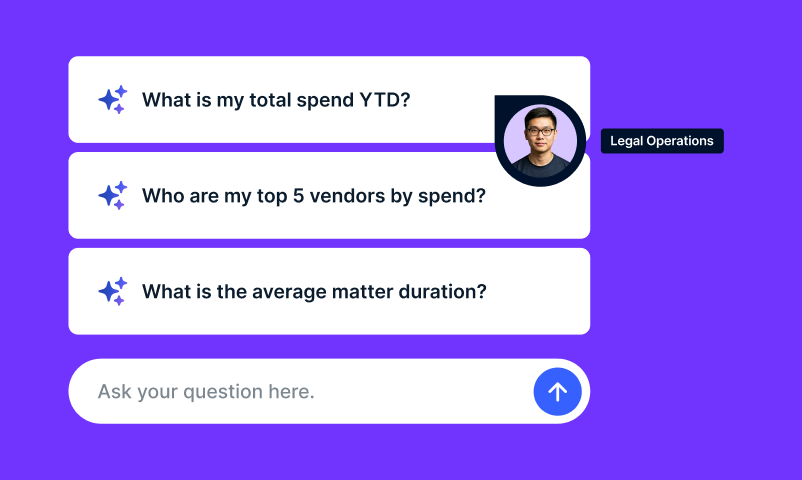


Walk into any legal ops conference this year and the agenda looks the same everywhere: AI, all day, every day. But underneath that one broad label, the actual conversations fall into three distinct buckets, operationalizing AI, untangling the tech stack, and a return to fundamentals, and the interesting part isn’t that teams are talking about these. It’s what’s different in how each one is actually being approached.
Is AI adoption still the open question?
Not anymore. A recent Onit survey found that 70 percent of legal teams now have a mandate to use AI, which means the real question has moved on. It’s no longer whether to use AI. It’s what’s actually real versus hype, and how to turn early experimentation into value that can be measured rather than just felt.
Enabling talent for that shift looks different team to team: prompt training, AI literacy assessments, and a genuinely new hiring category, legal engineers, sometimes called legal quants, who exist specifically to bridge legal judgment and technical implementation. Governance is moving just as fast. At a recent Onit App Builder user group, one legal team shared an internal app built to help senior lawyers review, approve, and track AI tool use across the entire company, a practical answer to a question a lot of legal departments are only starting to ask: who actually signs off when a new AI tool shows up inside the business. For a deeper look at how two legal departments are restructuring around this shift in practice, see Evolve or Get Left Behind: Designing the Future-Ready Legal Ops Team.
Is the answer to AI sprawl just one more platform?
Not exactly. The average lawyer already navigates somewhere between 30 and 60 applications to get through a normal day, and AI is adding to that list rather than replacing anything on it: frontier models, AI wrappers, MCP connectors, open source tools, and custom-built solutions all competing for a spot in the stack. Some teams are responding by building an orchestration layer that gives lawyers one place to access everything rather than switching between tools, while others are deliberately holding off, on the reasoning that not every problem is actually an AI problem in the first place.
One rule of thumb making the rounds in Onit’s community cuts through a lot of the noise: review the tools you’re already paying for before buying something new, lean on platforms your team already has real experience with, and skip automating a process that wasn’t actually a problem to begin with. People, Process, Tools: Strategies for Smarter Legal Spend Management goes deeper on what that looks like for spend management specifically, one of the areas where stack sprawl shows up fastest.
Is “back to fundamentals” just another buzzword?
It keeps coming up for a reason. Underneath the AI conversation, three plainer questions tend to decide whether any of it actually works. Is the AI being powered by clean, relevant data stored in a unified place, or is it layered on top of the same scattered systems that caused problems before AI entered the picture? Are the underlying workflows actually defined and consistent, or does the result still depend on which person happens to handle a given request? And are the people affected by the change being brought along the journey deliberately, or is adoption just being announced and left to figure itself out?
None of those three questions are new. Legal ops has been having versions of this conversation for years, long before AI made it urgent again. What’s changed is the cost of skipping them: AI makes good fundamentals pay off faster, and it makes bad ones fail faster and more visibly too, since a tool built on messy data or an undefined process doesn’t quietly underperform, it actively surfaces the mess.
In practice, that’s rarely one dramatic failure. It’s duplicate vendor records that make a spend report quietly wrong in both directions at once, or two reviewers handling the same type of request two different ways because the workflow was never actually written down, just passed along informally from whoever trained whoever came before them. An AI tool layered on top of either one doesn’t fix it. It just answers questions faster using the same inconsistent underlying picture, which can be worse than not asking at all, since a fast wrong answer gets trusted more than a slow one. And the “bringing people along” piece isn’t a soft add-on to the other two. A workflow that’s technically correct still fails if the people using it don’t understand why it changed, since they’ll quietly route around it the same way they would any other process that wasn’t explained.
Where this is still being worked out
Onit’s OnPoint community has already run more than a dozen peer group meetings this year alone, on subjects ranging from international e-billing mandates to AI hallucinations showing up in court filings, whether the industry is in an AI bubble, and what CFOs actually want from legal. None of those have tidy answers yet, which is exactly why they keep coming back around.
One thread worth watching: an upcoming session on outside counsel AI adoption and billing guidelines. If that’s a question on your mind already, You’re Negotiating Outside Counsel Savings. Can You Actually Prove Them? is a useful place to start now. For everything else, the conversations are ongoing in the OnPoint Community, and the next one is worth being part of rather than reading about after the fact.