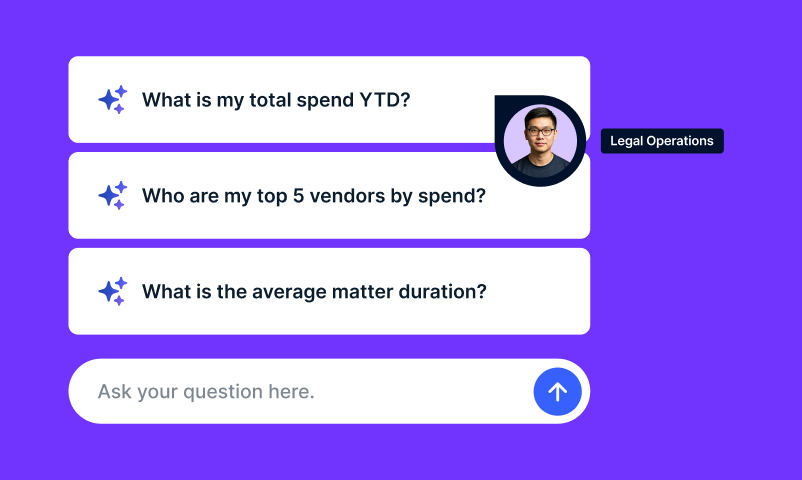


Legal eBilling is how modern legal teams bring order, accuracy, and transparency to their spend. It replaces manual billing chaos with automated workflows that capture data, enforce billing rules, and help teams understand exactly where their money goes. For departments under pressure to do more with less, eBilling provides structure, accountability, and time back in the day.
What is legal eBilling?
Legal eBilling is the electronic submission, review, and approval of invoices between law firms and corporate legal departments. Instead of exchanging invoices through email or spreadsheets, firms upload invoices directly into a secure eBilling platform. Most use a standardized format called LEDES (Legal Electronic Data Exchange Standard), which helps organize billing data consistently.
Once received, the eBilling system automatically checks each invoice against company billing guidelines, rate cards, and budgets. If something doesn’t match, it gets flagged for review. The invoice is then routed through an approval process where reviewers can accept, reject, or adjust line items as needed.
This structure creates consistency across the entire billing cycle. Invoices are processed faster, fewer errors slip through, and teams can focus on analysis rather than administration.

How legal eBilling works
A legal eBilling workflow is built around automation and visibility. Here’s what it typically looks like:
- Law firms submit invoices electronically. They log into the eBilling platform and upload invoices using approved formats like LEDES.
- The system validates automatically. Pre-set rules flag issues such as incorrect rates, missing matter codes, or out-of-scope tasks.
- Invoices move through approvals. The platform routes them to the right reviewers based on your internal workflows.
- Legal teams monitor progress. Dashboards and reports provide real-time updates on pending, approved, or rejected invoices.
- Finance syncs with legal. Once approved, invoices flow into accounting systems for payment, keeping budgets and records aligned.
This process eliminates repetitive tasks, reduces human error, and creates a digital record of every billing action taken. Law firms benefit too because they process payments faster, and set clear billing rules upfront.
Why legal billing matters for modern legal teams
Billing is one of those processes that can quietly drain hours from a legal department each month. And so, without automation, it’s easy for mistakes to pile up. Rates may differ from agreed terms. Tasks that fall outside of policy get billed. In many cases, approvals stall because the right person doesn’t see an email in time.
Legal eBilling fixes that by standardizing and streamlining how invoices move through review. As a result, the system enforces rules automatically and provides visibility into each invoice’s status. Then, teams can track pending items, approved expenses, and real-time spending.

This visibility is a game changer for legal ops. It allows teams to track spend by matter, law firm, or region, and uncover insights that drive smarter decisions. With clean, reliable data, legal departments can forecast budgets, monitor trends, and show measurable value to the business.
What to look for in a modern eBilling system
The best eBilling solutions are flexible, intuitive, and built to support collaboration between legal teams and law firms. Key features to prioritize include:
- LEDES support and global capability: Ensure compatibility with industry standards and multiple currencies.
- Configurable billing rules: Set your own policies, rate structures, and approval workflows.
- Dashboards and analytics: Access spend reports and compliance tracking in real time.
- Vendor collaboration tools: Make it simple for law firms to submit and track invoices.
- Integration readiness: Connect seamlessly with matter management or financial systems.
An effective legal eBilling platform should be easy to implement, simple for firms to use, and powerful enough to scale with the department’s needs.
The benefits of legal eBilling
Once legal eBilling is in place, the improvements are felt quickly. Teams spend less time chasing down invoices and more time analyzing results. Finance gains accurate, up-to-date data, and law firms have a smoother experience submitting bills.
Some of the biggest benefits include:
- Faster approvals: Automated routing reduces delays and shortens payment cycles.
- Stronger compliance: Built-in rules enforce outside counsel guidelines automatically.
- Better forecasting: Real-time data makes budgeting more predictable and accurate.
- Improved visibility: Every invoice and matter is tracked and searchable.
- Reduced rework: Standardized processes catch errors before they cause problems.
Together, these benefits add up to measurable ROI. Legal departments that adopt eBilling typically see a faster invoice turnaround, fewer disputes, and greater alignment with finance.

Common misconceptions about eBilling
It’s common for teams to assume eBilling is too complex, too expensive, or only for large enterprises. The reality is that modern solutions are far easier to deploy and maintain than they used to be. Cloud-based platforms now offer intuitive interfaces, built-in templates, and quick onboarding for both internal users and law firms.
Another misconception is that eBilling is only for tracking costs. While cost control is a major benefit, the true value lies in visibility. With the right data, legal ops teams can benchmark performance, justify budgets, and drive continuous improvement across their department.
The future of legal eBilling
Legal eBilling continues to evolve alongside the rest of legal technology. Automation and AI are already changing how invoices are reviewed and analyzed. Smart systems can now identify unusual billing patterns, predict potential overspend, and suggest optimization opportunities before issues arise.
These advances will make eBilling even more proactive in the years ahead. Instead of simply managing invoices, it will help legal teams make strategic decisions about where to invest time and budget.
Why it matters
Legal eBilling isn’t just about paying bills more efficiently. It’s about gaining the clarity and control that every modern legal department needs. It gives teams confidence in their data, alignment with finance, and the time to focus on higher-value work.
For growing legal ops teams, eBilling is the foundation for smarter, more strategic operations.
Ready to see how Onit helps legal teams simplify billing and spend management? Book a demo today.
*Post updated on 11/6/2025