


Updated March 2026
Contracts sit at the center of every business relationship, yet most organizations still manage them through a patchwork of emails, shared drives, and manual tracking. The result is predictable: slow turnaround, missed renewals, siloed contract data, and compliance gaps that surface at the worst possible moments. Contract Lifecycle Management (CLM) software addresses these problems directly by centralizing contracts and workflows in one place, automating routine tasks, and reducing risk while speeding execution.
For Legal, procurement, and sales teams alike, the business case for CLM is no longer abstract. It shows up in faster deal cycles, fewer compliance incidents, and cleaner data that supports better decisions. Understanding the full scope of what CLM delivers across an organization makes it easier to build the case internally and select the right solution.
Operational efficiency and speed
Manual contract processes create compounding delays. Drafting starts from scratch. Approvals route through inboxes. Redlines travel back and forth without a clear version history. By the time a contract reaches signature, days or weeks have passed on work that should take hours.
CLM software removes this friction by automating repetitive work across the full contract lifecycle. Pre-approved templates allow teams to generate accurate drafts in minutes. Configurable workflows route contracts through approvals without bottlenecks. Integrated eSignature capabilities finalize agreements faster without requiring separate tools or manual steps.

For sales teams specifically, self-serve templates and automated approvals help close deals faster without waiting on Legal to draft from the beginning. Contract approval times can be reduced by up to 80% with automated workflows and instant visibility into where each agreement stands. When contracts move faster, revenue recognition accelerates alongside them.
Reduced risk and better compliance
Every manually managed contract introduces risk. Clause inconsistencies slip through when language is negotiated informally. Renewal deadlines pass unnoticed when tracking depends on individual memory or spreadsheet reminders. Regulatory changes require batch reviews that manual processes struggle to execute at scale.
CLM software addresses this through centralized governance. A single repository with version control ensures that the most current, compliant version of each contract is always accessible. Standardized templates and clause libraries reduce language risk by maintaining consistency across agreements. Automated alerts flag obligations, renewal dates, and deadline milestones before they become problems.
For Legal teams managing compliance-heavy industries, CLM reduces review bottlenecks and ensures compliance across changing regulations by capturing key metadata, enforcing approvals, and maintaining audit-ready records. Risk isn’t eliminated, but it becomes visible and manageable before it escalates.

Cost savings and value capture
Contract leakage, the value lost through missed obligations, unfavorable terms, and overlooked renewals, quietly erodes business performance across organizations of every size. Most of it is preventable with the right visibility and processes in place.
CLM software creates the conditions for better value capture. Faster cycle times accelerate revenue recognition by moving contracts from request to signature quickly. Analytics surface which terms are being negotiated away most frequently, giving teams leverage to push back before patterns become costly habits. Procurement teams benefit from automated alerts for renewals and supplier performance tracking, ensuring that obligations on both sides of the agreement are met.
According to the World Commerce and Contracting organization, improved contract development and management can increase profitability by up to 9% of a company’s annual revenue. That figure reflects the cumulative impact of faster execution, reduced penalties, and better negotiation outcomes, all of which CLM software directly enables.
Enhanced collaboration and visibility
Contracts touch Legal, procurement, sales, finance, and operations. When contract data lives in separate systems, every cross-functional decision requires manual coordination. Teams pull data independently, reconcile inconsistencies, and still end up making decisions with incomplete information.
CLM software creates a single source of truth that breaks down these silos. Shared dashboards and status tracking give every stakeholder access to the same contract information, from approval status to key dates to clause usage patterns. Legal sees what sales has committed to. Procurement monitors supplier obligations. Finance tracks payment terms and renewal exposure without waiting for a manual report.
This visibility doesn’t just improve collaboration. It speeds decision-making. When teams centralize and keep contract data current, they can answer questions instantly that once required days of data gathering. Business partners gain confidence in Legal as a strategic function rather than a bottleneck.

Scale and growth enablement
Growing organizations face a contract volume problem. More deals, more vendors, more partnerships, and more regulatory requirements mean more contracts to manage. Manual processes don’t scale proportionally. They scale worse than linearly, adding complexity and risk with every additional agreement.
CLM software handles large contract volumes without requiring proportional increases in manual effort. Automation absorbs routine tasks like data entry, document tagging, and budget tracking. Integrations with CRM, ERP, and document management systems extend contract governance across the enterprise and ensure contract data flows directly into the systems that use it.
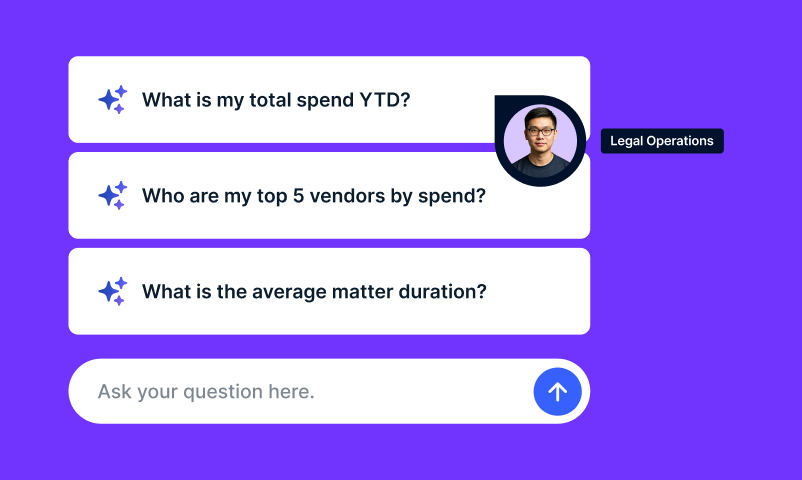
Teams can run real-time queries to unlock data insights across the business and bulk upload contracts without manual work. As the organization grows, the CLM infrastructure grows with it rather than against it.
CLM today: What modern software adds
CLM benefits extend beyond the classic value of centralization and automation. Artificial intelligence and machine learning are reshaping what contract management software can do, moving it from a system of record to a system of insight.
AI-powered tools now handle first-pass contract review, identifying risky or non-compliant clauses, extracting key dates and obligations, and generating a risk profile before a human reviewer opens the document. Research from Onit’s AI Center of Excellence found that AI-powered contract review using Large Language Models (LLMs) can complete reviews significantly faster than manual methods, with dramatic cost reductions compared to traditional review processes.
Beyond review, AI supports ongoing contract management through automated data extraction, compliance monitoring, and legacy contract migration. Contract data that would have required hours of manual extraction can be processed and tagged automatically, giving teams accurate metadata across their entire contract repository. Cloud-native collaboration tools allow remote teams to redline, approve, and sign without friction, making location-independent contract management a practical reality rather than an aspiration.
Making the case for CLM investment
Choosing to invest in CLM software is ultimately a decision about how a business manages one of its most critical operational assets. The benefits span teams, functions, and time horizons. Faster cycle times and reduced manual work show up immediately. Better compliance and risk management protect the organization over the longer term. Improved visibility and cross-functional collaboration compound in value as the organization grows.

For Legal operations leaders building the internal case, the strongest arguments aren’t abstract. They’re grounded in the specific pain points that slow the business down: approval delays that stall deals, missed renewals that trigger unfavorable auto-renewals, inconsistent contract language that creates disputes, and manual reporting that leaves leadership without reliable data.
CLM software addresses each of these directly. The question isn’t whether the benefits are real. It’s how much longer the organization can afford to manage contracts the way it always has.
See how OnitX CLM puts these benefits into practice
Legal operations leaders, procurement teams, and sales organizations that have outgrown manual contract processes need more than a system of record. OnitX CLM connects every stage of the contract lifecycle, from intake and review to execution, obligation tracking, and reporting, in one configurable platform built for the complexity modern organizations actually face. If any of this sounds familiar, check out how a connected CLM environment changes the way contracts get managed. Explore OnitX CLM today.
Originally published January 2022