

Tag: general counsel

Does your legal operations team get trapped on endless side quests? Let’s fix that

legal operations team side quests

Productivity suffers when your legal operations team is caught up in endless “side quests.” You know, those repetitive administrative tasks that distract from your true mission. Fetching documents, routing contracts, and handling approval requests can consume hours that should otherwise drive bigger business goals.

Unlike games, where side quests can be rewarding, a legal operations team faces a different outcome. These distractions drain productivity, burn out talent, and cost your business real money. And anything that affects your ROI can be a potential problem if not handled right.

Your legal operations team’s main quest is strategic: managing risk, facilitating major deals, and steering the company through regulatory changes. Yet, too often, highly skilled professionals get pulled into a cycle of low-value tasks, chasing signatures, uploading files, and searching for contract versions buried in email threads.

This grind isn’t just tedious — it’s expensive. If your legal operations team spends time on data entry or routine admin, high-value resources are being misallocated. It’s time to identify the distractions and automate them out of existence.

legal operations team tech stack

The high cost of low-value work

Manual tasks quietly undermine legal operations team productivity. Five minutes to file a contract or ten minutes to assemble a typical NDA seems trivial until you multiply it across hundreds of agreements and dozens of employees. Suddenly, those side quests are a major drain.

Thousands of lost hours cause friction across the organization. Sales teams wait on contract approvals, procurement stalls on vendor onboarding, and the legal operations team becomes known as the “Department of No” …not because it wants to, but because it’s buried in administrative backlog.

The hidden risk of manual processes

Every manual touchpoint introduces risk to your legal operations team. When tasks are repetitive, mistakes creep in. Compliance is threatened when someone misses an update or forgets a regulatory clause.

Small errors can lead to significant consequences: missed renewal deadlines, overlooked obligations, or non-standard terms that expose the organization to penalties or reputational harm.

Identifying your legal operations team’s side quests

Is your legal operations team’s productivity suffering? The answer often hides in everyday frustrations:

  • “Where is that file?” Without a centralized repository, hours are wasted searching for information.
  • “I’m just a glorified admin.” When legal professionals spend time formatting or triaging emails, morale falls and turnover risks rise.
  • “We need to hire more people.” If you need more headcount to keep up, the real solution may be eliminating those manual side quests.

If these sound familiar, your legal operations team’s energy is spent on maintenance, not progress.

identify legal operations productivity issues

Automating the grind for your legal ops department

The solution isn’t to work harder but smarter. Equip your legal operations department with automation tools that remove repetitive, manual tasks. This allows your experts to focus on impactful, strategic work.

Streamline contract management

Start with Contract Lifecycle Management (CLM). A robust CLM platform automates routine contract tasks, from document generation and template management to approval routing and secure, searchable storage.

This not only accelerates sales cycles, it also lifts the legal operations team out of bottleneck territory and creates time for more strategic priorities.

Leverage data-driven insights

Manual processes cloud visibility. Automation brings clarity, showing bottlenecks, high-risk vendors, and legal spend in real time.

With actionable data, your legal operations team can show its value to the business, using metrics that reflect improved efficiency, increased compliance, and cost savings.

Integrate your tech stack

Copying data between disconnected systems creates just another set of side quests. Your tools should connect seamlessly with CRMs, ERPs, and HR platforms.

When your systems are integrated, information flows effortlessly, reducing duplicate work and confusion over where to find the latest file.

legal operations team data driven decisions

AI for legal: The ultimate cheat code for your legal operations team

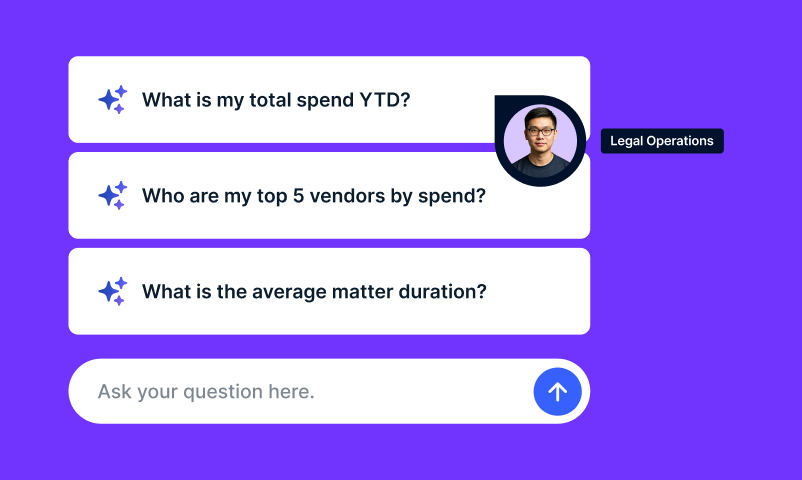
AI-native solutions are changing the landscape for the legal operations team. AI reviews contracts for risk, flags issue areas instantly, and extracts data from legacy documents in minutes. Chatbots can answer routine business questions so your lawyers remain focused on high-level work.

This isn’t about replacing your legal operations team; it’s about freeing them to apply skills to complex negotiations, risk analysis, and strategic projects that move the business forward.

Return to the main storyline

Legal operations teams face constant pressure: tighter budgets, restructuring, and evolving regulations. There’s no room for wasted effort.

Eliminating administrative side quests is essential. Streamline workflows and automate routine work to unlock your legal operations team’s expertise. Enhance compliance, cut costs, and empower your legal operations professionals to take on the high-impact work that fuels business growth.

The main quest is waiting. It’s time to stop grinding and start leveling up your legal operations team.

Ready to optimize your legal operations team?

If you’re ready to leave manual side quests behind and focus on real business outcomes, we’re here to help. Our AI-native solutions empower legal operations teams to move fast, work smart, and deliver the efficiency your business needs. Speak to an expert today to get your legal operations team on the right path.

How Enterprise Contract Lifecycle Management Software is Changing the Game for General Counsel

Managing risk at an organization is a full-time job, especially for a general counsel (GC) or chief legal officer (CLO). As a company’s chief internal lawyer, they are expected to provide legal advice on a vast range of subjects – legal rights, risk mitigation, compliance with new and existing laws and so much more.

If that weren’t enough, GCs and CLOs are also expected to manage the organization’s legal matters, oversee outside counsel spend, conduct legal research, review internal litigation strategy, and be the ultimate approver and keeper of the organization’s contracts. Despite handling all these critical, sensitive matters, legal departments are often seen as “cost centers” and therefore are forced to do their challenging jobs without all the resources they need to succeed.

Technology, automation and artificial intelligence are key to doing more with less and streamlining processes, particularly when it comes to contracts. Enterprise contract lifecycle management software allows busy lawyers end-to-end control over contracts, freeing up time to focus on other tasks in the process. They can also play pivotal roles in helping corporate legal departments reduce contract management costs. For example, Pearson’s commercial transactions shared service center for more than 10,000 users worldwide achieved a 35% cost reduction and 30% improved contract turnaround time.

Contractual Pain Points

Even the simplest contracts can expose an organization to risk and liability if it’s not handled correctly. GCs and CLOs are tasked with overseeing the crucial job of examining and creating draft agreements, maintaining knowledge of the organization’s operations and legal documents, approving non-standard contract language and more.

Without a centralized solution for managing contracts on an organization-wide basis, legal departments run into countless hurdles, including:

  • Inconsistent language between contracts, often caused by employees using out-of-date contract templates
  • Competing objectives of moving contracts through quickly yet still having enough oversight to effectively manage risk obligations
  • A lack of insight into all the organization’s current contracts
  • An inability to track changes in contracts and ensure that contracts are in compliance with new and existing laws and regulations
  • The risk that contracts might expire or renew without notice because no one’s tracking them
  • Complicated review and approval processes for even standard contracts
  • Manual review and approval processes that create longer contract cycle times
  • Human error and inconsistencies inherent in manual processes, increasing the organization’s risk exposure
  • Lost revenue when add-ons, upgrades and renewals are missed
  • Being seen by other aspects of the business as a barrier to closing deals

The above list is by no means exhaustive. Given the large volume of contracts at today’s modern businesses, the challenges presented by trying to manage those contracts can become overwhelming when you rely on manual processes or basic contract tools that lack automation and AI for general counsel, as well as a means of creating a single source of truth for the organization’s contracts.

The Benefits of Contract Lifecycle Management Tools

While the challenges outlined above may seem daunting, they’re not insurmountable. CLM tools use automation and AI to remove the tedious, manual aspects of traditional contract management, increasing accuracy and efficiency, eliminating errors, and freeing up precious time that GCs and CLOs can use to focus on the many other critical tasks they’re responsible for handling.

Leverage the benefits of contract lifecycle management software to take control of your corporate legal budget and take the headaches out of risk management.

Among other things, the right enterprise contract lifecycle management software will allow you to:

  • Find every contract you need, when you need it
  • Store all your contracts in one cloud location, creating a single source of truth for your organization’s contract data
  • Have full visibility at all times into the status of contract drafting, negotiations, amendments, and renewals, ensuring that nothing’s missed or overlooked
  • Implement uniform templates and playbooks to speed up contract cycle times, reduce manual errors and ensure you’re always using preferred terms
  • Automate approval processes to eliminate bottlenecks
  • Be notified of contract renewals to get a jumpstart on the process
  • Allow for self-service, so that other departments can create standard contracts with the correct language without legal review
  • Improve legal risk management across the organization
  • Improve efficiencies and free up the corporate legal budget for strategic use by automating contract lifecycle management
  • Demonstrate that the legal department is a strategic partner of the business, not a cost center

The ideal CLM tool will give you real-time insights into all phases of the contract lifecycle and provide you with actionable intelligence to make informed decisions for the business. More information means a better ability to identify and control risks across the contract process.

It’s time to take control of your contracts and let contract lifecycle management for general counsel and automation do the heavy lifting for you. Contact us today to learn more about how Onit can help you implement end-to-end CLM for your organization.