Author: Onit

Elevate Compliance and Clarity: The Game-Changing Benefits of Legal Entity and Party Hierarchies in Contract Management

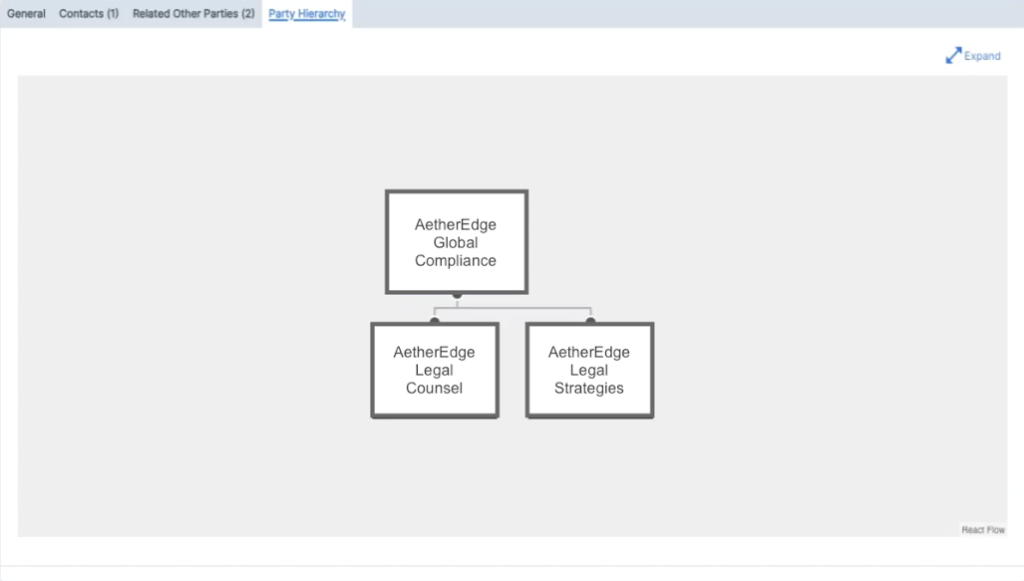
Navigating legal complexities can now be visualized with OnitX’s new Hierarchy enhancement for Contract Lifecycle Management (CLM). This feature empowers users to map out the relationships between legal entities and parties directly within the platform. For organizations, this means a clearer path to compliance, streamlined contract negotiations, and better-informed decision-making.

Easily identify which entities are responsible for each contract—be it subsidiaries, subcontractors, or third-party providers. With structured legal and party hierarchies, OnitX ensures smoother operations, accountability, and a holistic view of all contracting relationships. 

Here’s what’s new.

  1. Legal Entity Hierarchies: Manage complex entity structures and simplify compliance for global or domestic operations.
  1. Party Hierarchies: Understand who’s involved in each contract, improving transparency and accountability.

Key Benefits

  • Greater Transparency: These hierarchies enhance visibility into contract relationships, legal entity structures, and party interactions, reducing the chance of errors or overlooked obligations
  • Improved Compliance and Risk Management: Understanding how contracts, entities, and parties relate helps organizations remain compliant with regulations and identify risks early in the process
  • Operational Efficiency: Hierarchical structuring of contracts, entities, and parties reduces time spent tracking obligations, allows for better decision-making, and simplifies the negotiation and renewal process

OnitX CLM customers will have access to this feature enhancement on November 19, 2024. If you are interested in learning how OnitX CLM could transform your workflow, schedule a demo here.

Onit Recognized as Major Player in IDC MarketScape 2024 CLM Software Vendor Report

Houston, October 15, 2024 – Onit, Inc., a leading provider of enterprise workflow and artificial intelligence platforms, has been named a Major Player in the IDC MarketScape: Worldwide Contract Life-Cycle Management Software for Corporate Legal 2024 Vendor Assessment. This prestigious recognition reflects Onit’s continued dedication to innovation and excellence in the contract lifecycle management (CLM) space.

A Testament to Innovation and Excellence

The IDC MarketScape report is a comprehensive evaluation of the capabilities and business strategies of CLM software vendors, with a specific focus on how these platforms support corporate legal departments. Onit’s inclusion as a Major Player underscores the strength of its product offerings, innovation in CLM, and long-term strategic vision in this competitive market.

“As we continue to evolve and expand our products powered by AI, being recognized as a Major Player in the IDC MarketScape report is a significant milestone,” said Michael Farlekas, CEO of Onit. “This recognition reaffirms our commitment to delivering transformative solutions that empower legal teams to manage contracts efficiently and strategically.”

Onit’s CLM software combines advanced workflow automation, artificial intelligence, and data-driven insights to optimize contract management, reduce risk, and improve compliance. By streamlining contract lifecycle processes, Onit helps legal departments drive value and efficiency across their organizations.

About ONIT

Onit is a global leader in AI-enabled workflow automation solutions for legal, compliance, sales, IT, HR, and finance departments. With Onit, companies can transform best practices into smarter workflows, better processes, and operational efficiencies. With a focus on enterprise legal management, matter management, spend management, contract lifecycle management and legal holds, the company operates globally. It helps transform how Fortune 500 companies and billion-dollar corporate legal departments bridge the gap between systems of record and systems of engagement.Onit helps customers find gains in efficiency, reduce costs, and automate transactions faster. For more information, visit onitprostg.wpengine.com.

Introducing ReviewAI for Generative AI-Driven Contract Review 

A New Era of Contract Lifecycle Management (CLM): Quickly and Accurately Draft, Review, Redline, and Edit All Types of Contracts in Minutes 

The legal landscape is rapidly evolving, with technology at the forefront of this transformation. At Onit, we understand that the demands on legal teams are higher than ever before. Efficiency, accuracy, and speed are no longer just nice-to-haves—they are essential. That’s why we are excited to introduce the enhanced ReviewAI, now powered by Onit’s industry-leading generative AI capabilities. 

Pioneering AI in Contract Management 

For over three years, ReviewAI has set the standard in automated contract review as the first software that truly reads, writes, and reasons like a lawyer. But we didn’t stop there. We’ve continuously innovated to ensure that ReviewAI not only meets but exceeds the needs of modern legal departments. Today, we are proud to announce that ReviewAI is even more powerful, thanks to its integration with the latest in generative AI and large language models (LLMs). 

Jean Yang, Onit’s VP of GTM Strategy and AI Transformation, shares, “We’re extremely proud to offer ReviewAI as a standalone product for organizations everywhere. By deploying the game-changing technology of generative AI, we are providing intelligent contract review that is intuitive, collaborative, and user-friendly.” 

Why Generative AI Matters for Legal Teams 

Generative AI is not just another buzzword—it’s a transformative force that is reshaping how legal teams operate. With ReviewAI, you can draft, review, redline, and edit all types of contracts in minutes. The result? Legal teams can focus on strategic priorities rather than getting bogged down in routine tasks. 

ReviewAI delivers: 

  • 4x faster contract audit and migration projects 
  • 70% faster contract negotiations 
  • 400% accelerated data entry and validation projects when connected with Onit CLM, reducing human effort by 60% 

This isn’t just about speed—it’s about enhancing accuracy and boosting overall organizational performance. By leveraging Generative AI-powered chat and virtual assistants, ReviewAI allows users to ask questions and receive answers on the fly, making contract reviews more efficient and precise. 

Reimagining Contract Playbooks 

One of the standout features of ReviewAI is its library of playbook templates, pre-configured with legal concepts, fallbacks, and approved clauses. These templates are ready to be used out-of-the-box, accelerating the review process and ensuring consistency across your legal documents. Legal and business leaders can also configure these playbooks to align with their unique business standards, providing a tailored approach to contract management. 

Natural Language Processing (NLP) further enhances ReviewAI’s capabilities by providing AI-powered legal text processing. ReviewAI meets you where you work, whether it is in Word, via email or a multilingual environment, making it easy for legal professionals or business users to adopt and utilize these tools.  

Moreover, Onit’s commitment to ethics and privacy is paramount. Our detailed Ethics & Privacy / Zero Data Retention policy, coupled with robust support for EU customers, ensures that your data is secure and managed responsibly. 

The Future of Contract Management is Here 

As Jean Yang eloquently states, “ReviewAI represents the future of contract review, delivering precision, speed, and an AI virtual assistant that speaks your language. It’s the adaptable, AI-powered solution for tailored contract workflows that agile organizations need to scale and adapt in an ever-changing, fast-paced business environment.” 

In a world where business agility is key, ReviewAI offers the tools that legal teams need to stay ahead. Whether you’re looking to streamline your workflows, improve accuracy, or simply keep up with the pace of business, ReviewAI with Generative AI technology is your answer. 

Take the Next Step 

Ready to experience the future of contract management? Schedule your demo of ReviewAI today and discover how generative AI can transform your legal operations. 

Practical AI Prompting for Legal Teams: What You Need to Know

Feeling comfortable with core prompting concepts? Great — now it’s time to take the next step with integrating AI into your Legal workflows. Let’s walk through some examples to implement these skills. You can use any AI tool (ChatGPT, Anthropic) to illustrate these different prompting techniques.

Feel free to follow along by creating your own prompts, inputting them into the tool, or simply reviewing the examples provided. You can copy and paste the sample prompts into ChatGPT to test it yourself.

After each prompt, think about ChatGPT’s response and how you might refine the prompt using techniques like interactive dialogue or iterative refinement. The prompts below aim to demonstrate ways legal professionals can collaborate with AI to get the insights they need.

Exercise 1: Basic Legal Prompting

Basic Objective:
Have AI summarize a legal contract.

Contract Sample to Summarize:
“THIS AGREEMENT entered into this 1st day of January 2023, by and between Party A, a corporation organized under the laws of the State of California (‘Party A’), and Party B, a corporation organized under the laws of the State of New York (‘Party B’). Both parties agree to maintain and protect the confidential information obtained during the course of this agreement, following the confidentiality clause outlined in Section 5.”

Persona and Specifics:
You are a Paralegal assisting a lawyer, and your role is to review and summarize key points of contracts. The lawyer needs quick understanding through clear and concise summaries of the essential contract content.

Objective:
Short Summary Points: Offer short, precise summaries that illuminate the crucial contract aspects like agreement parties, confidentiality obligations, and other significant rights or duties. Summaries should be brief yet encompassing, shedding light on the contract’s main elements without over-detailing.

Constraints:
Output Length: Limit each summary point to two sentences maximum, with the overall response not exceeding 1000 characters.

Examples (Few-Shot Prompts):
Input: “A clause in the contract defines the agreement parties.”
Output: “Agreement Parties: Party A (California-based) and Party B (New York-based) are engaged in this agreement, each with distinct rights and obligations.”

Input
: “Section 5 of the contract outlines the confidentiality obligations.
Output: “Confidentiality: Both Party A and Party B are bound to protect and uphold confidential
information as detailed in Section 5 of the agreement.”

Accuracy:
Ensure summaries are exact and faithful to the contract’s text, avoiding assumptions and inaccuracies. Summaries should be strictly derived from the contract information.

Format:
Summaries should be presented in a bullet-point format. Each point must have a headline followed by a brief description, ensuring easy readability and understanding even for individuals not specialized in law.

AI Task:
Given the sample contract snippet above, craft a concise summary following the objective, constraints, examples, and format detailed in the Crafted Prompt for AI. Ensure your summary accurately reflects the contract’s content, facilitating quick and clear comprehension for the lawyer you are assisting.

Follow-up questions:
• Iterative Refinement: Ask it to summarize the key points in 3 bullet points instead
of full sentences.
• Interactive Dialogue: Could you clarify the confidentiality obligations – who is responsible for maintaining confidentiality?
• Chained Reasoning: What are the consequences if confidentiality is breached? And then, have it explained based on its previous summary.
• Socratic Questioning: What factors should be considered in determining if this confidentiality clause provides adequate protection?
• Self-Reflection: Review your summary. What are 1-2 ways you could improve the clarity or conciseness?

Exercise 2: Intermediate Prompting

Basic Objective:
Generate LinkedIn posts using AI based on an IDC MarketScape report.

Report Sample to Summarize:
The IDC MarketScape report content provided as input to AI.

Persona and Specifics:
You are an Enterprise Marketer working for a leading legal tech company. Your primary role involves creating engaging content for LinkedIn, blogs, and emails to inform and attract potential clients and partners.

Objective:
Short Summary Points: Deliver succinct, engaging LinkedIn posts capturing key findings and insights from the IDC MarketScape report. The focus should be on the unique capabilities and values of your company over competitors.

Constraints:
Output Length: Each LinkedIn post should not exceed 280 characters (standard LinkedIn post length), and the overall content generated should be close to 3000 tokens to yield multiple LinkedIn posts.

Examples (Few-Shot Prompts):
Input: “The IDC report mentions the unique capabilities of the leading legal tech
companies.”
Output: “Leading in legal tech! Our capabilities stand out in the latest IDC MarketScape report. Discover how we surpass competitors! #LegalTech #IDCReport2023”
Input: “The IDC report emphasizes the importance of business values.”
Output: “Business values at the forefront! The IDC MarketScape report echoes our
commitment to integrity and innovation. #LegalTechValues #IDCInsights”

Accuracy:
Ensure LinkedIn posts capture the essence of the IDC MarketScape report without misrepresentation. The posts should strictly adhere to the report’s findings while highlighting the company’s strengths..

Format:
Posts should be presented in a casual, engaging style suitable for LinkedIn. Each post must capture attention and motivate readers to learn more about the company and the report.

Temperature:
A temperature of 1 is set to encourage the AI to generate creative content. The temperature setting influences the randomness and creativity in the generated text, with higher values resulting in more creative outputs.

AI Task:
Given the sample IDC MarketScape report snippet above, craft LinkedIn posts following the objective, constraints, examples, and format detailed in this Crafted Prompt for AI. Ensure your posts accurately reflect the report’s content and promote the company’s unique position in the legal tech landscape.

Follow-up questions:
• Iterative Refinement: Can you reduce the length of this post while retaining its key message?
• Interactive Dialogue: What were the primary findings regarding our company in the IDC report?
• Chained Reasoning: Based on our company’s highlighted capabilities in the IDC report, how do we compare to our main competitor?
• Socratic Questioning: How does the report’s emphasis on business values differentiate us in the market?
• Self-Reflection: Review the posts you generated. Are there ways to make them more engaging or relevant to our target audience?

Want to learn more about how you can unlock the true potential of AI systems (including advanced prompting techniques)? Download our full eBook entitled The Legal Professional’s Handbook: Generative AI Fundamentals, Prompting, and Applications.

5 Key Factors to Consider When Integrating AI into Your Legal Department

Integrating advanced legal AI tools like LLMs catalyzes a significant shift for in-house legal teams. These models are evolving from mere tools to invaluable partners, extending in-house professionals’ capabilities. Adopting legal AI software is a strategic decision for in-house teams that can transform service delivery, enhance productivity, and provide data-driven insights.

Here’s a closer look at five key factors to think about when integrating AI:

1. Cost Considerations

Immediate Efficiency Gains: AI automation of repetitive tasks like contract reviews can yield direct time savings, reducing manual hours spent.

Optimize Spend: The cost savings allow for investments in training, advanced AI tools, and other high-value initiatives rather than repetitive manual work.

2. Workflow Evolution

Reskilling: With AI excelling in routine tasks, in-house team members can take
on more complex responsibilities, upskilling into higher-value work.

Ongoing Learning: As AI evolves, so must in-house professionals’ skills. Regular AI training ensures everyone stays updated on the latest developments.

3. Data-Driven Insights

Instant Analysis: AI for legal documents can provide real-time insights from data that previously required extensive manual analysis. This empowers faster, informed decisions.

Proactive Risk Monitoring: AI analysis of contracts and documents can proactively detect risks, allowing preventative mitigation.

4. Change Management

Addressing Hesitancy: Hosting regular workshops provides a venue for hesitant team members to gain familiarity with AI systems in a collaborative setting. This can ease adoption.

User Feedback: Encourage continuous user feedback on AI tools. On-the-ground insights allow refinements tailored to team needs.

5. Integration with Other Technologies

Legal Tech AI Synergy with Blockchain: AI can help validate blockchain data beyond smart contracts, offering a more robust solution for secure transactions or records.

Collaborative Platforms: AI can seamlessly integrate with collaborative tools and platforms used by legal firms, ensuring a cohesive workflow. Whether it’s document collaboration or scheduling client meetings, AI can bring efficiency to these tasks.

Adaptive Systems: The beauty of modern AI is its adaptability. By connecting it with tools like CRMs or document management systems, it can learn and adapt based on historical data and user interactions.

Integrating AI is an ongoing journey requiring strategic planning, skills development, and a willingness to evolve. The payoff makes this effort invaluable for in-house productivity and insights. With thoughtful change management, AI transitions from an external tool to an intrinsic capability. Involvement and feedback from professionals is the key to ensuring the tech aligns with team needs. With meticulous implementation, AI becomes a seamless ally rather than a disruptive presence, propelling teams to new heights.

Want to learn more about how you can unlock the true potential of AI systems (including advanced prompting techniques)? Download our full eBook entitled The Legal Professional’s Handbook: Generative AI Fundamentals, Prompting, and Applications.

7 AI Applications for In-House Legal Workflows

As AI capabilities progress, in-house legal teams have an invaluable opportunity to integrate these advanced technologies into key legal workflows and processes to drive greater efficiency, insights, and productivity. When thoughtfully implemented, legal AI can serve as an ally in handling high-volume, repetitive tasks that have traditionally burdened legal professionals’ time.

From contract management to legal research and beyond, AI systems powered by strong prompting skills can amplify and augment in-house teams’ efforts, allowing professionals to focus their expertise on the most strategic, high-value aspects of legal work.

Here are 7 key AI applications for in-house legal workflows:

  1. Contract Analysis and Review: A well-crafted prompt can enable AI to sift through complex contracts meticulously, spotlight duties, identify potential risks, and offer actionable insights.
  2. Invoice Auditing: AI can rapidly process high volumes of legal invoices, flagging potentially erroneous charges for auditors to review. This optimizes the invoice validation process.
  3. Litigation Support and Preparation: AI assists with tasks like organizing case documents, drafting briefs, and finding supporting precedents to bolster arguments. This reduces repetitive preparation work.
  4. Regulatory Monitoring: AI tracks updates across vast regulatory sources and alerts teams to key changes relevant to the business. This enables proactive compliance.
  5. IP Management: Consider the herculean task of analyzing vast patent databases. With its efficiency, AI ensures exhaustive patent searches and assists in drafting applications with precision.
  6. Discovery: AI expedites eDiscovery by quickly filtering huge document sets down to the most relevant materials, minimizing review time.
  7. Legal Research: With thoughtful prompting, AI can rapidly traverse extensive legal databases, identifying pertinent cases, rulings, and regulations.

Integrating Legal AI into these critical in-house legal workflows with meticulous implementation and oversight can profoundly augment legal professionals’ capabilities and enable more strategic, high-value work. AI’s incorporation in legal practice is not just a pursuit of efficiency — it’s about refining the quality of legal services. As we harness AI’s prowess, a principle must be held sacred: AI tools, no matter how advanced, should serve as an extension of your expertise and not a replacement.

Want to learn more about how you can unlock the true potential of AI systems (including advanced prompting techniques)? Download our full eBook entitled The Legal Professional’s Handbook: Generative AI Fundamentals, Prompting, and Applications.

Mastering the Art of Legal AI Prompting: The 3Ps Framework

Well-crafted prompts are key to accurate, useful AI outputs. A prompt is your input to the LLM to guide its outputs. Essentially, it’s a question or statement the LLM is asked to respond to or build upon.

Prompts can range from a single word to a whole paragraph, depending on what the user is trying to achieve. LLMs use the information in the prompt as a basis for generating their response, so the quality and clarity of the prompt can significantly influence the answer.

Careful prompt design is key in instructing the LLM to produce the desired output. Vague prompts lead to confusion, but clear, detailed prompts elicit outstanding results. Framing prompts using the AI’s language gets the desired responses.

The First Step: Begin with Basics and Progress Gradually

When integrating AI into legal tasks, start with straightforward, manageable prompts. For instance, initially use AI to summarize legal documents or provide legal principles overviews. This practical approach allows you to familiarize yourself with AI’s functionalities and limitations while developing proficiency in crafting effective prompts.

It’s common to encounter challenges as you navigate this learning process. Rather than aiming for immediate perfection, view each challenge as an opportunity for constructive learning. These early experiences, even the difficult ones, lay the foundation for future success with AI.

Remember that success with AI is collaborative. Adjust your approach accordingly if a prompt doesn’t yield the expected results. Refine prompts, analyze responses, and iterate as needed. This hands-on practice is key to mastering prompting and interpretation.

As your skills develop, gradually introduce more complexity into prompts. Consistency in practicing core skills leads from proficiency in basics to efficiently handling advanced AI interactions. With a solid foundation, you’ll be well-equipped to fully harness AI’s potential for elevating legal work.

The 3Ps Prompting Framework

The 3Ps approach provides a structured way to guide AI systems through effective prompting. It consists of:

  • PROMPT: This is the core instruction provided to the AI detailing exactly what you want it to do. A properly engineered prompt includes clarity, specificity, examples, constraints, and ample context to guide the system. The prompt is where you ask the AI for what you need, whether it’s a legal summary, analysis, document draft, or other output. An effective prompt maximizes accuracy. Combining thoughtful priming, persona setting, and a meticulously crafted prompt allows prompting at an expert level to get the most out of legal AI systems.
  • PRIMING: Priming involves setting the stage and establishing the necessary context for the AI. Imagine you need to brief a junior lawyer on a case’s background before they can work on it; explaining the goals, facts, and history allows them to dive in effectively. Similarly, priming an AI lays the groundwork for success. Examples of priming include summarizing documents the AI needs to read for context, explaining the business objectives, client needs, or legal issues involved, or providing any required definitions or domain knowledge.
  • PERSONA: You can specify a persona if you want the AI to adopt a specific perspective. This puts the AI in a certain mindset, similar to how lawyers think differently depending on their role, like prosecution vs. defense attorneys. Persona examples include patent lawyer (frames responses from a patent law point of view), plaintiff’s attorney (approaches issues from a plaintiff-favoring stance), and criminal prosecutor (considers implications in building a case against the accused).

Anatomy of a Strong Prompt

Now that we’ve covered the basics let’s dive into the anatomy of what makes an effective, robust prompt. What core attributes define a truly “strong” prompt?

Effective prompts contain:

  • Clarity – Unambiguous, precise phrasing
  • Specifics – Exact definitions of needed information
  • Context Richness – Sufficient background information for depth and insight
  • Good Structure – Clear formatting that aids comprehension
  • Readability – Use simple, concise language.
  • Examples – To illustrate desired outputs
  • Constraints – Outline boundaries and limitations (output length or formatting, timeframe, geography, etc.).
  • Accuracy – Avoiding errors that cause misleading results

Large language models are trained on extensive written text, making structural details like complete sentences and line breaks important for accurate responses. Constraints and examples guide the AI by setting expectations and a pathway to follow.

Every element of a prompt influences the AI’s response. Vague prompts confuse the AI, while focused, tight phrasing elicits spot-on responses. Constraints like length limits limit the scope. Examples guide better outputs. Each detail shapes the final result. Craft prompts carefully, considering how each component impacts the AI’s understanding.

Key Technical Settings

When using AI systems, there are specific settings you can adjust that impact how the AI responds. Knowing these key technical settings as a beginner will help you get better results.

  • Creativity Setting: This controls how consistent or varied the AI’s responses will be. A high creativity setting makes the responses more random and diverse. But it also increases the chance of incorrect or nonsensical outputs. A low creativity setting makes the AI’s answers more predictable and fact-based. But the responses might be too basic.
  • Response Length Setting: This controls the approximate length of the AI’s responses. Longer responses allow the AI to provide more detailed explanations. But it limits how much background context you can provide in your prompt. Shorter response settings enable you to give more context upfront in your prompt. But, the AI’s answers may lack depth.

Using moderate creativity settings and medium response lengths is a good starting point. As you get more experience, you can refine these settings per use case. The key is balancing detail, consistency, and context to get optimal results.

Want to learn more about how you can unlock the true potential of AI systems (including advanced prompting techniques)? Download our full eBook entitled The Legal Professional’s Handbook: Generative AI Fundamentals, Prompting, and Applications.
How Large Language Models (LegaLLMs) and AI Can Uniquely Supercharge Vital Legal Work

Imagine having a super-powered contract review assistant, able to rapidly comb through thousands of pages in record time to flag key clauses, risks, and insights. That’s the promise of Legal LLMs, generative AI large language models: a highly advanced predictive text system with specialized training in a legal context. For in-house legal teams, these tools accelerate the review of contracts, invoices, and legal service requests by eliminating attorneys needing to pore through mountains of paperwork and emails manually. That’s why AI adoption is surging for these document-intensive tasks that frequently overwhelm in-house legal professionals.

Artificial Intelligence (AI) broadly refers to computer systems capable of tasks requiring human intelligence like visual perception, speech recognition, and decision-making. Machine learning is a specific subfield within AI where algorithms improve through experience without explicit programming. Rather, the AI is trained use a representative dataset. The neural network is a common machine learning structure, inspired by the human brain’s interconnectivity.

A significant AI area utilizing machine learning is Natural Language Processing (NLP), which focuses on automating language understanding and generation. NLP employs neural networks trained on vast text data. Generative AI represents an advanced subset of NLP models called Large Language Models (LLMs) designed to produce human-like text. So, while not all AI uses machine learning, modern innovations like large language models leverage machine learning and neural networks to achieve their natural language capabilities.

This brings us to recent advancements in generative AI and the advent of Large Language Measures (LLMs), which have driven much of the recent excitement around AI applications in the legal field. These are specialized neural networks trained on vast amounts of text data, designed to understand and generate text.

What are Large Language Models?

Large language models (LLMs) like ChatGPT are trained on massive datasets of billions of data points, refined through human feedback loops of prompts and responses. This allows LLMs to break down text into tokens — commonly occurring groups of 4-5 characters – that are encoded as parameters. When you provide a prompt, the LLM uses that context to statistically predict the most likely sequence of tokens to generate a coherent response, like an advanced autocorrect.

However, LLMs have limitations. They don’t learn or understand content — they generate plausible responses using their parameters but don’t comprehend meaning. LLMs have restricted context windows, limiting how much text they can process, require substantial computational resources, and struggle with math or numbers. Poor data quality or biased prompts can result in inaccurate outputs. While LLMs can produce human-like text, they don’t innately understand language semantics. LLMs are powerful but require thoughtful prompts and oversight to mitigate risks. Setting realistic expectations by understanding how they leverage statistical patterns rather than true comprehension allows appropriate usage for augmenting legal work while providing necessary guidance and validation.

Challenges and Common Issues with (Legal) LLMs

While large language models represent a breakthrough innovation, they have inherent limitations requiring prudent risk management. As static systems, LLMs cannot continuously adapt on the fly post-training. Their memory capacity, or “context windows,” vary widely. More limited windows constrain the processing of lengthy content. State-of-the-art models boast expansive context but are still pale compared to human memory.

More concerningly, LLMs have several key issues that warrant caution:

  • Hallucinations: LLMs may generate or “hallucinate” data not present in reality, as they are optimized to respond to prompts without the ability to discern truth from fiction. This tendency to produce false information, incredibly confidently stated, is concerning and requires oversight.
  • Biases: The training data may contain societal biases encoded into the LLM’s parameters. Additionally, reinforcement learning through human feedback loops during training can further ingrain biases. Once deployed, even prompt wording can introduce biases that lead to unfair LLM responses.
  • Inconsistency: Due to the statistical nature of how LLMs generate each token and the inherent randomness built into models to enable creative responses, LLMs do not always take the same path to respond to identical prompts. So, you cannot rely on consistent output, even adjusting for creativity settings.
  • Misalignment: LLMs have demonstrated some awareness of when their outputs are being evaluated or tested and can provide responses that diverge from a user’s true intent. This makes it challenging to understand alignment with user goals outside of testing scenarios thoroughly.

Informed perspectives on LLMs’ capabilities and limitations allow full utilization of their transformative potential through responsible oversight. Their breakthrough innovation warrants measured adoption to realize possibilities ethically.

Realizing the Benefits of Legal LLMs & Generative AI While Mitigating the Risks

Generative AI has huge potential upsides for legal teams if thoughtfully applied. But we need to be realistic — Legal LLMs aren’t going to completely replace your skills and judgment overnight. Rather, they can take the grunt work off your plate so you can focus on high-value tasks like strategy, analysis, and client needs.

Before turning LLMs loose, comprehensive testing and review by real experts is crucial. We can’t just immediately take what LLMs spit out as gospel truth. Their output needs real validation via ongoing review. LLMs should collaborate alongside professionals, not try to substitute your judgment that’s sharpened through experience.

It’s also critical to regularly audit for biases, inconsistencies, or false info. The teams behind LLMs must take responsibility for thoughtfully addressing these risks head-on. Rigorous data governance, privacy protection, and cybersecurity are essentials, too. We need systems we can understand, not opaque “black boxes” that undermine trust.

LLMs can uniquely supercharge vital legal work:

  • They can rapidly pinpoint the most relevant info for document review out of massive document troves, saving tons of time over lawyers pouring over everything manually. But human oversight still matters to double-check what the LLM flags and catch subtleties it might miss.
  • For analyzing contracts, LLMs can efficiently unpack dense legalese to surface issues like inconsistencies or missing pieces for tightening before signing. But niche clauses unique to certain deals might get overlooked. Experts still need to verify that nothing big slipped through the cracks.
  • LLMs shine at legal research, promptly finding past precedents, citations, and case law to build persuasive arguments. However, they might miss seminal cases only seasoned attorneys would know; your guidance remains key for strategy.
  • LLMs can also assist organizations in the creation of legal service requests and invoice summaries, helping to ensure a more streamlined workflow, saving valuable time, and bringing clarity to collection processes. Human oversight, however, is still essential to ensure crucial elements are included and that requests and summaries get to the right people or departments.

Navigating the Ethical Frontier

Implementing new technologies for a legal team requires prudence to uphold core values like transparency, fairness, and accountability, considering the potential risks and rewards tied to distinct AI models.

While AI promises benefits like efficiency and insights, particularly in routine tasks like contract review, it is imperative to distinguish between consumer models and enterprise solutions of generative AI. Consumer models, like ChatGPT through OpenAI, a version provided through Microsoft, and others provided through Google, are accessible but pose significant data privacy concerns that are unacceptable for legal professionals. Such models may use confidential client data for future training or other purposes, potentially exposing sensitive information inadvertently.

In stark contrast, enterprise solutions offer robust data protection essential for in-house teams. These commercial models assure that client data won’t be used in future model training, nor will the results be shared or misused. This safeguard is pivotal for in-house legal professionals who handle confidential information daily and must assure clients and internal stakeholders about data security. Hence, in-house legal teams should avoid using consumer-level AI models to prevent compromise on client data privacy.

With these distinctions in mind, in-house legal teams must consider the following when evaluating AI solutions for integration into workflows like contract review and legal invoice examination:

  • Explainability: In-house legal professionals should require AI providers to disclose the inner workings of their systems. Understanding how recommendations are generated is crucial to fostering trust in AI outputs and preventing reliance on opaque “black box” systems unsuitable for legal work.
  • Accountability: Despite AI’s efficiency in reviewing contracts and invoices, in-house lawyers must still thoroughly vet AI outputs, establishing clear oversight procedures without mindlessly following AI-generated advice. Human oversight remains essential.
  • Fairness: Ensuring AI is developed without biases is essential to uphold legal principles. Continuous monitoring and assessment during both the development and production phases are necessary to sustain fairness.
  • Transparency: In-house teams need to be transparent about their AI usage with clients and courts, clearly communicating the chosen AI’s capabilities and limitations.
  • Risk Assessment: Identify and mitigate potential harms, like biases, security flaws, or loss of professional judgment, early when assessing AI solutions for integration into workflows.

The sweet spot is thoughtfully harnessing AI’s power while mitigating risks through governance, security, testing, and expertise-based oversight. This balanced approach lets us ethically integrate AI into legal work to augment your talent.

Ready to learn more about how you can integrate AI into your Legal workflows? Download our full eBook entitled The Legal Professional’s Handbook: Generative AI Fundamentals, Prompting, and Applications.
Perceptions of Legal: A Conversation with PwC

PwC US Legal Business Solutions Consulting Leader and Global Oversight Board Member Jane Allen recently sat down with Onit for an in-depth conversation about the insights gained from 2023’s Enterprise Legal Reputation Report. Here are some key takeaways from the discussion (view the webinar in its entirety here).

For the second year in a row, Onit’s holistic Enterprise Legal Reputation (ELR) report helped deliver keen insight into just how Legal can be perceived by internal clients — surveying over 4,000 enterprise employees and 500 corporate legal professionals around the globe. In this episode of “A Conversation”, PwC US Legal Business Solutions Leader Jane Allen shared her thoughts on some of the conclusions from the Report.

Here are some key takeaways from the discussion:

The overall corporate image of the Legal function remains positive across the globe. Legal is viewed as “protectors of the business, assets, and people” across the United States (55%), France (48%), the United Kingdom (41%), and Germany (33%). This positive image remains even as the current environment can make the job of Legal far more complicated.

“Legal is there to protect the people, the business, the IP, all of it,” Allen says. “I also think that doing this foundational piece has become far more complex and difficult, especially if you look at geopolitical issues and the evolving regulatory landscape – which can resemble a game of whack-a-mole in some places.”

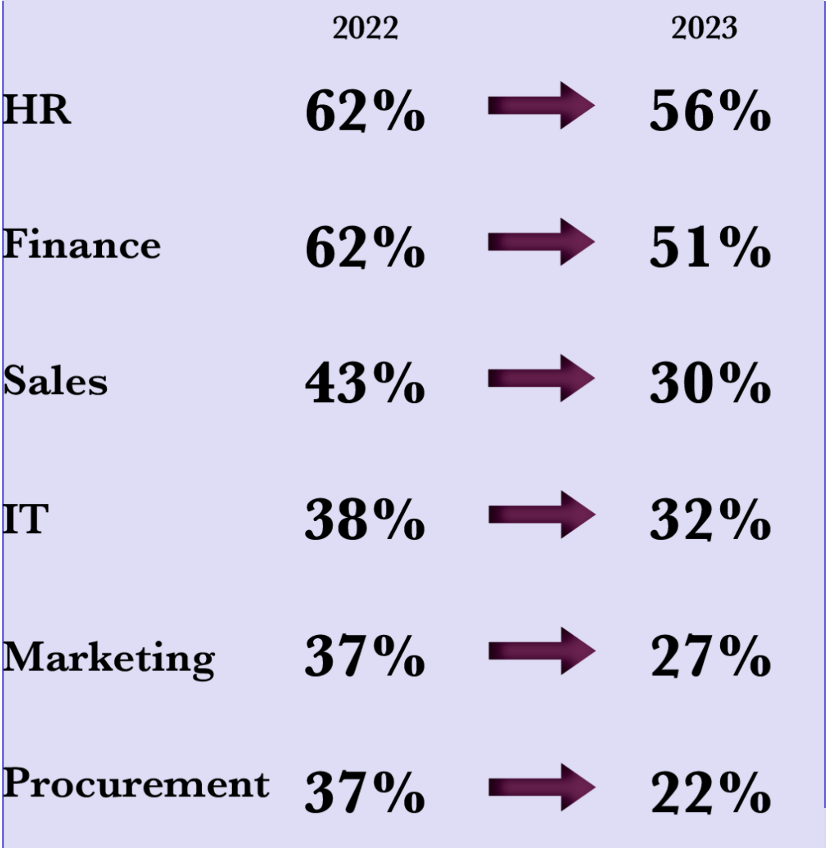
Over the span of one year, the percentage of corporate employees that believe Legal works well with their internal function has declined across all areas:

Allen believes that as companies need to rapidly shift strategies due to changing business conditions and technologies – significant transformations all around – Legal’s responsibilities can become overwhelming.

“Again, everything has become more complex,” Allen says. “Teams have less and less capacity to try to respond to their internal constituents. There is more on the legal function, and frankly, they are not getting much more headcount or budget. I think these numbers are the result of that.”

The first two takeaways can deliver both good and bad news: Legal does have a positive reputation as the protector of the business — however, relationships with other departments across the organization are strained. The next point directs us to where Legal needs to go: 56% of respondents said that Legal can have a “positive effect” on revenue operations.

Allen points to three key takeaways from this statistic:

  • It’s indicative of leadership turnover. “Over the past year, we’ve noticed more turnover in the CLO / GC community,” Allen says. “These new folks want to set strategy, and they are doing a great job about being strategic — not only managing the bottom line but adding to the top line revenue and making sure that the rest of the company sees and feels their efforts.
  • It’s indicative of new Legal organizational leadership. “Another trend is seeing more GCs and CLOs move into C-suite roles,” Allen says. “That cites just how much of the business they know and how companies can see Legal as a revenue driver that knows the organization inside and out.”
  • It’s indicative of Legal’s work in contracting. “Legal helps drive improvements in the contracting process — leveraging data tools, looking at trends, increasing efficiency, and boosting the speed- to market,” Allen says. “The business feels it immediately. They are helping the top line and hopefully leveraging data and insights to see who they should collaborate with — and who they should not. I think that top-of-the-house legal leaders, if they think strategically in that direction, will change the name of the game of how Legal is viewed within the organization.”

Click here to view the rest of the interview.

Empowering Legal Departments: Onit Named as a Leader in IDC MarketScape for Enterprise Legal Management Software 

In a world where businesses face macroeconomic pressures to demonstrate value in new and visible ways, Onit is a dedicated partner in the journey. Legal’s impact is now, and Onit is at the forefront of ensuring that impact is transformative, efficient, and growth oriented. 

As a longstanding provider of enterprise legal management (ELM), contract lifecycle management (CLM), and business process automation tools, Onit is proud to announce its recognition as a Leader in the IDC MarketScape: Worldwide Enterprise Legal Management Software (Doc #US49842023, August 2023).  

“We are honored to be named a leader in enterprise legal management solutions,” commented Eric M. Elfman, CEO and co-founder of Onit. “At Onit, our mission has always been to empower legal professionals to do their best work through more intelligent and efficient workflows. We will continue to invest in innovation to deliver leading solutions that help legal departments drive material impact.” 

A Portfolio of Solutions for Legal Departments of All Sizes  

With solutions for businesses of all sizes, Onit enables legal departments to modernize workflows, improve operational and cost efficiency, and contribute to faster revenue generation and business growth.

Onit’s commitment to empowering legal professionals is reflected in its diverse portfolio of solutions designed to cater to legal departments of all sizes. Onit has continued to enhance its portfolio to include the following: 

  • OnitX: The next generation of Onit’s highly configurable platform for automating complex legal workflows for enterprise legal management and contract lifecycle management  
  • Onit Catalyst: A family of AI-enabled products purpose-built to elevate the impact of ELM and CLM solutions  
  • SimpleLegal: Tailored for the mid-market, this ELM solution brings transparency and management to e-Billing, matters, vendors, and reporting 
  • ContractWorks: A modular, out-of-the-box solution to manage contracts and legal documents at specific contracting stages or across the entire contract lifecycle 

Customer-Driven Innovation 

Onit’s mission extends beyond technology – it’s an organization that values the voice of customers. The naming as a Leader in the IDC MarketScape report follows a period of customer-driven innovation, including: 

  • Smarter spend management: OnitX Spend Management’s integration with Onit Catalyst empowers legal operations teams with external benchmarks for quicker, data-informed decisions on timekeeper rate approvals. 
  • Complete European ELM solution: OnitX Matter Management’s integration with Onit BusyLamp offers European corporate legal departments a flexible and configurable means to manage legal matter workflows, addressing specific currency, regulatory, and tax requirements. 
  • Seamless litigation compliance: OnitX Legal Holds Management streamlines litigation compliance management and reduces the risks associated with pending litigation. 
  • Visual forms builder: Build custom applications powered by the OnitX workflow engine to address simple legal-related requests like invention disclosures, trademark or logo usage and data breach incident reporting. 
  • Smarter contract lifecycle management: Onit Catalyst ReviewAI and Catalyst Contract Extraction help streamline the contract lifecycle pre- and post-signature processes by using AI to review contracts and extract essential data — such as key terms and obligations, dates and other relevant information — to quickly identify contract risks and opportunities. 
  • Application and data integrations: OnitX leverages scalable technology from Workato, an industry-leading iPaaS technology provider, to integrate with applications such as Salesforce, SAP Ariba and Microsoft 365 so users can work in their preferred tools while data flows into other critical business systems that support revenue and operating expense management. 

Elevating Legal’s Role Within the Enterprise  

Legal is most often viewed as a stellar guardian of the enterprise and outstanding advisor — yet its perception as a business partner is not quite as golden. In the 2023 Enterprise Legal Reputation (ELR) Report, four in five (78%) corporate employees perceive Legal’s enduring image as a trustworthy protector of the business that imparts sage advice. Yet even though respondents view Legal as an authority figure and business protector, nearly three in four (73%) do not consider Legal an approachable business partner. In fact, many view Legal as a “bottleneck,” as “adding unnecessary roadblocks,” or “simply expect to experience holdups” when interacting with legal teams. As a result, relationships between Legal and its internal clients have declined year-over-year (YoY) in every department — by almost 10% in HR, 18% in Finance, 30% in Sales, 27% in Marketing, and 41% in Procurement. 

Onit’s mission is to elevate Legal’s stature within the enterprise by automating business-critical workflows that drive material impact,” said Scott Wallingford, President of Onit’s Enterprise Business. “With the next generation of our platform in OnitX and key product updates from Onit Catalyst, customers can optimize legal workflows across their entire enterprise — from ELM functions like matter and spend management to CLM functions like contract management and review. Macroeconomic pressure influences enterprise functions to show value in new and visible ways, and we’re partnering with our customers to do just that. Legal’s moment of impact is now.” 

Additional Resources 

For more company news, industry trends and best practices from corporate legal innovators, read the Onit blog and follow us on LinkedIn