
Resource Type: Checklist

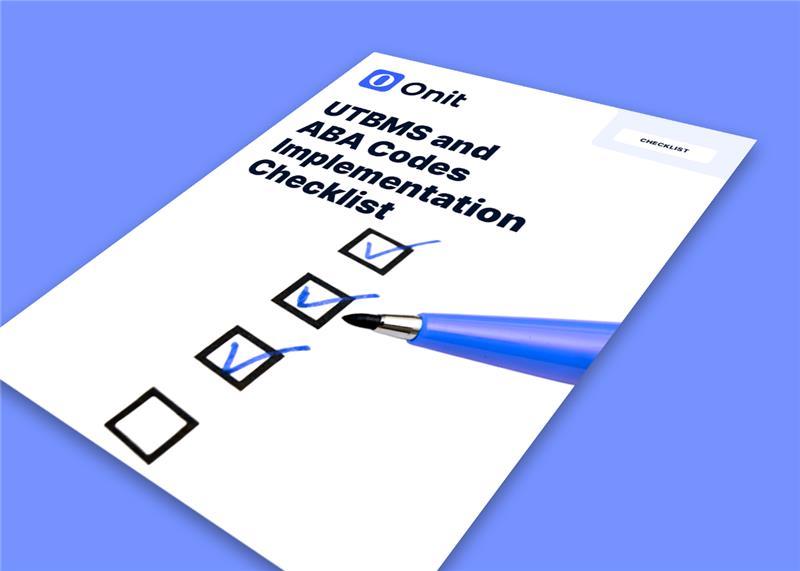
Get UTBMS implementation right the first time

A step-by-step checklist to standardize coding, reduce errors, and ensure billing compliance across your firm.

Rolling out UTBMS and ADA codes isn’t just a billing update. It’s a workflow change across your entire legal team.

Without a clear process, you’ll end up with inconsistent coding, frustrated attorneys, and invoices that still get rejected.

This checklist walks you through exactly how to implement UTBMS and ADA codes in a way that actually sticks.

What you’ll learn

  • How to map your current timekeeping to standard UTBMS phases and tasks 
  • How to configure billing systems to enforce proper code usage 
  • How to automate validation and catch errors before invoices go out 
  • How to train attorneys and staff to use codes correctly from day one 
  • How to audit, review, and maintain compliance over time 

Most teams don’t fail because they don’t understand UTBMS. They fail because implementation is inconsistent.

This checklist helps you avoid rework, reduce billing friction, and create a process your team actually follows.
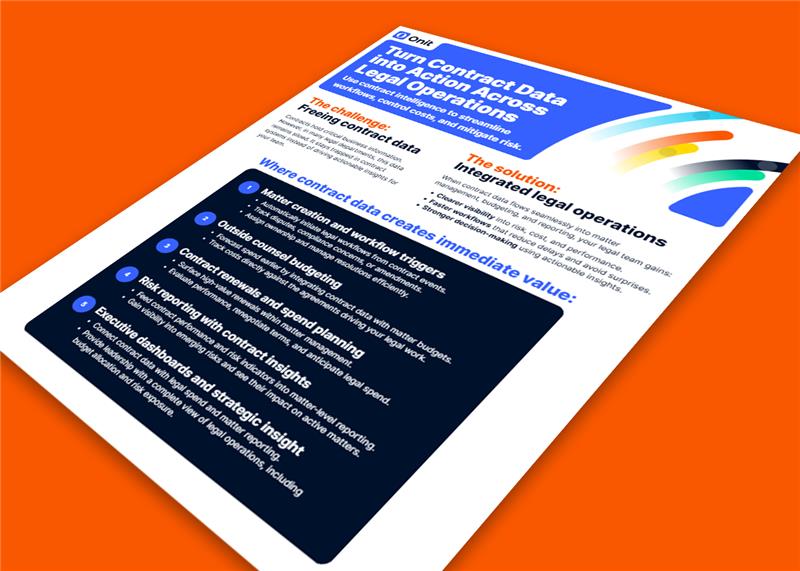
Turn Contract Data into Action Across Legal Operations

Use contract intelligence to streamline workflows, control costs, and reduce risk.

Contracts hold critical business data, but in most legal departments, it stays siloed instead of driving decisions. When that data connects to your legal operations, your team moves faster, sees risk earlier, and makes better decisions with real context.

  • Clear visibility into risk, cost, and performance
  • Faster workflows triggered by contract events
  • More predictable spend tied to real obligations

A more connected legal function starts with data that actually works for you, not against you. Bring contracts, matters, budgets, and risk into one connected view so your team can operate with clarity, control, and confidence.

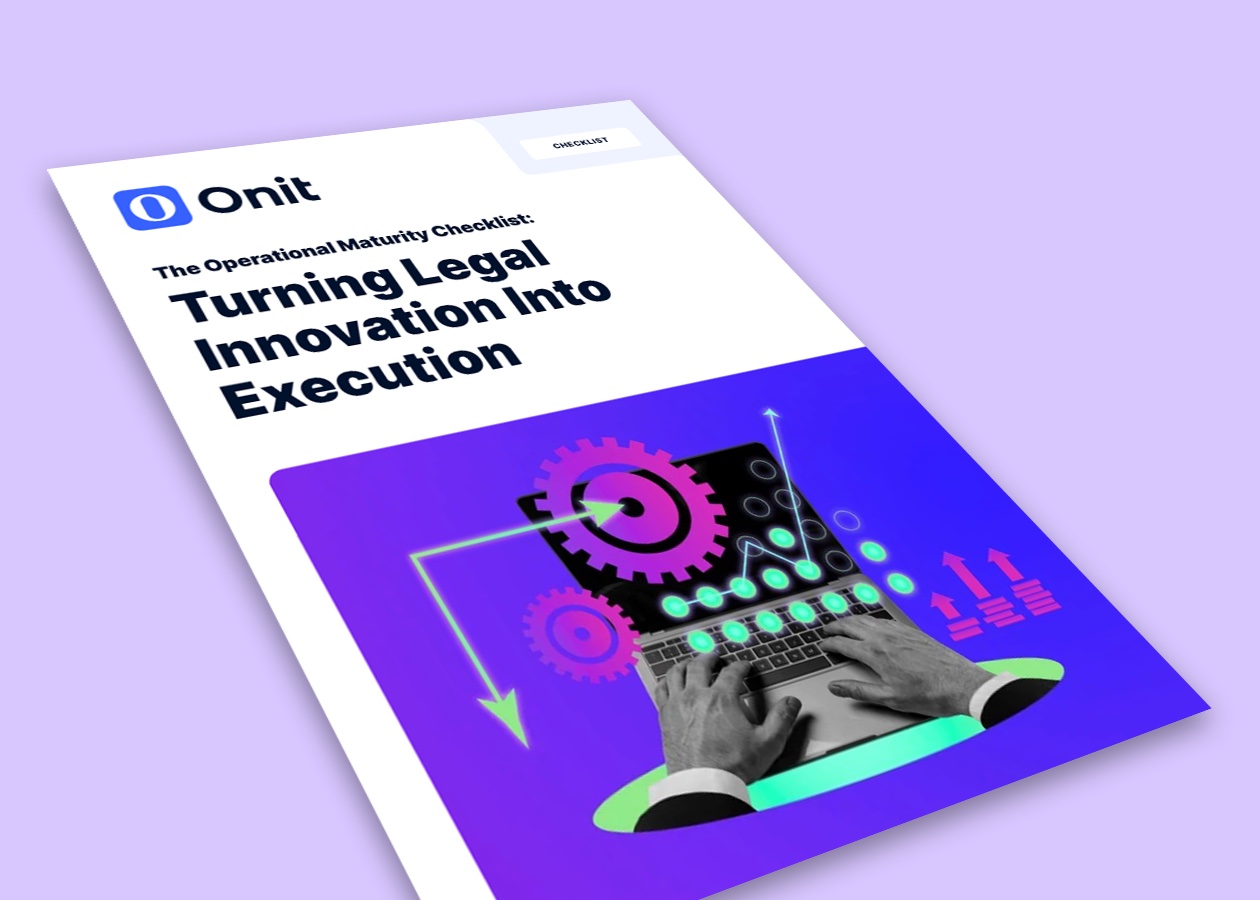
The Operational Maturity Checklist

A reality check for legal teams serious about execution, not just innovation. 

Legal teams aren’t short on technology. It’s lacking traction. 

They’re investing in AI, automation, and modern platforms. But transformation still stalls when adoption lags, workflows break down, and new systems never fully take hold.

This checklist helps legal operations teams assess where execution is breaking down and why. 

 Built from real-world insights shared by legal ops leaders, this isn’t theory.  It’s a practical framework to help you diagnose friction, align your team, and turn investment into impact. 

 Use it to see how work really moves across your organization, where it slows, where it fails, and where it never starts.

In this checklist, you’ll learn how to:

  • Identify gaps in stakeholder alignment and internal trust
  • Assess whether your processes are ready for change before introducing new technology
  • Spot where broken workflows are limiting adoption and impact
  • Understand what operational maturity really looks like in practice
  • Evaluate your team’s readiness to integrate AI into legal workflows

This checklist is designed for legal ops leaders who want to move beyond implementation and build a function that actually executes.

Vendor Management Without the Headaches

A quick self-check for legal ops teams

If vendor management feels harder than it should, it probably is.

Invoices come in from everywhere. Approvals stall. Firms follow up on payments. Finance wants answers you can’t pull quickly. None of that is unusual. But it is a sign your current process is creating friction behind the scenes.

This quick checklist helps legal ops teams spot where vendor management breaks down and what those gaps are really costing you in time, money, and credibility.

In this checklist, you’ll get a sanity-check on:

  • How invoices enter your system and who owns approvals
  • Whether billing rules are enforced before errors hit your budget
  • Where payment delays are hurting vendor relationships
  • If your vendor and spend data can actually be trusted

If your team is still chasing invoices or managing vendors in spreadsheets, this checklist is a good place to start.

The Legal Service Request checklist

Onit Legal Service Request checklist cover featuring a directional sign labeled "FUTURE" and a modern building background, emphasizing the need to modernize legal intake processes.

Most legal teams don’t realize how much time and credibility they lose at the very first step of the workflow: intake. When requests come through email, Slack, or spreadsheets, you get chaos, not clarity.

Your intake process is more than a front door. It’s the foundation of how Legal serves the business. If it’s broken, the whole department feels it. This checklist helps you quickly spot the warning signs and see if it’s time for a change.

What’s inside

  • 8 quick checkpoints to assess your current intake process
  • A simple scoring guide to identify whether intake is efficient, slowing you down, or completely broken
  • Next steps to modernize, streamline, and bring visibility to every request

Why it matters

Intake goes beyond how work begins. It shapes how Legal is perceived across the company. A modern, structured approach gives you:

  • One centralized front door for all requests
  • Transparent status tracking for business partners
  • Smart triage rules and automation that save hours
  • Reporting and analytics to prove legal’s impact

Get the checklist

Take five minutes to see how your intake process stacks up and what to do next.

Is Your Legal Tech Still Working on Your Terms?

Person standing at a crossroads with arrows pointing in multiple directions, symbolizing choices and decision-making in legal operations management.

Legal ops is moving fast. If your tech stack feels slow, scattered, or stuck in the past, it might be time for a gut check.

This quick checklist helps legal teams spot the signals of friction, complexity, and uncertainty that often mean your tech is no longer serving the team. No fluff. Just a clear-eyed look at whether your tools are keeping up or holding you back.

Use this checklist if:

  • Simple tasks feel unnecessarily complex
  • Innovation has stalled and roadmaps are unclear
  • Your team is adapting to the platform instead of it adapting to you
  • AI features feel disconnected or surface-level
  • Support only shows up when something breaks

Modern legal ops needs a solution that is unified, AI-powered, and built to grow with you.

Gut check your tech stack. Confirm your direction. Move forward on your terms.

The Operational Maturity Checklist

A reality check for legal teams serious about execution, not just innovation. 

Legal teams aren’t short on technology. It’s lacking traction. 

They’re investing in AI, automation, and modern platforms. But transformation still stalls when adoption lags, workflows break down, and new systems never fully take hold.

This checklist helps legal operations teams assess where execution is breaking down and why. 

 Built from real-world insights shared by legal ops leaders, this isn’t theory.  It’s a practical framework to help you diagnose friction, align your team, and turn investment into impact. 

 Use it to see how work really moves across your organization, where it slows, where it fails, and where it never starts.

In this checklist, you’ll learn how to:

  • Identify gaps in stakeholder alignment and internal trust
  • Assess whether your processes are ready for change before introducing new technology
  • Spot where broken workflows are limiting adoption and impact
  • Understand what operational maturity really looks like in practice
  • Evaluate your team’s readiness to integrate AI into legal workflows

This checklist is designed for legal ops leaders who want to move beyond implementation and build a function that actually executes.