

Resource Type: Guide

Navigating Higher Ed Sticky Spots 

Practical ways legal and administrative teams can reduce bottlenecks, improve visibility, and keep campus work moving

Every college and university faces “sticky spots” that slow progress across campus. From research agreements waiting on approvals to contract bottlenecks, outside counsel spend tracking, and last-minute reporting requests, legal and administrative teams are being asked to support more stakeholders with limited resources. 

In this guide, you’ll explore six of the most common operational challenges higher education institutions face today and learn practical strategies for creating more efficient, transparent, and connected processes. Discover how leading institutions are reducing manual work, improving accountability, and gaining the visibility needed to support faculty, administrators, researchers, and campus leadership. 

In this guide, you’ll learn how to: 

  • Bring order to requests coming from across campus  
  • Keep approvals moving without losing accountability  
  • Reduce delays in contract review processes  
  • Gain better control over legal spend  
  • Eliminate reporting fire drills  
  • Create capacity without adding headcount 

From Spreadsheets to Spend Control: The ROI Legal Teams Actually See

See how investment firms are improving legal spend visibility, reducing outside counsel costs, and uncovering measurable ROI with connected legal operations.

As transaction volume grows, legal spend becomes harder to track across funds, portfolio companies, entities, and outside counsel relationships. This guide explores how capital markets legal teams are moving beyond spreadsheets and disconnected tools to gain better visibility, tighter cost control, and more predictable outcomes.

In This Guide, You’ll Learn:

  • Why legal spend becomes harder to control as firms scale
  • How disconnected processes create hidden cost leakage
  • The limitations of relying on spreadsheets and standalone AI tools
  • Strategies for improving billing accuracy and approval efficiency
  • How connected legal spend management drives measurable ROI

Why AI Alone Won’t Fix the Sticky Spots in Your Workflow

Learn why investment firm legal teams still face workflow bottlenecks despite adopting AI and what it takes to eliminate friction across legal operations.

AI can help legal teams work faster, but it can’t solve disconnected processes on its own. This guide explores the workflow “sticky spots” that slow down investment firms and explains why connected data, systems, and workflows are essential for unlocking the full value of AI.

In This Guide, You’ll Learn:

  • Where workflow bottlenecks commonly appear across legal operations
  • Why disconnected systems create delays and rework
  • Where AI tools help and where they fall short
  • How connected workflows improve visibility across matters and spend
  • Practical ways to support faster decisions and deal execution

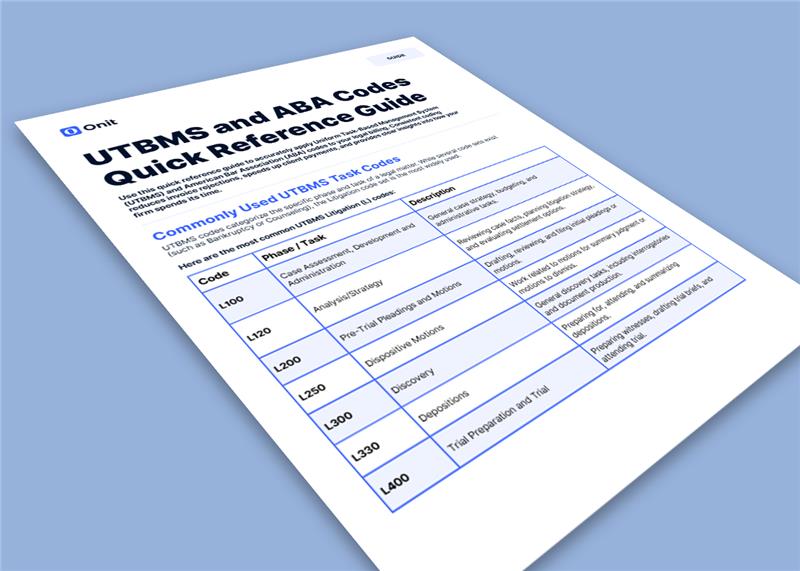
Stop second-guessing your billing codes

A quick reference guide to UTBMS and ADA codes so your team can code accurately, reduce invoice rejections, and keep billing moving.

Legal billing shouldn’t slow your team down. But when UTBMS and ADA codes aren’t applied consistently, invoices get rejected, time gets written down, and payments get delayed.

This quick reference guide gives your team a fast, reliable way to apply the right codes without digging through documentation or guessing.

Whether you’re reviewing invoices or entering time, this is the resource you keep open while you work.

What you’ll get

  • Common UTBMS litigation task codes with clear descriptions 
  • Frequently used ABA activity codes and when to use them 
  • Real-world billing examples that show how codes and narratives align 
  • Practical tips to avoid common mistakes like block billing and mismatched descriptions

Consistent coding does more than clean up invoices. It speeds up approvals, improves visibility into legal spend, and reduces friction with outside counsel.

This guide helps your team get it right the first time.

Skip the Sticky Spots: Smarter ways legal ops gets to the win faster

Legal operations teams don’t stall because they lack tools. They stall because the tools they have don’t share context. Work slows at the exact moments when information needs to move between systems, teams, or decisions — and those friction points are costing more than most teams realize.

This guide identifies where those sticky spots appear, why they persist, and how connected legal workflow management removes them. It examines the transitions that create the most friction: from request to matter, matter to spend, contract tracking to obligation monitoring, and reporting that requires manual reconciliation before anyone can act on it.

You’ll walk away with a clearer picture of where your workflows are losing momentum, why adding more tools or process often makes it worse, and what it looks like when information finally flows with the work instead of lagging behind it.

In this guide, you’ll learn how to:

  • Identify the sticky spots where work most commonly slows or stalls
  • Understand why disconnected tools create manual work rather than eliminate it
  • Recognize the transitions that drain capacity and undermine confidence in your systems
  • See how AI helps surface patterns, flag risk, and reduce the need for manual intervention
  • Understand what it looks like when legal ops shifts from reactive to proactive

This guide is for legal ops teams who want to move faster without adding steps, headcount, or workarounds.

The Legal Spend Spiral

Early signals teams see too late 

Legal spend doesn’t spiral out of control all at once. It builds quietly through patterns that go unnoticed until forecasts miss, invoices pile up, and leadership starts asking hard questions. 

This easy-to-read guide helps legal operations teams recognize the early signals that drive spend higher long before it shows up in a budget review. It explores how disconnected systems, manual review, and lagging insight contribute to unpredictability, and why teams often feel blindsided even with years of data at their fingertips. 

You’ll walk away with a clearer understanding of where legal spend pressure actually starts, how it accelerates, and what separates reactive legal reporting from earlier, more confident decision-making. 

In this guide, you’ll learn how to: 

  • Identify early signals that quietly drive legal spend upward 
  • Understand why traditional reporting catches problems too late 
  • Recognize patterns across intake, matters, and invoices that indicate rising risk 
  • See where manual review creates blind spots instead of control 
  • Understand how AI-native approaches are changing when and how spend insight shows up 

This guide is designed for legal ops leaders who want greater predictability without adding more process, more people, or more noise. 

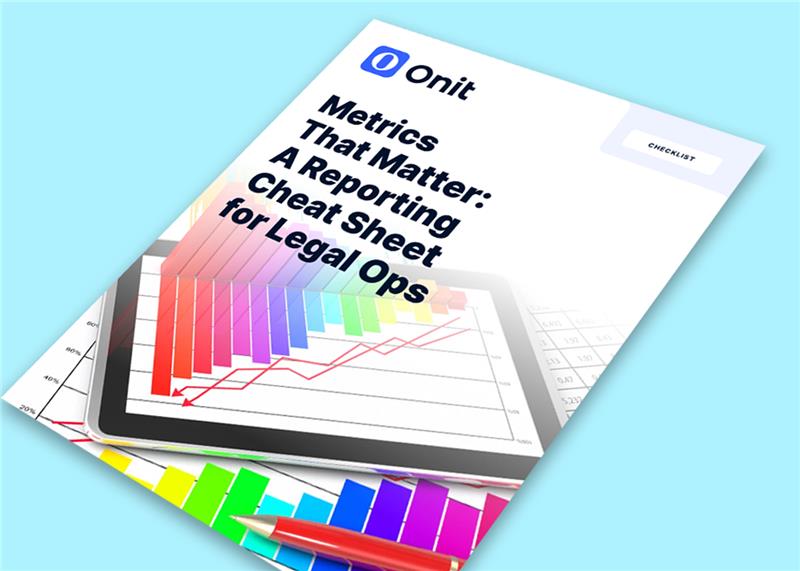
Metrics that matter: A reporting cheat sheet for Legal Ops

Legal ops teams don’t need more data. They need the right data. The kind that clearly shows leadership how legal contributes to the business.

This quick cheat sheet highlights the core reporting metrics legal ops teams rely on to show control, efficiency, and credibility without overcomplicating their reports.

Inside the guide, you’ll find:

  • Spend to budget metrics that demonstrate financial control
  • Billing compliance metrics that reduce friction and rework 
  • Vendor mix and performance metrics that turn outside counsel management into measurable outcomes
  • And more!

Use this cheat sheet to guide your next report, quarterly review, or leadership conversation and keep your reporting focused on outcomes, not noise.

Download the guide

Connected Legal Operations Starts with the Right Foundation

Make Your Move Legal Ops Maze _ Cover Image

A practical guide to building legal operations that connect spend, data, and decision-
making.

Legal teams are expected to deliver clearer insight and stronger control while managing
growing complexity. Disconnected systems make that harder than it needs to be.

This guide outlines what connected legal operations look like in practice and how
enterprise legal management supports visibility, coordination, and better decision-
making across the legal function.

You’ll learn:

  • What connected legal operations really mean day to day
  • How enterprise legal management brings spend, matters, and reporting together
  • Why disconnected tools slow insight and planning
  • The foundational capabilities modern legal teams rely on

Built for legal operations leaders and in-house legal teams responsible for visibility,
reporting, and planning.

Download the guide

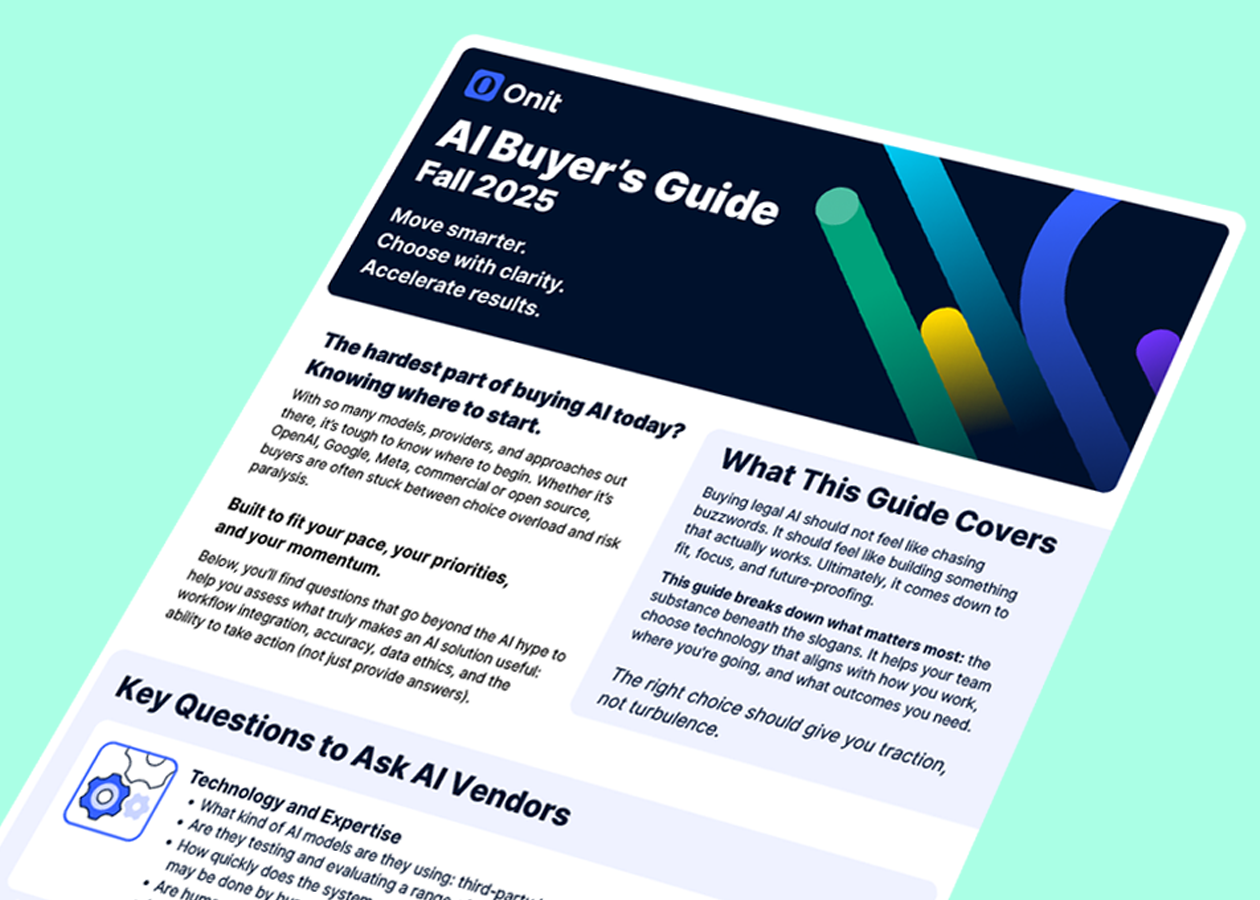
Ask Better Questions. Get Better AI.

AI Buyer's Guide - Fall 2025 Cover Image

The legal AI market is full of big promises, shifting standards, and fast-moving innovation. But what most teams need right now isn’t more hype. It’s clarity.

The AI Buyer’s Guide helps legal teams and procurement leaders make smarter, faster decisions about artificial intelligence. Whether you’re comparing vendors, exploring use cases, or simply figuring out where to start, this guide gives you the questions to ask, the red flags to avoid, and the context you need to move forward with confidence.

From integration and privacy to performance and long-term vision, this guide focuses on what matters most and leaves the buzzwords behind. If you’re evaluating AI for legal, this is where to begin.

The CFO’s Guide To Document Retention

As Chief Financial Officer, you’re tasked with organizing all your company’s financial paperwork to protect it from penalties, civil lawsuits, and even criminal charges.

All that paperwork – both physical and electronic – can really add up as your company grows, but it’s not always easy to know what you need to keep. 

Download this guide to learn:

  • What to save
  • How long to save it
  • Best practices for properly storing critical information
  • Penalties for improper record keeping and poor document retention

Access your copy by completing the form on the right and clicking “Download Now.”