Category: Business Process Management

New Podcast: A Simple Way to Automate Business Processes

Onit is excited to introduce our latest podcast! In this episode, Jonathan Powers discusses Onit’s Apptitude solution (a business process automation platform), and how he loves empowering people who will be building solutions on the platform. Jonathan begins by succinctly illustrating how Apptitude is sort of a “blank canvas” on which clients can “paint” to solve specific problems. Expanding on this theme, he describes how clients can configure Apptitude to solve business process management problems. There are no vertical specific objects built into Apptitude; in other words, it doesn’t know what a contract is, or a legal matter, etc., but rather the client (or Onit) teaches it what those things are, and then productizes their configuration. This then becomes the starting point for future projects, such as e-billing, matter management, legal holds and contract management solutions.

Jonathan goes on to provide some good examples of solutions developed on Apptitude such as legal service requests, phased-based budgeting and matter management reports. He wraps things up by reinforcing that Apptitude is a tool for solving your problems, and why automating solutions shouldn’t be a frightening or intimidating proposition.

Onit’s Apptitude provides the foundation for solutions across your business. Apptitude has transformed some of largest global companies to become more agile, efficient and effective. In fact, Apptitude has more than 100 pre-built business process management actions available to build workflows.

Solutions are easy to create with Apptitude, and some workflows can be implemented in less than 30 minutes. Apptitude is an innovative tool that makes it easy to create, modify and deploy new processes with robust workflow, transaction management and reporting capabilities. Using Apptitude, Onit helps customers solve real business problems without the need for costly support, training or IT infrastructure.

We have more podcasts coming your way soon, and we look forward to your joining us! Here is a link to this podcast.

Five Must-Have Features in a Workflow, Process & Collaboration Platform

Business process automation (BPA) platforms have been around for years. It can be an overwhelming task trying to decide which one is just right for your business. When it comes to state-of-the-art enterprise solution (or “app”) development, you must have the workflow, process and collaboration platform that is the best fit. In other words, software also needs to fit the collaborative way that business is now done. These are the reasons that a cutting-edge, collaborative platform is critical.

We now almost take for granted certain features we need in such a platform: no-code configuration, rapid value delivery, responsive user interface, and adaptive end user experience. But it should also be highly human-centric with certain simple capabilities — a simple intake form, a shared workspace, configured and ad hoc workflow, and a dashboard to view all of your transactions.

The platform should centralize all data, notes, documents, conversations and email threads in one location. Business teams should have real-time visibility into the process—whether it is a contract negotiation, NDA request or sales quote approval. It should easy to configure custom forms, fields, checklists, workflows and process tracking capabilities with the flexibility to make changes and improvements in-stream as often as required.

So, knowing the basic things needed, what are five features that you need to be looking for in the best BPA platforms?

  1. Short Development Time  A simple process pilot can be ready for implementation in hours and in production within days.
  2. Flexible Technology that provides business users with the flexibility to route, comment, revise and track progress of the project to accommodate the variability and unpredictability inherent in knowledge work.
  3. Standard Intuitive Interface  A simple intuitive interface allows the user to focus on the “process” instead of the application.
  4. A Hands-On Approach  Business users can optimize their processes quickly using an agile approach, unlike traditional software customization that requires the development of process maps and workflow design.
  5. Cost Savings – Solutions developed with the platform should be a fraction of the cost of standard business process automation software and traditional enterprise systems.

We fully agree that the task of finding just the right BPA platform can be daunting, to say the least. But if you proceed in your quest armed with the knowledge of what you need to be looking for, you’re already a giant step ahead.

To learn more about Onit’s Apptitude platform, listen to our most recent podcast.

Onit and Client Archer Daniels Midland (ADM) Featured in Legal Evolution

After Onit’s and Archer Daniels Midland’s (ADM) joint ACC Value Challenge 2017 win, you’d think the smoke would’ve started clearing by now. Imagine our surprise when we saw the fantastic write-up by Bill Henderson in Legal Evolution, titled, “Successful technology adoption: David Cambria (ADM) and Eric Elfman (Onit) Discuss their Collaboration.“

The article encapsulates how Onit collaborated with ADM on a high-profile global legal technology project. ADM’s legal department needed workflow automation that didn’t require their lawyers to change, and also substantial productivity gains. By partnering with Onit, ADM was able to leverage technology and their new platform solution to reach all corners of the law department beyond legal and spend management.

Henderson also offers an enticing look into how Onit came into being and touches on how the book “Crossing the Chasm” by Geoffrey Moore, had significant influence on Eric M. Elfman, CEO and co-founder of Onit. The thesis of the book is the “big fish, small pond” strategy, which suggests that companies should focus the efforts of key personnel on a niche market. Having done this and then developing a “whole product” solution, the company can then cross the chasm into mainstream.

The article also plays fair and mentions the high risks involved when small companies try to cross the chasm by attempting to focus on niches like legal technology. This in mind, Henderson ended his write-up by noting an observation that Elfman made, “…technology startups are essentially a series of experiments until something works or you run out of money.” Good for Onit that things worked well.

Click here to read the entire article. To read more about our joint ACC Value Challenge win, click here.

Gogo Goes Live with Onit’s Enterprise Legal Management and Contract Lifecycle Management Solutions

We’re excited to announce that Gogo, the leader in commercial and business aviation broadband connectivity, is now using Onit’s Enterprise Legal Management (ELM) and Contract Lifecycle Management (CLM) solutions.

“It’s an honor to add Gogo to our rapidly growing list of satisfied clients. It’s also worth pointing out that the Gogo implementation was not only highly successful for everyone involved, but it was also a rather unique one,” says Eric M. Elfman, founder and CEO of Onit. “After going live with the ELM solution, they then quickly went live with the full CLM package. Users can quickly switch back and forth between ELM and CLM at any time. The implementation team went their usual extra mile on this project, and I am extremely pleased with their accomplishment at Gogo.”

Gogo, a company providing superior connectivity and entertainment in the aircraft industry, first went live with Onit’s ELM solution. Their ELM solution is not only a system of engagement, but also comprehensive and highly flexible in the sense that additions can be made quickly. And this was the case with Gogo – shortly after they went live with ELM, they added CLM and went live with that as well.

To see the full press release, click here.

Onit Recognized as a Market Leader in Process Automation and Enterprise Apps by Hyperion Research

Onit is pleased to announce it has received special recognition of its Enterprise Legal Management (ELM) solutions in the 2017 MarketView™ Report on Enterprise Legal Management by Hyperion Research, a leading analyst-based market research firm covering the ELM market. Onit was recognized as a Market Leader in the categories of process automation and enterprise apps and Highly Innovative for its system architecture.

According to the report, “Onit’s vision closely aligns with market demand for a more fulfilling and dynamic user experience. Onit is positioned as a disruptive alternative to the traditional ELM ecosystem…the company’s rapid growth and market acceleration speaks strongly to the enthusiastic reception of its innovative ELM paradigm across the legal ops spectrum.”

Hyperion also underscored some key advantages of the company, “In a direct challenge to the prevailing matter management model, which Onit believes encumbers companies with outsize investments in large applications with features they may not want and won’t use, Onit presents a familiar app-based approach to legal operations management by breaking up ELM into individual task- based solutions and processes.” Further endorsing Onit’s leadership in this market, Hyperion also stated, “Onit’s matter and spend management apps themselves offer the strong functionality one would expect from a leading system.”

The full press release is available online.

Ring in the New Year With Some of Onit’s Favorite Blogs From 2017!

A lot has happened in the life of Onit during the past year. We hit our strategic milestone objectives, put even more incredible success stories under our belt, hired a lot of new talent, and continued our thought leadership role in this field. To ring in 2018, we’d like to offer a compilation of some of our favorite solution-related blogs from the past year.

Here they are, starting with most recent:

Listen to Onit’s Podcast on Contract Lifecycle Management
Onit is excited to announce the premiere of episode 2 of our new podcast series! In this episode, Reagan Haisler discusses Onit’s Contract Lifecycle Management (CLM) solution. Starting with the unveiling of Onit’s new CLM solution at the ACC Annual Meeting in October, Reagan goes on to offer an overview of CLM. He also talks about what sets Onit apart from other CLM providers, as well as why automation is necessary to an organization. With the assurance that automation shouldn’t be a “scary” proposition at all, Reagan also reveals how a cutting-edge CLM solution allows knowledge workers to get about the business of doing what they do best – the “real” knowledge work.

Six Features of the Best Contract Management Solutions
Contract management. If there are two words that can make you cringe, it has to be those two. But contract management is part of life, and it’s crucial that organizations have better visibility into where a contract is, how long it’s been there, and when it’s expected to be completed. That’s especially true now that financial reporting is required to improve contract compliance and enhance operational efficiency. Businesses that implement a transparent contract management process compress their time to revenue; mitigate risks by having fewer contractual exceptions, and increase customer satisfaction.

Six Features of the Top Enterprise Legal Management Solutions
When shopping for an enterprise legal management (ELM) solution, you need to ensure that it can be built around the way your teams work. After all, you’re trying to streamline your operations and avoid the old standards of relying on email and spreadsheets to get the job done. In today’s fast-paced legal settings, lawyers need to be able to work faster, smarter and more efficiently, and the best way to do it is by automating law department processes.

Five Must-Have Features of a Contract Lifecycle Management Solution
Contracts directly impact your ability to meet sales goals and execute on corporate initiatives. But managing the lifecycle of a contract — from review to approval to execution to renewal — involves a lot of departments, and those departments often don’t have access to the same systems. Businesses that implement a transparent contract management process compress their time to revenue; mitigate risks by having fewer contractual exceptions, and increase customer satisfaction.

Five Must-Have Features of an Evolving Business Process Platform
Every organization needs a business process platform that can grow beyond the legal department and automate all of your enterprise process needs. While it’s okay to acquire traditional, individual enterprise process solutions as you need them, there is much to be said for platforms that are built with change in mind and designed to evolve your processes.

Paradigm Shifts Shouldn’t Be Ignored: The Case for ELM
For quite a few years, enterprise legal management (ELM) has focused on matter management and spend management.  It’s fair to say that effective ELM platforms were, and still are, good at what they do best – only matter and spend management.  But many of these platforms were designed solely for storage and access of data; not a whole lot more than that.  This is the problem, and these systems need to be laid to rest.

Six Features of Focused Contract Management Solutions
Traditional “all-in-one” contract management (CM) software solutions can be astonishingly expensive, cumbersome, and don’t always work well in legal departments. User experience can be sub-par, and such a system is hard to change when it needs to support a new business initiative. CM should be visible to many areas of an organization, and that data should be both easy to find and logically stored. Legal needs to be able to work together with procurement, sales and others to function at full capacity. Additionally, the contract review process needs structure to avoid miscommunication and missed opportunities. Is your organization lacking in one of these areas?

The New Generation of Process Automation: Collaborative Capability Fuels Success
Business process automation has been around for decades and is now considered old news. Someone pushes a button and the automated “system of record” process starts. But nowadays more is needed than simply tracking the data. Daily interactions that occur between groups and departments require tools that clearly define, track, and report on who is responsible at each step and who is taking over. In short, built-in, collaborative processes are desperately needed.

Game Changing Features of Leading ELM Solutions
There have been some pretty momentous game changers in the world of enterprise legal management (ELM) solutions in recent years. I’ll take it a step further and tell you there has also been an evolutionary paradigm shift in ELM (but we’ll save that for another story).

Avoid the Black Hole at all Costs: Revive Your Ailing Contract Management Process
Contracts are the lifeblood of all business agreements — whether it’s buying or selling products, services or consulting agreements. As part of this process, someone must create a contract, negotiate the terms and ultimately store it where it can be accessed by other team members.

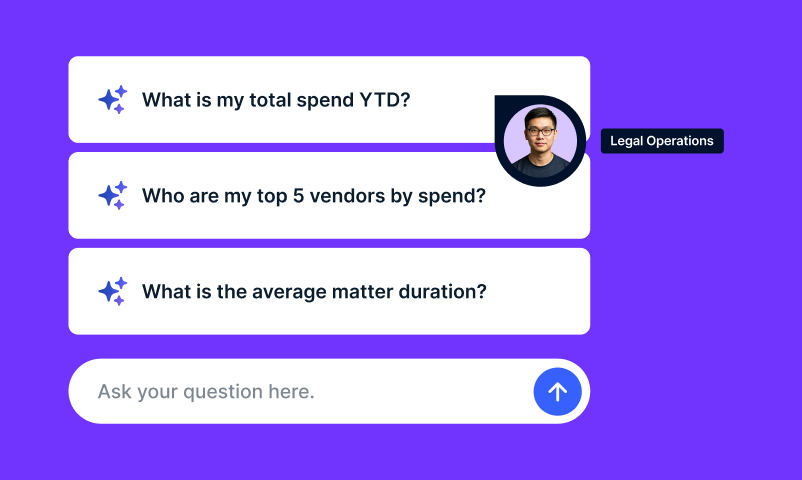
Six Benefits of the Top Enterprise Legal Management (ELM) Solutions

When shopping for an enterprise legal management (ELM) solution, you need to ensure that it can be built around the way your teams work. After all, you’re trying to streamline your operations and avoid the old standards of relying on email and spreadsheets to get the job done. In today’s fast-paced legal settings, lawyers need to be able to work faster, smarter and more efficiently, and the best way to do it is by automating law department processes.

Traditionally, ELM vendors have taken a databased-centric (system of record) approach in designing their solutions. However, and this cannot be over-emphasized, your competitive legal department needs a system of engagement – a system that supports the highly collaborative nature of your legal work. This in turn reinforces your business goals and ultimately, your bottom line.

So, what should you be looking for in your new ELM solution? We’ve chosen six key benefits that should be included in a cutting-edge system:

  1. Cost savings  You can realize substantial cost savings of between 4 percent and 7 percent of your outside counsel spend.
  1. Easier collaboration – Improved knowledge sharing and collaboration among internal and external team members allow you to be more responsive to clients and provides transparency to your operations.
  1. Enhanced performance – Aggregate all transactions and develop metrics around cycle times, work distribution and others at the portfolio, business unit and individual level that allow you to quickly shift to find efficiencies.
  1. Drive operational improvements easily – Unlike the development and implementation process for a large enterprise legal management system, which can take several months or years, our implementation process is faster so you can see ROI quicker than other ELM vendors promise.
  1. Robust reporting – Track total spend by law firm and matter type and create reports in various formats (i.e. line graph, bar graph, pie chart).
  1. Flexibility  As your intake process evolves so can the tool. Adding a new approver or creating business logic to route matters or business documents to the appropriate reviewer can be done quickly without involving IT.

There are many other benefits of the best ELM solutions, so look around and find the system that best suits your organization’s needs. It will be time well spent, and will better ensure successful adoption of your new ELM solution.

Five Must-Have Features of a Contract Lifecycle Management Solution

Contracts directly impact your ability to meet sales goals and execute on corporate initiatives. But managing the lifecycle of a contract — from review to approval to execution to renewal — involves a lot of departments, and those departments often don’t have access to the same systems. Businesses that implement a transparent contract management process compress their time to revenue, mitigate risks by having fewer contractual exceptions, and increase customer satisfaction.

A contract lifecycle management (CLM) solution gives you complete control and visibility of your contracts, from review to approval to execution to renewal. The best CLM solutions simplify the submission, review, approval and management of contracts in one easy to use tool. No longer will your team members have to search their inbox or hard drive for the latest version or keep an Excel spreadsheet to manage their contracts.

Which features should you be looking for when considering various CLM solutions?

Five Must-Have Features of a Cutting-Edge Contract Lifecycle Management Solution

  1. Central Repository – A central location for all contract drafts, notes and communication is a must-have for a robust CLM system.
  2. Unified Intake Process – A simple intake form unifies the process and ensures the same process is followed each and every time. Depending on the drop down fields that are selected (i.e. contract value amount, location, etc.), workflow can be assigned to the appropriate team member or attorney for review.
  3. E-sign Capabilities – Users can electronically sign contracts and manage them in one easy-to-use tool.
  4. Usability – A tool is only good if your legal and business users “actually” use it. Having a user-friendly interface gives your team the information they need quickly and requires almost no training.
  5. Notifications – A comprehensive contract management system sends proactive alerts as the contract progresses through its lifecycle. This is critical as it can be configured to send alerts to all team members involved.

In the not-so-distant past, CLM may have been a major headache for everyone involved. On the bright side, the times have changed, and so should you. Start checking out the finest CLM solutions – the ones that will have your team thanking you for making their lives easier.

Five Must-Have Features of an “Evolving” Business Process Platform

Every organization needs a business process platform that can grow beyond the legal department and automate all of your enterprise process needs. While it’s okay to acquire traditional, individual enterprise process solutions as you need them, there is much to be said for platforms that are built with change in mind and designed to evolve your processes.

We call these “evolving” platforms because they allow you to easily develop and deploy your own enterprise process solutions as you need them – the sky’s the limit. The solutions developed on the best platforms can be configured, in some cases, in less than 30 minutes. They require no coding, which contributes to this lightning-fast time. They are also a fraction of the cost of traditional, dedicated process solutions. Some examples of solutions that can be easily built on these platforms include:

  • Sales contract tracking
  • SOW approval
  • Legal service requests
  • Legal e-billing
  • Matter management
  • NDA creation and review
  • Power of attorney
  • Matter intake
  • RFP response management
  • Legal hold management
  • Legal process outsourcing
  • Partnership agreements

These cutting-edge platforms combine business process management, collaboration and transaction management functionality into one innovative tool. It is easy to develop and deploy enterprise solutions that streamline business processes and solve real world problems which directly impact customer satisfaction, employee productivity and profitability. So, which features should you be looking for in an evolving process platform?

Five must-have features of gold-standard evolving business process platforms:

1. Unmatched Time to Value

The best platforms dramatically reduce time to pilot and time to value. Simple process pilots can be ready for implementation in hours and in production within days, so you can see ROI much faster.

2. Increased Flexibility


The best in breed of these platforms provide business users with the flexibility to route, comment, revise and track progress of the project to accommodate the variability and unpredictability inherent in knowledge work.

3. Standardized Intuitive Interface


Solutions developed with evolving business process platforms provide simple intuitive interfaces with standard features allowing the user to focus on the “process” instead of how the application works. This means that little or no training is required, radically reducing the time and cost of deployment.

4. A Hands-On Approach


The focus should be on learning the optimal process through feedback from rapid deployment rather than a customized and expensive development of complex process maps and workflow design that anticipate every possible contingency that may or may not occur.

5. Collaboration

Collaboration is vital for managing processes in any department. Team members need an easy way to communicate in a shared workspace, so everyone knows exactly what is going on without having to search in Outlook for status updates.

It’s time to fuel your company’s success and raise the bar in your process automation. Your organization needs to be able to streamline internal processes, gain greater visibility into transactions and improve operational efficiency. A state-of-the-art evolving process platform lets you easily bridge the organizational and geographic boundaries critical to your business, allowing you to see ROI much faster than with traditional systems.

Six Features of Focused Contract Management Solutions

Traditional “all-in-one” contract management software solutions can be astonishingly expensive, cumbersome, and don’t always work well in legal departments. User experience can be sub-par, and such a system is hard to change when it needs to support a new business initiative. Contract management should be visible to many areas of an organization, and that data should be both easy to find and logically stored. Legal needs to be able to work together with procurement, sales and others to function at full capacity. Additionally, the contract review process needs structure to avoid miscommunication and missed opportunities. Is your organization lacking in one of these areas?

What is needed are contract management solutions that are logically focused on particular aspects of contract management, such as contract lifecycle management, contract administration, or contract review and approval. In other words, you need a solution that is focused on yourparticular contract management needs. The best in breed of these solutions also allow you to expand the system as needed.

So what are six premium features that you should look for in a state-of-the-art, focused contract management solution? We’ve put together a quick-start list to help you move forward:

1. Quick Development Time

The best solutions are built to fill specific needs with great efficiency. It is easy to create, modify and deploy focused solutions with robust workflow, transaction management and reporting capabilities. These tools can be developed in as little as 30 minutes. They can be built as a business needs them, preventing costly delays. By building a new solution only when there is a need for it, the company saves money that would otherwise be wasted on solutions that just don’t work.

2. Rapid Deployment

While traditional contract management software has a lengthy deployment process that may take many months to complete, look for solutions that can be built and deployed in a few short weeks. The time to value provided by these solutions is unmatched, allowing greater agility by providing more immediate feedback.

3. Central repository

The ability to establish a searchable repository of all contracts, clauses and associated business information is critical. A single source for all sales collateral and other customer-facing content will make it easier for team members to find documents.

4. Usability

A simple, lightweight tool that only gives you the information you need and requires almost no training. It is intuitive and easy for anybody to use. Everyone will know exactly where contracts are in the process, who completed the last revision, what the next step is, etc. An iterative review process lets team members collaborate in a shared workspace.

5. Notifications

Notices can be easily configured to ensure compliance with notice provisions. The tool alerts the right people when required notices (e.g. price changes, renewal, or termination notices) are due, and ensures the highest level of visibility so you can manage to the most favorable terms.

6. Configurability

Modifications to the system can be made quickly without assistance from IT. By assessing the problem and building outward, organizations will not have to compromise existing initiatives to find value-building opportunities.

No matter the nature of your contract management problem, now is the time to be innovative. By assessing the problem and building outward, you won’t have to compromise existing initiatives to rescue your bottom line. If you already have a traditional contract management system in place, you can deploy focused solutions to fill the process and collaboration gaps. By implementing such cutting-edge solutions, an organization will free procurement, legal and sales to focus on adding value to the organization, as opposed to administrative tasks.