

Manual legal tasks slow teams down and quietly cap their potential. Legal departments are handling more matters, more invoices, and more scrutiny than ever before, all while being asked to do more with the same resources.
And yet, a surprising amount of legal work is still done by hand.
Not because legal teams don’t know better. But because manual processes tend to stick around long after they stop serving anyone. They feel familiar. They feel manageable. Until volume increases and the cracks start to show.
The result is slower workflows, frustrated professionals, and hours lost to manual legal tasks that technology could handle in minutes.
The teams moving ahead are not working longer hours. They are deliberately shedding the manual work that no longer makes sense. If your team is serious about scaling smarter, these are the manual legal tasks you need to stop doing now, and what to replace them with.
1. Reviewing invoices line by line
If invoice review still means scrolling through PDFs and eyeballing every line item, you have a scalability problem.
Manual invoice review is slow, inconsistent, and heavily dependent on individual judgment. Even experienced reviewers miss issues as volume grows. Over time, this leads to uneven enforcement, missed savings, and unnecessary friction with finance and outside counsel.
What to do instead: Move to exception-based review
Modern legal operations shift routine enforcement to systems and reserve human judgment for true exceptions. Policy-driven compliance checks can automatically surface billing guideline violations, duplicate charges, and unusual patterns before an invoice is approved.
This ensures consistent enforcement across every invoice while allowing reviewers to focus on decisions that actually require context. The result is faster review cycles, clearer insight into spend behavior, and less time lost to repetitive validation.
2. Tracking matters in spreadsheets
Spreadsheets feel flexible until they become fragile.
Manual matter tracking quickly leads to version control issues, missing information, and limited visibility. As matter volume grows, spreadsheets stop functioning as a source of truth and start introducing operational risk.
What to do instead: Create a connected system of record
Matter data should live in a centralized environment where status, documents, spend, vendors, and outcomes are connected. Real-time updates give legal leaders immediate visibility into workload and exposure without chasing updates or reconciling files.
This approach also protects institutional knowledge. When matter intelligence lives in a shared system rather than individual spreadsheets, teams remain resilient through growth, reorganization, and turnover.

3. Chasing approvals over email
Approval workflows built on email threads slow everything down.
Requests get buried, stakeholders miss messages, and legal ops teams spend time nudging instead of advancing work. These manual legal tasks create friction without improving outcomes.
What to do instead: Standardize policy-driven workflows
Centralized approval workflows replace inbox chaos with structure and accountability. Requests route automatically based on defined rules, status is visible at every stage, and approvals leave a clear audit trail.
This reduces turnaround time, lowers compliance risk, and gives leadership confidence that decisions follow consistent governance rather than ad hoc judgment.
4. Manually enforcing billing guidelines
Billing guidelines only work when they are applied consistently.
Manual enforcement after the fact leads to disputes, write-offs, and uneven application. Over time, firms learn where guidelines bend, which undermines both cost control and credibility.
What to do instead: Embed billing rules directly into review
Digitizing billing logic makes enforcement proactive instead of reactive. Issues are flagged automatically before approval, creating a predictable and neutral process.
This shifts conversations with outside counsel away from retroactive corrections and toward shared expectations. Consistent enforcement reduces friction, improves compliance, and eliminates recurring manual cleanup.

5. Re-entering the same data across systems
Copying data from one system to another is a quiet drain on productivity.
Manual data entry introduces errors, wastes skilled time, and undermines confidence in reporting. These tasks are often invisible, but their impact compounds quickly.
What to do instead: Eliminate data silos
Legal systems should operate as part of a connected operating environment, not in isolation. Matter, spend, and vendor data should flow automatically across legal and finance without re-entry or reconciliation.
When information is entered once and shared everywhere it is needed, teams gain accuracy, trust, and speed. This turns fragmented tools into a cohesive foundation for decision-making.
6. Managing vendors through inboxes and memory
Too many vendor decisions rely on anecdotal knowledge.
When performance, rate history, and outcomes are tracked informally or not at all, legal teams lose leverage and consistency. Strategic decisions become reactive instead of evidence-based.
What to do instead: Capture vendor intelligence through real work
Vendor insight should be derived from how firms actually perform across matters, not from separate scorecards or scattered notes. Structured data tied to outcomes, responsiveness, and spend patterns provides a factual basis for staffing and negotiation decisions.
This allows legal teams to reward firms that consistently deliver value and course-correct when performance falls short.
7. Pulling reports by hand every month
Manual reporting is one of the most expensive recurring tasks in legal operations.
By the time reports are compiled and formatted, the data is already outdated. Highly skilled professionals end up reporting on past activity instead of shaping future decisions.
What to do instead: Rely on real-time operational insight
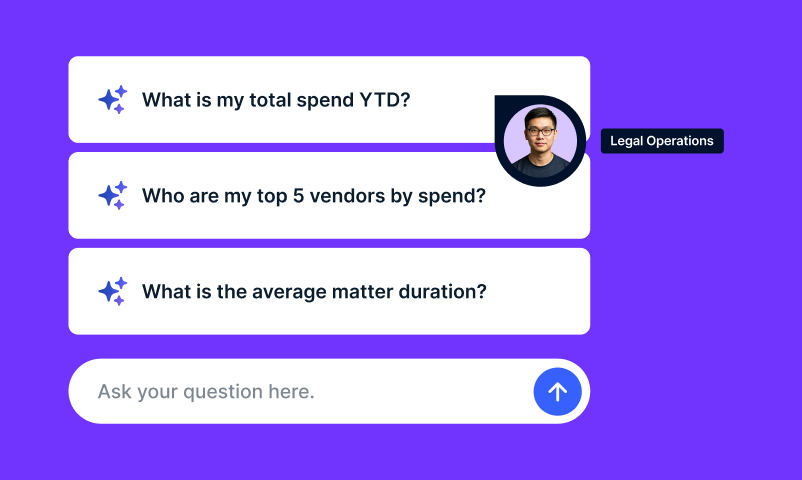
Automated dashboards provide immediate answers to questions about spend, workload, and risk. Reporting becomes available on demand rather than as a monthly exercise.
This positions legal operations as a strategic partner to the business, providing insight that informs planning instead of simply documenting history.

8. Handling legal intake manually
Email-based intake creates confusion from the start.
Requests arrive incomplete, urgency is unclear, and tracking progress becomes difficult. Legal teams spend time clarifying instead of resolving issues.
What to do instead: Make intake the front door to your operations
Standardized intake workflows capture the right information upfront and route work intelligently. Routine requests can move quickly, while complex matters are escalated with the right context.
This improves responsiveness for the business while protecting legal teams from constant interruption and rework.
9. Relying on people to remember process
Processes that live in someone’s head are fragile by definition.
They break when someone is unavailable, slow onboarding, and make improvement difficult. Over time, this creates operational risk that is hard to see until it causes disruption.
What to do instead: Automate for continuity and scale
Documented, system-driven workflows ensure consistency regardless of who is managing the work. They also generate data that can be used to identify bottlenecks and continuously improve performance.
This is how legal teams scale sustainably without burning out their best people or relying on heroics.
Ready to escape the manual maze?
Manual legal tasks are not a badge of honor. They are a signal that your systems are working against you.
You do not need to automate everything at once. But you do need a clear path forward.
If your team is ready to escape the manual maze and start operating on your terms, explore our newest and most comprehensive guide, Make Your Move: A Strategic Guide to Escaping the Manual Maze of Modern Legal Work. It outlines practical steps legal teams can take to reduce manual work, increase visibility, and build momentum without disruption.
Make your move. The work that matters is waiting.