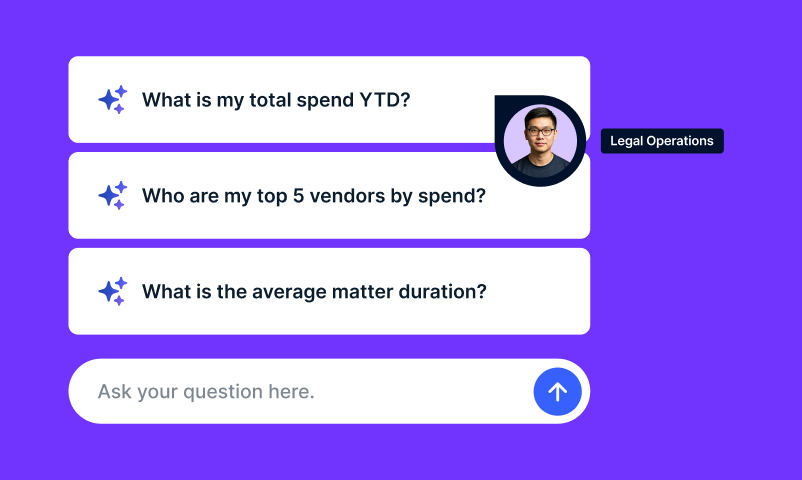


Tag: legal reporting

Generative AI for Legal Teams: How Small Departments Close the Capability Gap

Generative AI for legal teams

Legal departments are stretched thin. Budgets are tighter, workloads are heavier, and expectations keep climbing. For lean legal teams operating with limited headcount, the pressure to do more with less isn’t just a challenge… it’s the daily reality.

But Generative AI for legal teams is changing that equation. Not by replacing lawyers, but by removing the friction that keeps small departments stuck in reactive mode. It’s giving lean legal operations the ability to work with the speed and sophistication of much larger organizations, without the overhead.

The unique pressure on lean legal teams

Small legal teams face a particular set of challenges. Every hour spent on administrative work is an hour not spent on strategic advice. Each and every invoice that requires manual review is time stolen from supporting a critical business initiative. And every contract that sits in a queue waiting for review becomes a bottleneck that slows down revenue.

When you’re operating with 3 people instead of 30, inefficiency compounds quickly. There’s no bench depth to absorb sudden spikes in work. There’s no specialist to hand off routine tasks. The same person reviewing vendor contracts might also be managing litigation holds, negotiating with outside counsel and fielding questions from the business.

This reality makes automation essential, not optional. But traditional legal tech often requires significant configuration, training and maintenance — resources that lean teams simply don’t have.

resources for legal ops adopting generative ai

Where Generative AI for legal teams creates immediate value

Generative AI for legal teams works differently. It doesn’t require extensive rules engines or months of implementation. It understands context, adapts to your specific needs and starts delivering value quickly.

Contract review becomes exponentially faster. Research from Onit’s AI Center of Excellence found that Large Language Models can review contracts 70 to 270 times faster than human reviewers. A junior lawyer might spend nearly an hour reviewing a single contract. An LLM can complete the same task in minutes — sometimes under a minute — while maintaining accuracy that rivals professional reviewers.

For a lean legal team drowning in NDAs or vendor agreements, this isn’t just a productivity gain. It’s the difference between being a bottleneck and being an enabler.

Invoice review shifts from manual grind to exception handling. Manual invoice review is one of the most time-consuming tasks in legal operations. Line-by-line audits drain hours and often miss subtle billing violations. Generative AI for legal teams can interpret billing guidelines in plain language, flag issues automatically and generate clear explanations for any rejections.

What can lean legal teams do to get out of the manual grind?

Instead of reviewing every invoice manually, legal teams can focus on genuine exceptions while AI handles routine compliance checks. This frees up capacity for higher-value work like vendor negotiations or budget forecasting.

Document generation happens in seconds, not hours. Drafting routine legal documents (like status updates, matter summaries, internal memos) consumes valuable time. Generative AI can auto-populate templates with relevant details, maintain consistency across outputs and produce polished documents that would otherwise require significant manual effort.

This capability matters most when legal teams are already maxed out. Instead of choosing between speed and quality, Generative AI for legal teams delivers both.

Legal research becomes targeted and efficient. Traditional legal research can consume hours of attorney time. Generative AI analyzes vast amounts of legal data quickly, summarizes relevant cases and statutes and surfaces insights that inform strategic decisions. It doesn’t replace the judgment required to apply those insights, but it dramatically reduces the time spent finding them.

legal insights and legal reporting for legal teams adopting ai

Making Generative AI for legal teams work without adding complexity

Lean legal teams can’t afford technology that creates more work. The value of Generative AI for legal teams lies partly in its accessibility. Modern AI tools integrate into existing workflows without requiring dedicated IT resources or extensive training programs.

Cloud-based platforms offer intuitive interfaces that legal professionals can use immediately. Built-in templates and guided prompts make it easy to get consistent results without deep technical knowledge. And because these systems learn from usage patterns, they become more effective over time without constant manual tuning.

The key is choosing solutions designed specifically for legal work. Generic AI tools might offer impressive capabilities, but they lack the context and precision that legal departments require. Purpose-built legal AI understands billing guidelines, contract structures and legal terminology. It’s trained on relevant data and optimized for the tasks legal teams actually perform.

Beyond efficiency: Strategic impact for legal teams

The real transformation isn’t just about working faster. It’s about fundamentally changing what lean legal teams can accomplish.

Visibility improves without additional reporting effort. When Generative AI for legal teams handles routine data capture and analysis, legal leaders gain real-time insight into spend patterns, matter status and vendor performance. They can spot issues before they escalate and make informed decisions without waiting for quarterly reports.

Compliance becomes proactive instead of reactive. Automated risk assessments, regulatory monitoring and policy enforcement help small teams stay ahead of compliance requirements. Instead of responding to violations after they occur, lean legal departments can identify potential risks early and address them systematically.

Capacity scales without headcount. Perhaps most significantly, Generative AI for legal teams allows lean departments to absorb workload increases that would otherwise require additional hiring. When AI handles contract reviews, invoice audits and document drafting, the same 3-person team can support significantly more business activity.

This doesn’t mean AI eliminates the need for talented legal professionals. It means those professionals can focus on work that actually requires human judgment, creativity and strategic thinking.

strategic generative ai for legal

What AI adoption actually looks like for legal teams

Implementing Generative AI for legal teams doesn’t require a complete overhaul of existing systems. Smart legal teams start with high-impact, high-volume use cases where AI can deliver immediate results.

Contract review is often the first application because the ROI is measurable and immediate. Teams can track how many contracts move through the system faster, how much time attorneys save and how consistently standards are applied.

Invoice review follows naturally because it’s another high-volume, rules-based process that AI handles well. The time savings translate directly to cost control and improved vendor relationships.

From there, teams expand into document generation, legal research and compliance monitoring as they build confidence in the technology and identify additional opportunities for automation.

The critical factor is maintaining human oversight. Generative AI for legal teams augments legal work; it doesn’t replace the judgment required to evaluate risk, negotiate terms or advise business leaders. The most effective implementations keep lawyers in control while removing the busywork that prevents them from adding real value.

The competitive advantage for legal teams that move early

Legal departments that adopt AI now gain advantages that compound over time. They build workflows that scale effortlessly. They establish data practices that enable continuous improvement. And they develop the organizational muscle to integrate new capabilities as AI technology continues advancing.

Teams that delay face a different trajectory. Manual processes become more entrenched. The gap between what’s possible and what’s actually happening grows wider. And the competitive disadvantage becomes harder to overcome.

For lean legal teams specifically, the stakes are higher. Operating without modern tools means working harder just to stay in place. Every hour spent on manual invoice review or routine contract drafting is an hour not spent supporting strategic business objectives.

Generative AI for legal teams offers a different path forward. One where small teams punch above their weight, deliver exceptional service and demonstrate measurable business value — all without burning out their best people or compromising on quality.

The question isn’t whether lean legal teams should adopt Generative AI for legal teams. It’s whether they can afford not to.

It’s time to make your next move with Generative AI

Ready to adopt AI for your legal team but not sure where to start? Check out our AI Buyer’s Guide to help guide you on questions and answers you should be considering.

Already know you’re lagging behind the rest of the legal world and ready to adopt AI … like yesterday? We’ve got a team of experts to help you get started seamlessly. Reach out to us today to start your AI journey.


Legal workflow management: From legal intake chaos to connected legal ops

legal workflow management

For many legal teams, intake chaos is the first visible symptom of a bigger problem: fragmented legal workflow management. Requests come in without context, priorities are unclear, and work gets routed before anyone has a full picture of impact or effort. Even teams with structured intake processes struggle to achieve predictability because the workflows that follow intake are not truly connected.

Legal workflow management is what turns intake from a moment into a motion. Without it, intake becomes a handoff instead of the foundation for how work actually gets done.

Why intake chaos persists even with structure in place

Most legal teams have invested in intake. They use forms, triage rules, and routing logic to control how requests enter the department. But intake still feels chaotic when legal workflow management stops at the front door.

Requests are captured, reviewed, and approved, but the information collected does not reliably flow into the systems managing matters, spend, contracts, and reporting. Intake data gets re-entered downstream. Context is lost. Ownership shifts. Priority has to be re-evaluated.

When legal workflow management is disconnected, intake quickly loses its value the moment work begins.

legal workflow management for legal ops through automation

What fixing legal intake alone fails to solve

When intake feels messy, the instinct is to tighten control. Teams add required fields, expand categories, and layer on more review steps. Structure helps, but it does not create predictability on its own.

Without connected legal workflows and better management, teams still chase updates later. They still reconcile inconsistencies. They still manually update matter status and spend details. The same work resurfaces because intake was never tied into how work flows across the department.

The issue is not intake quality. It is incomplete legal workflow management.

The operational cost of disconnected legal workflows

When legal workflow management is fragmented, small gaps compound quickly. Requests get approved without a clear understanding of downstream effort. Matters start without budgets or timelines attached. Spend issues surface late because intake context never carried forward. Contracts stall because urgency or ownership was never clear.

legal reporting best practices

Reporting becomes reactive because intake data never became part of the operational record. What teams experience as intake chaos is really disconnected legal workflow management showing up early.

What predictable workflows actually require

Predictability comes from connection, not control.

When legal workflows connect intake directly to matters, spend tracking, contract workflows, and reporting, teams stop re-entering information. Context moves with the work. Status updates happen automatically as tasks progress. Visibility improves before bottlenecks form.

In this model, intake is not a gate. It is the first step in legal workflow management that carries information from request to resolution without constant human intervention.

legal intake chaos

How AI supports better legal workflows without replacing judgment

AI does not replace intake ownership or legal decision-making. It strengthens legal workflows by supporting continuity and context.

Used thoughtfully, AI helps normalize request information, reduce back-and-forth before work starts, and keep workflows aligned as work evolves. It helps surface risk, identify patterns, and maintain consistency across matters, spend, and contracts.

The goal is not to automate judgment away. The goal is to ensure legal ops workflow management supports people in making decisions, not reconstructing information the system already has.

From legal intake chaos to operational confidence

When intake is supported by connected legal workflow management, chaos gives way to predictability. Teams stop reacting and start planning. Visibility improves without additional reporting effort. Legal moves faster without sacrificing control.

Intake still matters. Structure still matters. Automation still matters.

best legal workflow management solutions

What changes is that legal workflow keeps work connected from the moment a request arrives through execution, spend, contracting, and insight. That is where predictable legal work actually begins.

Want to see how modern legal workflow management helps teams reduce manual work across intake, spend, contracts, and reporting?

Explore our newest guide, Make your move: A strategic guide to escaping the manual maze of modern legal work, to see how connected systems help legal teams move forward with confidence.

Of course, if you’re ready to dive in now and reduce all that manual chaos, it might be time to speak to an expert.

7 Keys to Effective Legal Matter Management

effective legal matter management

Effective legal matter management helps your team cut chaos, boost efficiency, and deliver stronger results. Master these seven essentials to spend less time on busywork and more time practicing law while building trust and reliability.

When you manage legal matters effectively, your team stays focused, roles are clear, and surprises are rare. You find what you need when you need it, without frantic searches or missed details.

Your legal matters rarely go as planned. The good news is, when you adopt effective legal matter management, you take control. Last-minute surprises fade, your team knows what to do next, and you become the trusted go-to when it counts.

Why is legal matter management important?

Effective legal matter management helps your team move faster, stay organized, and solve problems with less stress. With the right systems in place, you save time, make better decisions, and become the go-to person when issues arise.

1. Clear communication and collaboration

When communication is clear and direct, your team moves faster and fewer mistakes happen. Set expectations early and keep everyone in the loop so projects run smoothly and stress stays low.

Breakdowns in communication kill productivity and morale. According to Gallup’s 2025 State of the Global Workplace report, poor communication drains productivity fast. Keep your team informed and share updates regularly so projects and people keep moving.

Strong communication keeps projects on track and teams aligned. Share updates often to avoid delays and confusion. When everyone is in the loop, you build trust and deliver results without surprises.

Tips to get started

  • Use centralized communication channels. Whether you use discussion forums, messaging platforms, or a combination, ensure everyone knows where to go to join the conversation.
legal document management

2. Centralized document storage and management

If you’re tired of wasting time tracking down files, you’re not alone. The 2025 ABA Legal Industry Report found just over half of law firms use cloud storage, so many teams still scramble for documents. Organize your files in one place to save hours, lower stress, and always be prepared.

Stop wasting time searching for files. Organize documents in one secure, accessible place to make it easy for your team to quickly find what they need and stay focused.

If you’re still using email to find files, it’s time for a change. A centralized hub makes documents easy to find, saves time, and keeps your team organized. Store everything in one place so you can focus on work, not searching.

Tips to get started

  • Verify that docs are accessible and secure. Use access controls to ensure cloud-based documents are shared safely with the right people, not just anyone with a link.
  • Keep your system searchable. Filter files by name or matter to prevent a marathon scrolling session every time you need to find something.
  • Prioritize scalability. Make sure your storage capacity meets your needs and can be adjusted as your requirements change.
  • Follow a single document-sharing process. Your file-sharing process should include version history for all documents and allow you to restrict access.

3. Standardized workflow management

If you’re buried in spreadsheets and manual updates, it’s time for a better workflow. Standardize and automate processes to fix bottlenecks fast and focus on real legal work. A streamlined approach helps your team work smarter and keeps days running smoothly.

Automate and standardize your workflows so everyone knows the next step, work is clearly divided, and you can focus on higher-value tasks. A consistent process means fewer mistakes and improved productivity for your team.

Tips to get started

  • Automate repetitive work. Whenever possible, automate sequential processes, like sending invoices upon matter completion, to keep your work consistent and efficient.

4. Streamlined task management

Endless emails and scattered spreadsheets cause mistakes and missed deadlines. A smarter task management system keeps you organized, ensures nothing is overlooked, and keeps projects on track.

Too many tasks and no plan? Details get missed. Set a clear, simple system everyone can follow so nothing slips through. A strong task management approach keeps you on track and deadlines met.

Want your to-do list under control? Use smart task management. Break tasks into clear steps, track progress with the right tools, and spend less time chasing details. You’ll have less stress and fewer mistakes, so you can focus on the work that matters.

Tips to get started

  • Rely on how-to templates. Create templates by matter type that break legal matters down into a predictable series of steps.
  • Use an assignment dashboard. Keep task assignments in one centralized location where everyone can view who’s working on what.
  • Automate basic tasks. When possible, use automation to streamline everyday matter tasks, like creating due dates, sending reminders, and monitoring deadlines.
document management and storage

5. Enhanced data insights for efficient legal matter management

To lead with confidence, you need clear, actionable data… not guesswork. The 2025 ACC CLO Survey found most legal leaders now rely on tech and data for better decisions. When you track results and adjust as needed, your data helps you stay in control.

With the right data, you know exactly where resources go, what’s working, and what to adjust. Clear insights help you lead with confidence and deliver measurable results.

When reports show costs rising, use that data to adjust your budget and fix issues before they turn into problems. Let data drive your decisions and help you avoid financial surprises.

Tips to get started

  • Objectively track performance. Track metrics like recorded hours by matter, matter spends, and top timekeepers to discover where your team is efficient and where matters need improvement.
  • Budget efficiently. Create projections based on previous matters to effectively allocate resources.
  • Create reusable reports. Save go-to reports for any area of legal matter management to make effective choices in real time.

6. Robust risk management and compliance

Simple mistakes, like sending the wrong file or missing an access update, can cause compliance issues. The 2025 Verizon Data Breach Investigations Report shows most data breaches come from human error. Stay alert and check permissions to keep your team secure and your data safe.

Work with IT early to set permissions, update systems, and track privacy rules. This way, you can focus on your work, stay compliant, and keep data secure.

Tips to get started

  • Audit your risk management and compliance. Work with your IT department to identify your biggest areas of risk and act accordingly.
  • Stay updated on current laws. Regularly check data privacy laws and provide necessary training when you onboard new team members.
  • Know the basics. Understand where your data is stored, who has access, if it’s encrypted, and how roles and permissions are set.
expense tracking and reporting for effective legal matter management

7. Detailed time and expense tracking

Manual time and expense tracking wastes hours and causes mistakes. The right tools keep your records accurate, prevent billing errors, and help you stay organized with less chaos and more control.

Accurate time and expense tracking helps you avoid errors, spot issues early, and make better decisions. With a reliable system, you know where every dollar and hour goes, can prove your team’s value, and keep surprises to a minimum.

Tips to get started

  • Catch potential spend issues early. Track legal spends and monitor potential problems with detailed spend management reports.
  • Leverage historical data. Use information from previous matters to improve decision-making and budgeting for future matters.
  • Get team alignment on accruals. Keep your teams in the loop on accrual calculation and submission procedures.

See the real ROI of effective legal matter management

Want to see the measurable impact of better legal matter management? Try our ROI calculator to track efficiency gains, control budgets, and reduce risk so your team can stay focused on what matters most.

Ready for deeper guidance? Connect with an Onit expert to map your path forward.

Measure Legal Department KPIs with These 4 Hacks

legal department KPIs and hacks to measure them

Let’s be honest: if you’re not measuring your legal department KPIs, you’re flying blind. The modern legal team is expected to prove their value, support the business’s strategy, and ruthlessly optimize legal spend management. If you aren’t there yet, you’re overdue for a change.

Stuck in spreadsheet hell? You’re not alone, but you’re also not going to win the future that way. Legal reporting best practices and technology can take you from manual chaos to automated clarity. The best part? You don’t need a massive analytics platform to crush your KPIs. Start with structure, consistency, and the four hacks below to unlock performance data that actually matters.

1. Legal department KPIs are your leverage

Legal department KPIs aren’t just pretty numbers for a slide deck. They’re your narrative. They tell leadership exactly how your team impacts the bottom line and why you should have a seat at the decision-making table. This aligns with broader business guidance on performance measurement, like Harvard Business School Online’s breakdown of how effective KPI structures drive organizational decision-making. Quantified, strategic, and focused: that’s how forward-thinking legal leaders play the game.

Even if you’re building from scratch, laser in on high-impact metrics: efficiency, risk reduction, alignment with business goals. This isn’t an optional exercise. It’s your ticket to credibility.

Still tracking data privacy costs manually and watching them climb? There’s your smoking gun. Use those insights to push for process changes, justify training, or argue for in-house moves that slash outside counsel spend. Strong legal department KPIs tell a story the C-suite can’t ignore.

legal reporting data

2. Cut the fluff: Choose legal department KPIs that actually matter

Let’s talk results. Your legal KPIs must expose the link between legal effort and business value. Ditch vanity metrics and focus on what drives decisions.

Start with these proven performers for both legal spend management and operational rigor:

  • Actual spend by month: Own your budget, find burn points, and spotlight cost control.
  • Total hours billed: Reveal capacity constraints and dependency on outside counsel.
  • Discounts, adjustments, alternative fee arrangements: Show you don’t just spend. You negotiate and save.
  • Number of contracts executed: Measure how legal accelerates (or blocks) deals.
  • Matters resolved and time per matter: Find choke points, boost efficiency, and rebalance workloads.

If you’ve got access to AI-native analytics or enterprise legal management tools, level up:

  • Top matters by attorney hours and rate: Pinpoint where you’re leaking money or over-allocating talent.
  • In-house vs. outside counsel workload: Stop outsourcing what you should be running internally and vice versa.
  • Line-item spend breakdowns: Kill off travel drains, admin bloat, and research inefficiencies.

Reporting on these KPIs isn’t about making leadership happy. It’s about controlling your narrative, driving legal reporting best practices, and putting yourself in the driver’s seat for strategic initiatives.

Pro tip: Modern legal ops solutions automate dashboards and reporting, letting you focus on strategy instead of spreadsheet migraines.

legal operations strategy - use legal department KPIs to get more time back

Quantitative KPIs: Don’t guess, prove it

Dig deep into your data. Your in-house timesheets and coded invoices hold gold if you know how to mine it. Build your legal spend management story from the numbers, not just gut feelings.

Track reductions and overruns by line item. Follow the money. Compare workloads and costs across practice areas over time. Trends don’t lie, so use them to predict, pivot, and persuade.

Qualitative KPIs: Influence beyond the numbers

Some of your impact is beyond the spreadsheet. Smart legal reporting best practices mean capturing qualitative wins too. Did negotiating a high-stakes deal save the company millions? Shout it out.

Ask your business partners for honest feedback. Are they waiting too long for support? Do they feel legal is a strategic enabler or a stubborn bottleneck? Build internal surveys and measure what matters, not just what’s easy to count.

3. Ditch the data dumpster: Build smart records around legal department KPIs

Your KPIs are only as good as your data hygiene. Step up your legal reporting best practices:

  • Tag invoices precisely. If it doesn’t drive a KPI, why track it?
  • Train your squad on the critical fields. Everyone must play by the same data rules.
  • Standardize formats for ease, speed, and auditability.
  • Stay compliant. The regulators will thank you, plus you’ll sleep better at night.

If the company demands ruthless efficiency, your systems and reporting must make cost savings unmistakably clear. Legal department KPIs are your ammunition. Organize them, defend them, and use them to drive real change.

4. Track legal department KPIs the modern way, or get left behind

Let’s face it. Spreadsheets are a stopgap, not a solution. They’re better than nothing, but if you want to bring the heat, automation and real-time dashboards are your best friends.

Pull all your legal department KPIs, legal spend management data, and performance metrics into one simple view for leadership. No more scrambling before the next quarterly report. Let cloud tools and visualization software do the grunt work so you can focus on results.

When you’re ready to stop living in the stone age, migrate to an AI-native solution. Let automation run the numbers, surface trends instantly, and produce dashboards executives actually want to read. The future of legal reporting best practices is real-time, interactive, and smart.

legal ops software - your legal tech stack matters

With the right tech, your team can:

  • Build automated dashboards that make spend, matter cycles, and vendor performance instantly visible.
  • Slice KPI reports by team, region, or matter type with ease.
  • Share insights in seconds, not days or weeks.

Time to upgrade or be outpaced

A basic spreadsheet works until it doesn’t, then you need a legal ops platform that automates data management and reporting. Modern legal analytics tools are purpose-built for legal department KPIs. Get dashboards you can trust, share insights on autopilot, and keep leadership looped in with zero manual hassle.

Ready to wield real influence? Sharpen your KPIs and build a truly data confident legal department by checking out our guide, Math of Legal Ops: Numbers, Process, and People Driving the Bottom Line.

It breaks down the real mechanics behind legal performance, spend control, and operational impact, and shows why manual math has no place in modern legal ops.

Click here to download the guide.