
Archives: Resources

August Product Launch: Stronger legal operations, from insight to action

Legal teams need accurate spend data, clear workflows, and answers they can use right away. The August Product Launch strengthens the work behind those outcomes.

Launching today, these enhancements help teams manage legal spend, review invoices, work with outside counsel, route legal requests, and turn contract data into action.

Unity ELM: More control over legal spend workflows

Pro Forma Invoicing

Resolve invoice changes before they become final

Tax-sensitive invoices can create unnecessary rework when issues surface after the final invoice or tax document has been issued.

Unity ELM Pro Forma Invoicing gives your team a controlled way to review and adjust eligible invoices before finalization. Once the review is complete, the vendor can finalize the invoice and provide the required Government Invoice ID.

Key highlights

  • Review and adjust eligible invoices before finalization.
  • Support VAT- and tax-sensitive invoice workflows.
  • Maintain a documented history of client adjustments, vendor reconciliation, approvals, and final invoice details.
  • Add an optional secondary internal approval step while your team validates the process.
  • Reduce post-finalization rework for Legal and outside counsel.

The result: Your team can resolve billing changes while they are still practical to address, with a clearer path from review through final invoice and payment.

Clearer invoice and timekeeper context

Small workflow improvements can make a meaningful difference when your team is reviewing high invoice volume.

Key highlights

  • View invoice-level taxes and discounts more clearly.
  • See additional purchase-order detail directly from the invoice.
  • Review approval steps with reviewer details expanded by default.
  • View legal entity codes in matter allocations.
  • Open dashboard invoice links in the actionable My Invoices experience.
  • See when an approved timekeeper rate expires and when a future rate takes effect.

The benefit for your team: Less navigation and fewer manual lookups when reviewing invoices, approvals, allocations, and timekeeper rates.

Unity ELM Release notes

Ask Unity: Expanded data access and product guidance

Get answers from more of your Unity ELM data, in the flow of work

A question about spend should not require a new report, a spreadsheet, or a wait for someone to pull the numbers.

Ask Unity now expands beyond invoice and spend analysis to include additional Unity ELM datasets. Users can ask questions in plain language about:

  • Budgets
  • Accruals
  • Matter allocations
  • Purchase orders
  • Invoice reviewer rules
  • Client-configured custom attributes

Ask Unity remains available on Unity pages, so users can investigate an issue without leaving the matter, invoice, or workflow they are reviewing. It also provides product guidance and a path to Support when self-service is not enough.

Key highlights

  • Compare budgets, accrued amounts, and final spend.
  • Explore matter allocations and purchase-order activity.
  • Understand which invoice reviewer rules apply to a vendor.
  • Analyze client-configured data alongside standard Unity ELM data.
  • Access Ask Unity through the persistent in-page chat experience.
  • Save page-level conversations to Ask Unity history.
  • Get product guidance and escalate to Support from the same conversation.

The result: Legal and Finance can answer more operational questions from the Unity ELM system of record, without switching between reports, spreadsheets, and support channels.

Ask Unity Release Notes

Spend Agent: More context and control for AI invoice review

Auto Adjustments

Move from identifying a variance to assessing its financial impact

Finding a billing issue is only the first step. Your team also needs to know what the issue means financially and decide how to act.

Spend Agent Auto Adjustments calculate a recommended monetary adjustment when Spend Agent identifies line-item violations. Reviewers can see the original amount, the issue, the relevant billing guidance, and the recommended adjustment together.

Key highlights

  • Calculate a recommended monetary adjustment for line-item violations.
  • Review the evidence and billing guidance behind each recommendation.
  • Use Sentry mode when a reviewer should approve or reject the recommendation.
  • Use Auto mode for qualifying invoices when automated action fits your operating model.
  • Enable or disable adjustments by vendor while continuing to use Spend Agent insights.
  • Override a recommended adjustment with a manual adjustment when needed.

The benefit for your team: Spend less time calculating clear-cut adjustments and more time focused on the exceptions that require judgment.

Matter-level engagement documents

General billing guidelines do not always capture the terms of a specific engagement.

Matter-level engagement documents give Spend Agent the context of the matter and vendor under review. Add engagement letters, billing guidelines, rate agreements, fee arrangements, and other relevant documents so invoice review reflects the terms that apply to that engagement.

Key highlights

  • Include matter-specific agreements and exceptions in invoice review.
  • Use more than one relevant document for a matter and vendor.
  • Prioritize matter-level terms when they conflict with general vendor billing guidelines.
  • Add PDF email correspondence when it contains terms relevant to review.

The result: Invoice review reflects the agreement for the engagement, not just a general vendor policy.

Spend Agent Release Notes

Unity RFP: Connect vendor selection to matter execution

RFP-to-Matter Integration

Vendor selection should not create a second round of data entry.

Unity RFP now connects sourcing decisions to the matter and budget workflows that follow. Link an RFP to an existing matter, create a new matter during setup, or initiate an RFP from the Matter vendor tab.

Key highlights

  • Transfer the approved RFP total to the related matter as its budget.
  • Capture budget start and end dates during RFP setup and proposal approval.
  • Transfer winning rates and fees into Matter Management.
  • Add the selected vendor to the matter after proposal approval.
  • Reduce duplicate data entry between sourcing and matter execution.

The benefit for your team: Preserve negotiated value and move from vendor selection to matter execution with less administrative work.

Engagement letters

Create clearer expectations before outside counsel begins work.

Key highlights

  • Draft engagement letters in the RFP editor or upload a file.
  • Add letters during RFP setup, while responses are in progress, or when approving a proposal.
  • Send engagement letters to selected vendors for acknowledgment.
  • Preserve engagement letters when an RFP is saved as a template.

The result: More consistent engagement terms and a clearer record that selected firms received and acknowledged them.

Unity RFP Release Notes

Unity LSR: A clearer front door to Legal

New legal request types

Business users need a simple way to get the right request to Legal. Legal needs enough context to route it well.

Unity LSR adds five legal-specific request types:

  • Employment
  • Intellectual Property
  • Product Legal Review
  • Insurance
  • Legal Operations

Each request type is available through both form-based and chat-based intake. Preconfigured fields and seeded, admin-editable picklists help capture the information Legal needs from the start.

Key highlights

  • Give business users clearer choices than a general legal question.
  • Collect domain-relevant information for Employment, Intellectual Property, Product Legal Review, Insurance, and Legal Operations requests.
  • Use Request Agent to support classification and required-field collection.
  • Apply existing routing, lifecycle, notification, matter conversion, reporting, search, and dashboard capabilities.
  • Enable or disable each request type independently.

The benefit for your team: Better request categorization, more relevant context at intake, and a cleaner queue for Legal to triage and route.

Unity LSR Release Notes

OnitX: More connected, secure legal operations

Product Picker

Customers using both Unity and OnitX can move between authorized products from one connected navigation experience.

Key highlights

  • Switch between Unity and OnitX products from the product navigation.
  • Access configured custom apps in OnitX.
  • Use the Product Picker in both new and legacy OnitX experiences.

The result: A more connected path across the authorized Onit products and workflows your team uses every day.

Column-level encryption

Protect sensitive content at rest while preserving normal access for authorized users.

Key highlights

  • Encrypt incoming email subjects and bodies at rest.
  • Encrypt selected text, text-area, and HTML fields at rest.
  • Maintain the familiar in-application experience for authorized users.
  • Keep encrypted fields out of search.
  • Support historical-data encryption through a separate follow-on process.

The benefit for your team: More protection for sensitive legal content without disrupting day-to-day work.

Unity Product Integration 

Extend Unity LSR and Unity RFP into existing OnitX workflows and custom apps.

Key highlights

  • Respond to Unity LSR and Unity RFP record-created and record-updated events.
  • Map Unity event data to OnitX records through business rules.
  • Create or update OnitX records based on Unity events.
  • Send approved updates from OnitX back to Unity products.

The result: Customers with established OnitX workflows can extend Unity products into their existing legal operations environment.

OnitX ELM Release Notes

Counsel Exchange: Faster, clearer vendor workflows

Vendors need a simple way to submit invoices, budgets, rates, and other information accurately. Legal teams need fewer avoidable errors and less rework.

Counsel Exchange enhancements improve the day-to-day experience for law firms and vendors.

Key highlights

  • See more invoice line-item detail and customize grid views.
  • Interpret validation messages and warnings more easily.
  • Support clearer error handling and bulk invoice-submission workflows.
  • Refine timekeeper and rate-management workflows with additional filters.
  • Review selected budgets before bulk submission.
  • Filter and navigate matter budgets by date range and page.
  • Protect in-progress work with an unsaved-changes prompt.
  • Access Support Assistant, hashes, API keys, and system announcements more easily.

The benefit for your team: Cleaner submissions, faster corrections, and less friction across the e-Billing process.

Counsel Exchange Release Notes

BusyLamp: Stronger e-Billing collaboration, security, and invoice processing

Chat, MFA, and invoice controls

BusyLamp enhancements help teams collaborate more securely and manage e-Billing activity with greater control.

Key highlights

  • Communicate securely with internal stakeholders and external law firms in eBilling.Space.
  • Strengthen account security with TOTP-based multi-factor authentication.
  • Preview invoice PDFs without leaving the application.
  • Apply more granular blocking controls to law firms, lawyers, and matters.

The result: Better collaboration and stronger controls, without adding unnecessary steps to the invoice-review process.

Smart Invoice Converter updates

Invoice conversion should not slow down a complex billing workflow.

Key highlights

  • Use a new AI invoice extraction engine.
  • Convert LEDES files faster.
  • Improve validation and review of converted LEDES invoices.
  • Process invoices associated with multiple matters for more accurate allocation.

The benefit for your team: Less manual correction and more reliable invoice data entering your e-Billing workflows.

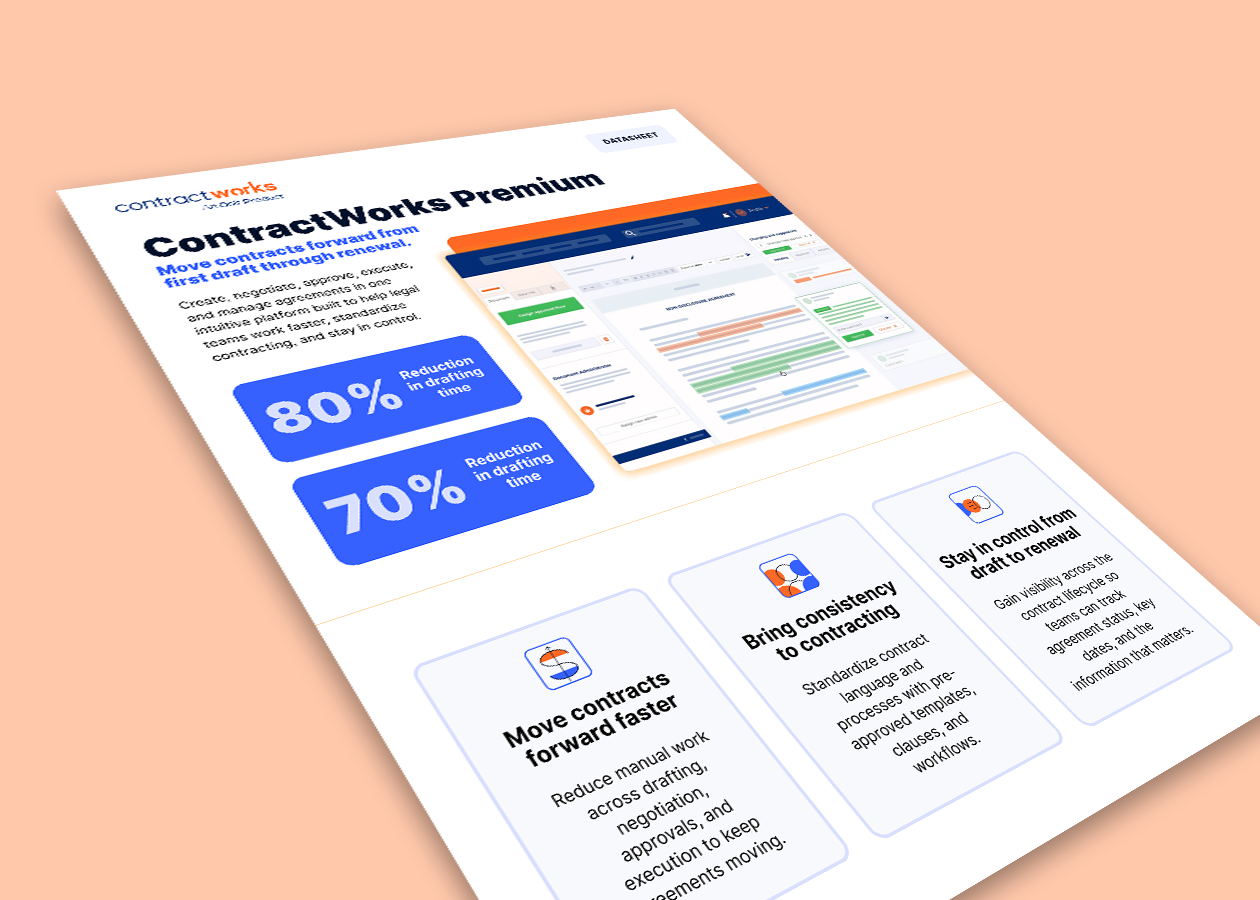
ContractWorks: More usable contract data at scale

ContractWorks bulk AI reprocessing

When extraction logic or templates change, updating documents one at a time creates unnecessary work.

ContractWorks now lets users select multiple documents in a folder and reprocess them with AI in bulk.

Key highlights

  • Review current template tags before reprocessing.
  • See which tags the newly applied template will overwrite.
  • Select or deselect tags before running the bulk action.
  • Apply updated extraction and template logic across selected documents.

The result: Keep contract data current at scale without reprocessing records one by one.

Refreshed Preferences experience

ContractWorks has refreshed the Preferences page within Create and Collaborate settings to create a more consistent experience across ContractWorks.

The benefit for your team: A more consistent experience without changing the underlying workflow your team already knows.

ContractWorks Release Notes

ReviewAI Smart Mapping

ReviewAI Smart Mapping now supports more OnitX CLM field types, helping teams turn extracted contract information into structured, usable records.

Key highlights

  • Map extracted values to combo/list, currency, date, time, and email fields.
  • Use ReviewAI playbooks and prompts to guide extraction and classification.
  • Populate OnitX CLM records with more structured contract data.

The result: Less manual data entry and more useful contract information for workflows, reporting, and analysis.

What the August Product Launch means for your team

With these enhancements, your team can:

  • Resolve invoice changes before finalization.
  • Apply billing terms more consistently across matters and vendors.
  • Reduce manual work across invoice review, vendor collaboration, intake, and contract data management.
  • Give Legal and Finance clearer visibility into spend and operational activity.
  • Connect sourcing decisions to downstream matter and budget workflows.
  • Find answers and product guidance without interrupting the workday.
  • Strengthen security and governance without adding unnecessary process.

The result: More context where decisions happen. Less rework after the fact.

ReviewAI Release Notes

ReviewAI Datasheet

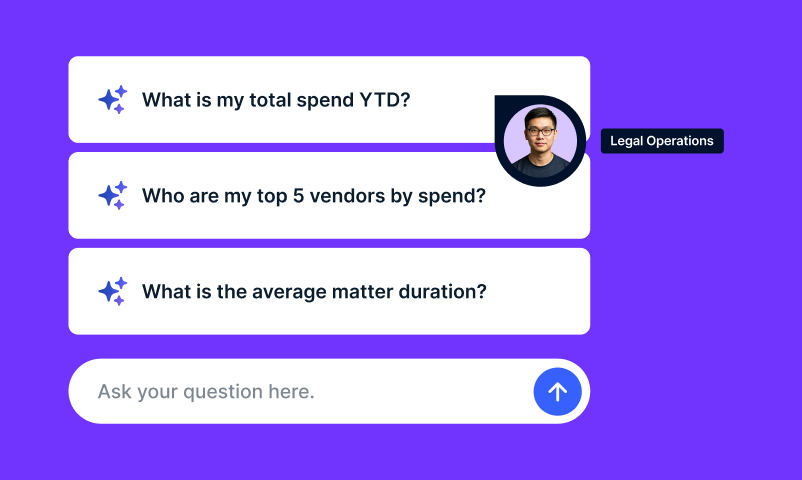
Ask Unity: Executive-Ready Legal Insight, Built Into Unity ELM

Ask. Act. Automate — conversational access to your live legal operations data.

Every spend decision starts with a question Q4 spend, vendors on a matter, rejected timekeepers, accruals versus budget, open purchase orders, line items for court fees. When answers depend on manual reporting or exported data, decisions slow down and risk goes up. Ask Unity (beta) delivers real-time, conversational access to Unity ELM data, letting legal teams explore trends, uncover anomalies, and surface insights that static dashboards may miss. It analyzes live financial and operational records spend, invoices, vendors, matters, timekeepers, budgets, accruals, allocations, purchase orders, reviewer rules, and client-configured attributes and returns clear, structured answers with supporting visuals, all inside Unity ELM.

Download the datasheet to see how Ask Unity turns questions in plain language into executive-ready insight, grounded in your governed system of record and delivered without leaving Unity ELM.

In this datasheet, you’ll learn about:

  • Conversational, real-time answers over live Unity ELM financial and operational data
  • Structured, defensible responses with supporting visuals no manual reporting cycles required
  • Governed insight that respects each user’s role-based permissions and stays inside your system of record
  • Refinement prompts instead of speculative output when a question lacks clarity
  • Seamless move from insight to follow-through inside Unity ELM workflows, with no export or separate reporting tool

Unity LSR: A Smarter Legal Front Door

Faster intake, answers, and triage built for the Unity suite.

Legal teams are under pressure to respond faster, reduce administrative burden, and give the business a clearer path to legal support. But requests often arrive through scattered emails, chat messages, incomplete forms, and informal side channels. Unity Legal Service Requests (LSR) brings structure, intelligence, and control to legal intake with an AI-guided experience that helps business users get answers, submit structured requests, and track outcomes. Built for the Unity suite, Unity LSR helps legal teams modernize intake without adding operational complexity reducing avoidable requests, improving submission quality, and preserving oversight from first touch through triage, resolution, or matter creation.

Download the datasheet to see how Unity LSR combines AI-guided self-service, structured request creation, and connected matter management to help legal teams handle demand at scale.

In this datasheet, you’ll learn about:

  • An AI-guided legal front door that lets business users describe what they need in plain language and get to the right next step
  • Knowledge-based responses with citations, grounded in a customer-managed library of approved company documents
  • Guided legal request creation and controlled escalation so ambiguous or higher-risk work always moves to Legal
  • Complete request records with conversation transcripts, source information, comments, history, and status
  • Matter creation directly from an LSR, preserving continuity from intake through ongoing legal work

The Modern Outside Counsel RFP Playbook

How legal departments select the right law firms with better data, better pricing and better outcomes.

Outside counsel is one of the largest controllable line items in most legal budgets, yet many teams still choose firms the way they did a decade ago: relationships, familiar names and spreadsheets buried in email. That approach is getting more scrutiny as finance, procurement and executive leadership ask for more visibility, more predictability and more proof of value.

This playbook lays out a practical framework for modernizing outside counsel sourcing without losing the relationships and legal judgment that drive every engagement. Whether you’re selecting counsel for a single high-stakes matter or refreshing a full preferred panel, you’ll get the structure, worksheets and checklists your team needs to make more informed, transparent and repeatable decisions.

In This Playbook, You’ll Learn:

  • When an RFP earns its keep and when to skip the formal process
  • Five myths that keep legal teams from running better RFPs
  • How to ask smarter questions instead of longer ones
  • How to evaluate firms on total value, not hourly rate
  • What governance after selection should look like
  • How to run the process on a realistic 10-week timelin

Also included

Four ready-to-use tools you can adapt for your own organization: an RFP readiness assessment, an evaluation weighting framework, a law firm scorecard and an outside counsel governance checklist.

Customer Only: Are You Asking Law Firms the Right Questions?

The quality of an RFP response often depends on the quality of the questions. When questionnaires are too broad, lengthy, or vague, law firms may provide generic answers that make meaningful comparison difficult. 

Join other Unity ELM customers for a facilitated peer discussion on designing RFPs that surface decision-ready information while respecting the time and effort required from both legal teams and participating firms. 

We’ll discuss how to: 

  • Focus the RFP on questions that will meaningfully influence the selection decision 
  • Give firms the context they need to provide relevant, substantive responses 
  • Structure requests around scope, assumptions, staffing, pricing, and deliverables 
  • Prevent questionnaires from becoming overly long or driven by competing stakeholder requests 
  • Ask more effective questions about technology, innovation, and AI 
  • Improve the consistency and comparability of firm responses

Hear how other legal teams are refining their questionnaires, reducing unnecessary work, and gathering the information needed to make more confident outside counsel decisions. 

This is a customer peer exchange, not a product presentation. Come ready to compare approaches, share what has worked for your organization, and discuss the questions that have produced the most useful firm responses. 

Demo – Review Legal Invoices Faster and Smarter with Spend Agent

Legal invoice review should not depend on how much time your team can spare. 

Yet many legal teams still rely on reviewers to manually sort through line items, interpret billing guidelines, and explain every dispute. The result is a slow, inconsistent process that makes it harder to control spend without straining outside counsel relationships. 

Spend Agent changes the equation. 

Join us for a 20-minute live demo to see how Onit’s AI agent reviews legal invoices line by line, applies billing guidelines in context, and gives your team the clarity to act faster and with greater confidence. 

You’ll see how Spend Agent helps legal teams: 

  • Surface AI-generated invoice summaries that focus reviewers on what matters 
  • Validate invoices against budgets and accruals before approval 
  • Identify billing issues with clear explanations tied to specific guidelines 
  • Accelerate review while strengthening compliance and financial control 
  • Quantify savings opportunities and improve visibility into legal spend 

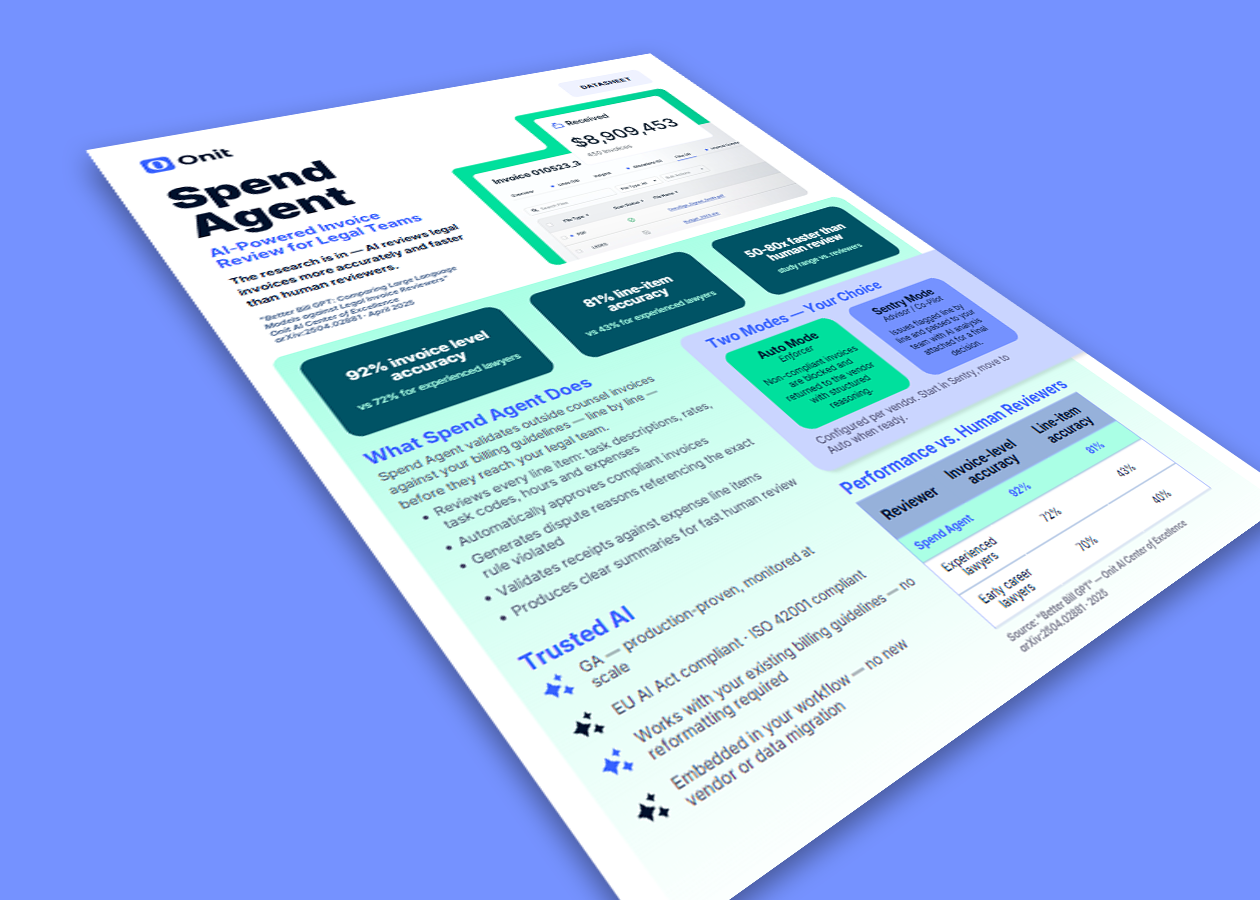
Spend Agent delivers 92% invoice-level accuracy and 81% line-item accuracy, with review speeds 50 to 80 times faster than human reviewers. It does not replace judgment. It gives your team better analysis earlier in the process so they can make the right call faster. 

See what invoice review looks like when every line gets the attention it deserves. 

The Right Invoice: Rethinking Legal Invoice Review

How AI, business rules, and human judgment can create a smarter approach to invoice review 

Legal invoice review is about more than finding savings. It’s about ensuring every invoice is accurate, compliant, and aligned with your organization’s expectations without consuming valuable attorney time. 

As AI takes on a greater role in legal operations, teams have an opportunity to rethink how invoice review gets done and where human judgment adds the most value. 

Watch this replay conversation to explore: 

  • What it means to focus on paying the right invoice, not simply paying less 
  • How AI and business rules can work together to enforce billing guidelines more consistently 
  • How engagement documents and matter-level requirements can add context to invoice review 
  • Where automated adjustments can reduce manual effort while maintaining human oversight 
  • How a smarter first pass can improve invoice quality, compliance, governance, and attorney efficiency 

You’ll also hear how Spend Agent puts this approach into practice, using AI analysis and deterministic business rules to identify issues earlier and focus human review where judgment is actually needed. 

OnitX LSR: A Smarter Legal Front Door

Faster intake, answers, and triage for in-house legal teams.

Legal teams are under pressure to respond faster, reduce administrative burden, and give the business a clearer path to legal support. But requests often arrive through scattered emails, chat messages, incomplete forms, and informal side channels. OnitX LSR brings structure, intelligence, and control to legal intake with an AI-guided experience that helps business users get answers, submit structured requests, and track outcomes—while giving Legal a centralized view of demand, ownership, and status across the intake lifecycle.

Download the datasheet to see how OnitX LSR standardizes intake, uses AI to guide business users to the right next step, and gives Legal Ops end-to-end visibility into requests, interactions, and outcomes.

In this datasheet, you’ll learn about:

  • Standardized, configurable intake forms that capture the right information before work reaches Legal
  • AI-guided self-service that answers common policy and process questions from approved company knowledge
  • Auto-routing and triage so the right requests reach the right team at the right time
  • Role-based dashboards for admins, legal, and business users with real-time status visibility
  • Connect intake to SimpleLegal or ContractWorks to move approved requests into spend and contract workflows

OnitX Matter Management: Collaborative Matter Engagement

Clarity, collaboration, and configurability across the matter lifecycle.

An overwhelming volume of matters can lead to confusion, duplicated work, and a lack of trust across the organization. OnitX Matter Management gives the broad clarity your matter portfolio needs, engaging your entire legal team through powerful collaboration and workflow capabilities and delivering visibility and insight into matters throughout their lifecycle. It ensures the right work is guided to the right expertise, with a configurable system of record that adapts to how your legal department operates.

Download the datasheet to see how OnitX Matter Management centralizes matter data, streamlines workflow, and delivers real-time insights across your entire legal portfolio—on a secure, enterprise-grade platform.

In this datasheet, you’ll learn about:

  • A complete legal matter management repository that captures 100% of matters and law department value
  • Real-time data and dashboards to monitor internal and external matters throughout their lifecycle
  • Configurable intake and data forms with context-sensitive and conditional data capture
  • Deep integration with Microsoft Office, Google, and third-party solutions so work happens where teams already work
  • A configured, highly secure system of record for sensitive matter information, backed by SOC II, HIPAA, and GDPR-aligned controls

Customer Only: When Does a Formal RFP Create the Most Value?

A formal RFP can bring greater structure, competition, and accountability to outside counsel selection. But not every matter justifies the additional process.

Join other Unity ELM customers for a facilitated discussion on when an RFP creates meaningful business value, when a lighter approach may be more effective, and how legal teams are putting practical governance in place.

We’ll discuss how to:

  • Identify the matters and initiatives that benefit most from a formal RFP
  • Choose between a matter-specific RFP, panel review, rate negotiation, or reverse auction
  • Set practical RFP thresholds and establish a clear process for exceptions
  • Define responsibilities across Legal, Legal Operations, Procurement, and Finance
  • Address resistance from internal attorneys and incumbent firms
  • Align the process with business outcomes such as cost control, predictability, panel consolidation, and access to new capabilities

Hear how other legal teams are balancing structure with efficiency, maintaining strong firm relationships, and building RFP processes their organizations will follow.

This is not a product presentation. It is an opportunity to compare approaches, learn from other Unity ELM customers, and discuss a scenario from your own organization

This webinar is being recorded and uses AI to generate transcripts, summaries, and insights to improve eachattendee’s experience and  we may use such actionable insights in accordance with our privacy policy (Onit’s Privacy & Cookie Policy Explained! #LegalTech). By attending, you acknowledge and consent to this use.