

Author: Onit

How Enterprise Contract Lifecycle Management Software is Changing the Game for General Counsel

Managing risk at an organization is a full-time job, especially for a general counsel (GC) or chief legal officer (CLO). As a company’s chief internal lawyer, they are expected to provide legal advice on a vast range of subjects – legal rights, risk mitigation, compliance with new and existing laws and so much more.

If that weren’t enough, GCs and CLOs are also expected to manage the organization’s legal matters, oversee outside counsel spend, conduct legal research, review internal litigation strategy, and be the ultimate approver and keeper of the organization’s contracts. Despite handling all these critical, sensitive matters, legal departments are often seen as “cost centers” and therefore are forced to do their challenging jobs without all the resources they need to succeed.

Technology, automation and artificial intelligence are key to doing more with less and streamlining processes, particularly when it comes to contracts. Enterprise contract lifecycle management software allows busy lawyers end-to-end control over contracts, freeing up time to focus on other tasks in the process. They can also play pivotal roles in helping corporate legal departments reduce contract management costs. For example, Pearson’s commercial transactions shared service center for more than 10,000 users worldwide achieved a 35% cost reduction and 30% improved contract turnaround time.

Contractual Pain Points

Even the simplest contracts can expose an organization to risk and liability if it’s not handled correctly. GCs and CLOs are tasked with overseeing the crucial job of examining and creating draft agreements, maintaining knowledge of the organization’s operations and legal documents, approving non-standard contract language and more.

Without a centralized solution for managing contracts on an organization-wide basis, legal departments run into countless hurdles, including:

  • Inconsistent language between contracts, often caused by employees using out-of-date contract templates
  • Competing objectives of moving contracts through quickly yet still having enough oversight to effectively manage risk obligations
  • A lack of insight into all the organization’s current contracts
  • An inability to track changes in contracts and ensure that contracts are in compliance with new and existing laws and regulations
  • The risk that contracts might expire or renew without notice because no one’s tracking them
  • Complicated review and approval processes for even standard contracts
  • Manual review and approval processes that create longer contract cycle times
  • Human error and inconsistencies inherent in manual processes, increasing the organization’s risk exposure
  • Lost revenue when add-ons, upgrades and renewals are missed
  • Being seen by other aspects of the business as a barrier to closing deals

The above list is by no means exhaustive. Given the large volume of contracts at today’s modern businesses, the challenges presented by trying to manage those contracts can become overwhelming when you rely on manual processes or basic contract tools that lack automation and AI for general counsel, as well as a means of creating a single source of truth for the organization’s contracts.

The Benefits of Contract Lifecycle Management Tools

While the challenges outlined above may seem daunting, they’re not insurmountable. CLM tools use automation and AI to remove the tedious, manual aspects of traditional contract management, increasing accuracy and efficiency, eliminating errors, and freeing up precious time that GCs and CLOs can use to focus on the many other critical tasks they’re responsible for handling.

Leverage the benefits of contract lifecycle management software to take control of your corporate legal budget and take the headaches out of risk management.

Among other things, the right enterprise contract lifecycle management software will allow you to:

  • Find every contract you need, when you need it
  • Store all your contracts in one cloud location, creating a single source of truth for your organization’s contract data
  • Have full visibility at all times into the status of contract drafting, negotiations, amendments, and renewals, ensuring that nothing’s missed or overlooked
  • Implement uniform templates and playbooks to speed up contract cycle times, reduce manual errors and ensure you’re always using preferred terms
  • Automate approval processes to eliminate bottlenecks
  • Be notified of contract renewals to get a jumpstart on the process
  • Allow for self-service, so that other departments can create standard contracts with the correct language without legal review
  • Improve legal risk management across the organization
  • Improve efficiencies and free up the corporate legal budget for strategic use by automating contract lifecycle management
  • Demonstrate that the legal department is a strategic partner of the business, not a cost center

The ideal CLM tool will give you real-time insights into all phases of the contract lifecycle and provide you with actionable intelligence to make informed decisions for the business. More information means a better ability to identify and control risks across the contract process.

It’s time to take control of your contracts and let contract lifecycle management for general counsel and automation do the heavy lifting for you. Contact us today to learn more about how Onit can help you implement end-to-end CLM for your organization.

Overcoming Law Firm WIP Reporting Challenges

While e-billing has brought new transparency, control, and clarity to the billing process for in-house teams, one criticism of “conventional” e-billing is that the client is still not able to see the time and expenses being charged by their external law firms until the final invoice is sent (whether that is a draft or an engrossed version).

The goal is to be able to see the work carried out and the associated costs during the life of the matter itself and be able to query or even reject items early in the billing cycle. This is necessary for accurate cost control, forecasting, and avoiding invoice surprises. This WIP (Work in Progress) information has long been the subject of discussion between in-house legal teams and law firms. Until recently, law firms have only been able to provide rough estimates of accruals – usually at the end of each month – without any detail.

The key areas that an in-house legal team should be able to monitor to stay in control of its legal spend are:

  • Cost overruns against budget/forecast.
  • Counsel’s pre-billing time entries
  • Large amounts of a single activity (e.g. research, drafting etc.).
  • Wide date ranges between the work carried out and the time/fees submitted to the client.

WIP REPORTING IS BENEFICIAL FOR LAW FIRMS AND CORPORATE LEGAL TEAMS

Modern legal spend management solutions such as Onit’s BusyLamp includes WIP reporting as a key feature. It adds an extra dimension to the relationship between corporate legal teams and their external law firms. Some of the advantages of WIP reporting for both parties include the following:

  • The law firm adds value for the client through enhanced billing data – over and above the provision of quality legal advice.
  • The law firm has confidence that the work performed (so far) has been accepted by the client, and there will be no pushback when presenting the final invoice.
  • The client has more certainty that the work is done correctly and in line with the billing guidelines. Detailed actual spend versus budget can be monitored early in the transaction and through all its phases

CHALLENGES OF WIP REPORTING FOR LAW FIRMS

Despite these benefits, implementing WIP reporting has its challenges. While some law firms have embraced the requests from their clients to provide timely and accurate WIP information, several law firms still need to fully meet the WIP reporting requirement.

A common concern is that firms view the “raw” WIP information as law firm data that the client should not see. Many large international firms have specialist revenue controllers working within the legal teams and closely with the deal partners. These firms also have well-established billing processes, a crucial part involving revenue staff and partners reviewing the WIP for each matter before finalizing the bill. They will decide which items of time to charge. More importantly, they will also check that time narratives are worded appropriately and are suitable for the client’s view.

In most firms, lawyers get advice regarding appropriate content for matter narratives. Still, several hundred associates can work on matters, and it is impossible to “police” what they enter before the bill data is “cleaned up.” The firms are reluctant to go through this cleaning-up process on the WIP data (even though it may be for a small number of bills) as partners see it as doubling up on work. Furthermore, no partner wants to be the first to allow a client to review WIP information in case it contains inappropriate content.

Another reason sometimes quoted by law firms for not wanting to provide WIP revolves around the timing and process issues associated with WIP information. What are the consequences if the client rejects some or all of this information? Some firms argue that if WIP information must be re-submitted, it may fall outside the acceptable time limits between the work done and when it gets billed. These firms often seek to establish reasonable windows and processes for WIP review and resubmission if any line entries are not approved.

A final objection is that producing WIP files in the LEDES e-bill format requires development work to be scheduled by the Finance/IT Systems team. Some firms have implemented manual workarounds for supporting WIP submissions, but this is not sustainable in the long term and for a growing number of invoices.

OVERCOMING WIP REPORTING CHALLENGES

E-billing vendors, in-house legal teams and law firms have together come up with a number of compromises to address these challenges, which include:

  • Line-Item Narratives: If this is a concern, parties may agree to drop narratives from the WIP upload or substitute them with holding text saying that the narratives will be on the final bill. If approved, the clients would at least see costs and the associated activity or expenses based on the LEDES code (e.g., communicating, drafting and so on).
  • Billing Cycles and Accruals: The client can achieve similar output if the billing cycle is reduced to a calendar month, allowing them to view that month’s work. Another option would be to improve the information supplied as accruals. This would not give all the time details to the in-house team but would meet some of the requirements.
  • LEDES Output Requirement: To address the concerns of law firms about possible additional IT development work, Onit has developed two alternative methods used with BusyLamp:
    • Firms can output their WIP information as an Excel spreadsheet, which can then be uploaded into the e-billing application as required by the client. As all law firms have access to Excel as standard and have staff who can use it, the issue of needing expensive billing system changes gets minimized.
    • AI functionality in BusyLamp can extract non-LEDES-format, unstructured WIP data into meaningful and useful reports for the in-house legal team.

For a successful WIP reporting implementation, legal teams should engage with the law firm partners early in the process and discuss the requirement for WIP reporting. This should include why the in-house team requires WIP and what they aim to achieve from tracking it. It will help overcome some of the arguments against providing WIP and help all parties explore suitable alternatives that still give the in-house legal department what they need to succeed.

Request a demo of BusyLamp eBilling.Space today.

Legal Ops in 2020: A Look at How Law Departments Have Weathered the Storm

There’s no question that 2020 was an unusual year for organizations across all industries – and their law departments. From being forced into working from home overnight to embracing new technologies at an accelerated pace, law departments have adapted in ways they never imagined.

The Blickstein Group recently released its 13th Annual Law Department Operations Survey, titled “Weathering the Storms of 2020.” The findings show that, despite the pandemic’s unprecedented challenges and novel demands, corporate law departments have weathered those storms well.

As the survey points out, the world changed dramatically in the year since the 2019 Law Department Operations Survey. The impacts of those changes, however, were less dramatic. Here are just some of the critical insights about legal ops in 2020.

The Biggest Challenges

Survey respondents were asked to identify their most significant challenges in 2020 relating to law department functions, and notably, COVID-19 was nowhere near the top of the list. Instead, the top-three challenges identified were:

  • Cost containment and savings/managing the budget – 60.3%
  • Business process improvements – 56.2%
  • Departmental resources (e.g. funding for personnel/technology, personnel retention) – 38.4%

Concerns about cost containment are nothing new, as managing costs and budgeting have long been a focus for legal ops professionals. The same is likely to remain true throughout 2021 and into the future, making Enterprise Legal Management solutions – which simplify legal operations by analyzing legal spend, minimizing company risk and driving process efficiency – valuable investments.

Delivery of Work Product

Disruption to everyday business practices and routines seemed to come from all sides in 2020, but law departments didn’t let that stand in their way. When asked if they noticed a diminished ability of their internal legal teams to deliver work product due to the pandemic and working from home, a staggering 94% of respondents said no.

Much of this ability to avoid disruption can be attributed to advanced technologies that support remote legal operations management work, allowing legal departments to deliver the high-quality work product from anywhere. Automation and AI also played a major role in seeing legal ops through the pandemic. For example, a tool like Review AI automates contract review, cuts contract review time by up to 70% and increases accuracy in reviewing, redlining and editing all types of contracts. These tools are critical to improving efficiency and eliminating manual tasks that would otherwise present barriers to remote work

Focus on Diversity

The pandemic wasn’t the only thing grabbing headlines in 2020. Diversity and inclusion were perhaps more in the spotlight than ever before. While companies across the country struggled to figure out how to best address diversity and inclusion within their ranks, what was clear was that more and more law departments were turning the focus to these issues. When asked what employee-related metrics they track, 72.7% reported tracking diversity, up significantly from prior years’ surveys.

While there’s no one-size-fits-all solution for improving diversity and inclusion, technology can play a significant role in achieving progress. At Onit’s recent Hack the House competition, one team – Team Diversity – built a solution to expand opportunities for diversity and an equal opportunity workspace using Onit Apptitude in just three weeks. (You can see a demo here.) This is only one example of how legal ops professionals can use institutional data to address workplace challenges and track progress on important issues.

Law Firm Rates

Law firm rates have increased in 2020, according to law departments. When asked how overall law firm rates changed in the past year, only 3.6% of law department respondents reported any decrease. In fact, 69.7% reported an increase, while 26.8% said that rates remained flat. Participants indicated they expect this increase to continue in the next 12 months, with 46.4% expecting an increase.

There’s no reason to think these trends won’t continue for the foreseeable future. That means it’s more important than ever to be able to track invoices and ensure that your law firm’s charges are accurate and in-line with your billing guidelines. With Onit Enterprise Legal Management, you’ll have the data you need to show the value your law firms are providing to the organization in exchange for the rates they’re charging.

For more insights on the state of legal ops in 2020 and how the pandemic has impacted law department operations, you can download the entire survey here.

Four Legal AI Trends Impacting Corporate Legal Departments

Each day, the accomplishments of artificial intelligence multiply. AI recently solved Schrödinger’s equation in quantum chemistry. It regularly diagnoses medical conditions, pilots jets and fetches answers for our everyday queries. And now, it might dance better than you do.

The ever-improving abilities of AI are having marked positive impacts on a wide variety of industries and professions – especially corporate legal departments and the in-house counsel and legal operations professionals that run them. So, what can corporate legal departments expect from legal AI in 2021?

Ari Kaplan, attorney, legal industry analyst, author, technologist and host of the Reinventing Professionals podcast, recently interviewed Nick Whitehouse, General Manager of the Onit AI Center of Excellence. Nick, who is the 2019 IDC DX Leader of the Year and Talent’s 2018 Most Disruptive Leader Award (as judged by Sir Richard Branson and Steve Wozniak), shared the legal AI trends that general counsel and legal operations professionals should keep an eye on for 2021, including:

  • Accelerated adoption – The pandemic has greatly affected the use of AI, spurring businesses and their corporate legal departments to recategorize it from curiosity to necessity. For example, 2020 saw many companies having to quickly reassess large numbers of contracts (such as leases). Legal AI allowed in-house teams to quickly assess their contracts and take action, helping their businesses survive and thrive.
  • Banishing the black box – Legal departments have historically been perceived as black boxes – work goes in and decisions come out slowly with little transparency. AI reduces the time spent on individual transactions, increasing transparency by enabling consistent use of playbooks and the ability for the business to self-serve.
  • Focus on solving in-house challenges  – The technology has shifted from a project-based law firm focus toward products that are centered on solving in-house problems like contract lifecycle management and AI legal contract review. With 71% of lawyers saying they are mired in manual tasks, these AI products can drive a massive amount of value for corporate legal.
  • AI in the near future – In addition to the shift from law firm focused AI services to more in-house based services, corporate legal can expect a greater blending of AI into contract lifecycle management and third-party review as well as AI-assisted document automation and billing management.

Visit the Reinventing Professionals website to listen to the podcast. You can also find it (and subscribe) on Apple podcasts.

6 Trends for Legal Tech in 2021

It’s no exaggeration to say that the coronavirus pandemic has affected every single person and business around the world, forcing many of us to rethink what we know about how we work and the tools we need to do it – and legal tech is no exception.

The industry was already experiencing increased adoption and momentum, but the pandemic has forced both law firms and corporate legal departments to do more with less and modernize at an accelerated rate.  

Here’s a look at some of the top trends we expect to see in 2021: 

1. Remote Technology & The Talent Wars

For many, COVID-19 accelerated — and sometimes forced — the adoption of new technology in an effort to keep operations afloat. Businesses will continue to look to legal tech solutions to facilitate collaboration, eliminate man hours spent on menial tasks, measure performance of service providers, manage budgets, and more. 

The normalization of remote work has also opened the doors to a broader talent pool. Businesses are no longer restricted to just the candidates in their geographic area. They are now free to pursue the best talent – but so is everyone else, resulting in some serious talent wars. 

While we do believe physical offices will make a comeback, we foresee many businesses adopting a more hybrid approach that allows them to suit up and battle it out for the top talent. 

2. Artificial Intelligence

As legal tech looks to service more corporate legal departments to transform the tedious, manual tasks that typically waste precious time and resources, AI will become increasingly understood and less stigmatized.

Legal departments will leverage AI to deliver real-time insights, making them more efficient and effective. As we like to say at Bodhala — AI will help ‘let lawyers be lawyers!’

AI is turbocharging the legal industry and as we continue operating in a remote environment for the foreseeable future, expect to see more corporate legal departments adopt legal spend management tools, eDiscovery, contract management, and other legal tech solutions to drive their strategic initiatives,

3. Increased Focus on Data & Analytics

Data has long been the driving force of the strategic decisions in most businesses – from media to manufacturing and everything in between. It probably comes as no surprise, but legal has been a late adopter of data and analytics. But renewed focus on ‘the business of legal’ has forced a data reckoning, with both firms and corporate legal departments taking new interest in how they can leverage data to improve strategic decisions and business processes. 

In-house teams are also now demanding increased transparency from their outside counsel on everything from rates to the diversity of the timekeepers staffing their matters. This demand is driving a need for real-time data and reporting as well.

With cost optimization and diversity efforts assumed to be at the forefront of many corporate legal departments’ 2021 priorities, legal spend management solutions and data visualization tools will become even more prominent in the marketplace. 

4. Cross-Functional Collaboration

Legal departments have often had reputations for being a bottleneck when it comes to decision-making. But organizations are increasingly looking for solutions that support collaboration with legal departments to speed up, not slow down, their decision-making processes. 

In 2021, legal tech won’t just serve the legal department. It will play an integral role in cross-functional collaboration, consolidating pertinent information into one place and streamlining workflows.

For example:

  • Finance departments may leverage legal spend management solutions and eBillers to optimize their workflows, consolidate invoices, obtain data-backed insights to support budgeting/forecasting, optimize spend, or report on the health of their bottom line.
  • Sales teams will continue to benefit from legal tech tools that decrease sales cycles and simplify the process for prospects, like contract management and e-signature solutions.
  • Legal procurement teams will expand their use of data from legal spend management solutions to improve strategic spending decisions and firm selection processes.

As organizations look to become more spend-savvy, disintermediation continues to be a common trend. 

Prompted by the high rates charged by law firms even for mundane tasks or simple matters, many in-house teams are embracing a more economic and efficient solution — Alternative Legal Service Providers, or ‘ALSPs’. 

Lawyers will leverage technology to not only identify target task and matter types, but to also recommend categories that could be outsourced to ALSPs and the projected savings opportunity. 

Thanks to AI, machine learning, and a continued focus on cost optimization and efficiency, we expect ALSP adoption to hockey stick in the next few years.

6. Increased Investment, Acquisitions & Partnerships

The legal services market is a half-a-trillion dollar global industry, and like any massive market opportunity, it’s being disrupted – for the better! The opportunities to service the industry are massive – and innovation is really picking up. And along with innovation comes investment. 

2020, despite all it’s challenges, saw a huge uptick in legal tech investment – from venture capital funding to large scale acquisitions. Growth is also being driven by partnership – both technology partnerships as well as channel partnerships are on the rise. Case in point – Bodhala. In 2020 we closed our $10M A Round in March, and announced our first major partnership with Mitratech in November. 

As products and revenue accelerate growth, we anticipate interest from the investment community to continue to grow — undoubtedly making 2021 increasingly exciting! 

Looking Ahead

Though we hope that our world can slowly begin to return to normal in 2021, the events of 2020 have certainly proven the long-term value legal tech solutions can provide. 

It’s more than likely we’ll see the newly adopted practices and technologies adopted in 2020 remain in place for years to come as the legal industry has slowly unearthed the benefits technology and innovation present. 

Get in touch with our team of legal billing and data experts to find out how Bodhala can transform your legal department.

What is Artificial Intelligence? The ABCs of What Is It and What it Does

Artificial intelligence (AI) is one of the hottest buzzwords in legal technology today, but many people still don’t fully understand what it is and how it can impact their day-to-day legal work.

According to  Brookings Institution, AI generally refers to “machines that respond to stimulation consistent with traditional responses from humans, given the human capacity for contemplation, judgment, and intention.” In other words, artificial intelligence is technology capable of making decisions that generally require a human level of expertise. It helps people anticipate problems or deal with issues as they come up. (For example, here’s how AI greatly improves contract review.)

In this blog post and podcast (see below), we cover the ins and outs of AI in more detail. In this first installment of our new blog series, we’ll discuss what it is and its three main hallmarks.

What Is Artificial Intelligence?

At the core of AI and machine learning are algorithms, or sequences of instructions that solve specific problems. In machine learning, the learning algorithms create the rules for the software, instead of computer programmers inputting them, as is the case with more traditional forms of technology. Artificial intelligence can learn from new data without additional step-by-step instructions.

This independence is crucial to our ability to use computers for new, more complex tasks that exceed the manual programming limitations – things like photo recognition apps for the visually impaired or translating pictures into speech. Even things we now take for granted, like Alexa and Siri, are prime examples of artificial intelligence technology that once seemed impossible. We already encounter in our day-to-day lives in numerous ways and that influence will continue to grow.

The excitement about this quickly evolving technology is understandable, mainly due to its impacts on data availability, computing power and innovation. The billions of devices connected to the internet generate large amounts of data and lower the cost of mass data storage. Machine learning can use all this data to train learning algorithms and accelerate the development of new rules for performing increasingly complex tasks. Furthermore, we can now process enormous amounts of data around machine learning. All of this is driving innovation, which has recently become a rallying cry among savvy legal departments worldwide. 

Once you understand the basics of AI, it’s also helpful to be familiar with the different types of learning that make it up.

The first is supervised learning, where a learning algorithm is given labeled data in order to generate a desired output. For example, if the software is given a picture of dogs labeled “dogs,” the algorithm will identify rules to classify pictures of dogs in the future.

The second is unsupervised learning, where the data input is unlabeled and the algorithm is asked to identify patterns on its own. A typical instance of unsupervised learning is when the algorithm behind an eCommerce site identifies similar items often bought by a consumer.

Finally, there’s the scenario where the algorithm interacts with a dynamic environment that provides both positive feedback (rewards) and negative feedback. An example of this would be a self-driving car where, if the driver stays within the lane, the software will receive points in order to reinforce that learning and reminders to stay in that lane.

The Hallmarks of AI

Even after understanding the basic elements and learning models of AI, the question often arises as to what the real essence of AI is. The Brookings Institution boils the answer down to three main qualities:

  1. Intentionality – AI algorithms are designed to make decisions. They’re not passive machines capable only of mechanical or predetermined responses. Rather, they’re designed by humans with intentionality to reach conclusions based on instant analysis.
  2. Intelligence – AI often is undertaken in conjunction with machine learning and data analytics, and the resulting combination enables intelligent decision-making. Machine learning takes data and looks for underlying trends. If it spots something relevant for a practical problem, software designers can take that knowledge and employ data analytics to understand specific issues.
  3. Adaptability – AI has the ability to learn and adapt as it compiles information and makes decisions. Effective AI must adjust as circumstances or conditions shift. This could involve changes in financial situations, road conditions, environmental considerations, military circumstances, and more. Artificial intelligence needs to integrate these changes into its algorithms and decide on how to adapt to the new circumstances.

For a more in-depth discussion of artificial intelligence, you can listen to the entire podcast below.

In the next installment of our blog series, we’ll discuss the benefits AI is already bringing to legal departments. We hope you’ll join us.


 

The General Counsel’s Guide to AI Based Contract Management

Essential Steps to Establish a Single Point of Truth

Contracts are the lifeblood of most businesses, yet too many companies lack a comprehensive and effective solution for contract lifecycle management (CLM). Legal departments looking to digitize their contracts will find the most success with a platform technology strategy that avoids creating data silos and serves as a single point of truth for all contract data. Increasingly, most enterprise businesses are looking to AI-based contract automation to help them set up automated legal contract management processes.

Prosus, a global consumer internet company and one of the largest technology investors in the world, recently implemented a new CLM system from Onit with the help of Cognia Law, an international company that helps law departments and law firms find cost-effective, process-optimized, and technology-enabled solutions. Steven Van Oss, Group Sr. Legal Council at Prosus and Tyson Ballard, Head of Legal Consulting at Cognia, recently spoke with Onit to share valuable insights on choosing and implementing the right legal AI and CLM system.

General Counsel Seeks Contract Lifecycle Management

Like many companies, Prosus initially had some technology in place for contract management, but for the most part those solutions relied on legal staff to know how everything operated. At a certain level, such an approach becomes infeasible, as employees leave or the business grows.

Other solutions proved ineffective as pain points developed after implementation. A lack of continued buy-in from colleagues in other departments quickly saw the company back at square one. They had to define their legal automation and contract management needs. They needed a solution that was easy to understand and would allow them to gain insights from the large amount of contract data they had.

The answer was to partner with Cognia to workshop a strategy for legal operations, and it immediately became clear that the legal contract management process was a major pain point. Prosus needed to get a single source of truth for contracts while standardizing processes at the same time. Cognia’s job was to help Prosus navigate the vast jungle of legal tech that exists on the market today to find the right AI-based contract management tool.

Choosing the Right AI-Based Contract Management Tool

It’s critical to understand your people and the legal contract management processes before choosing your technology. You can have the best tool on the market, but if no one actually uses it, it’s essentially worthless.

Prosus had scoured the market and gotten lost in the legal tech jungle. Cognia helped them identify their needs, creating a list of must-haves and nice-to-haves, then guided Prosus through the possibilities and potential solutions.

The right AI-based contract management tool will provide the basic foundations of contract management every legal department needs – a good repository for searching and finding contracts, the ability to import and harness data to help with decision-making and understanding risk, and the ability to generate workflows. Too many solutions focus on a lot of bells and whistles, rather than providing the necessary base functionality for CLM.

Integrations were essential to the general counsel at Prosus. While the company initially focused on their need for CLM, they quickly realized that they needed to manage their vendor compliance efforts as well. The best place to capture vendor data is in your CLM tool, since it serves as a single source of truth for that data. Prosus needed its CLM solution to integrate with ethiXbase, it’s preferred third-party compliance screening tool.

In the end, Prosus got not only its must-haves, but its nice-to-haves, too, with contract lifecycle management from Onit.

Advice for General Counsel Implementing AI-Based Contract Automation

Choosing the right CLM solution isn’t the end of the story – in reality, you’re really only halfway to the contract management goal at that point. Implementing that solution always comes with a few hurdles.

  • The first is timing. Implementation of your AI-based contract automation will almost always take longer than you think it will, since it relies on a large number of internal and external resources to complete. Add more time to your expectations. In other words, hope for the best and prepare for the worst.
  • You should also be prepared to take a deep dive into all your legal contract management processes. Even day-to-day processes that may seem simple to you require an extreme level of detail to implement into your CLM tool. Chances are you’ll be thinking about the processes at a level you never even considered before.
  • Finally, it can be hard to maintain the excitement you had when you first choose your AI-based contract management solution. Throughout the implementation process, it’s important to remind yourself why you’re doing what you’re doing and stick with it. By keeping to a simple implementation approach, you’ll end up with both your must-haves and your nice-to-haves.

The right contract management solution can change everything for general counsel. Visit here to hear the entire discussion between Prosus, Cognia and Onit on creating a single point of truth for your legal contracts.

Onit Takes Home Three More Awards in 2020 for Rapid Growth

As 2020 draws to a close, Onit is proud to announce that it has won three more awards, including the Deloitte Technology Fast 500, the Growjo 10K and the Vet100.

Deloitte 2020 Technology Fast 500

Deloitte has named Onit to its distinguished 2020 Technology Fast 500 list, an annual ranking of the fastest-growing North American companies in the technology, media, telecommunications, life sciences, and energy tech sectors. Onit landed at #190 on the list, with a three-year growth of 641%.

This is the third consecutive year Onit has been included on this prestigious list.

The rankings over the years demonstrate a consistent increase for Onit. Last year, we ranked #249 on the Deloitte Technology Fast 500 with a percentage growth of 441%. In 2018, we landed at #264 with a three-year growth of 327%.

Technology Fast 500 awardees are selected based on percentage fiscal year revenue growth from 2016 to 2019. Overall, the 2020 Technology Fast 500 companies achieved revenue growth ranging from 175% to 106,508% over the three-year time frame, with a median growth rate of 450%.

You can view the entire Technology Fast 500 list here.

The Growjo 10K, an Exclusive List of the World’s Fastest-Growing Companies

For the second consecutive year, Onit is honored to be included in the 4th edition of the Growjo 10K, a list of the world’s fastest-growing companies. Growjo evaluates more than one million companies for the list each year.

This year, Onit scored #648.

Growjo also ranks the 10,000 on its list by geography and industry – meaning that Onit earned additional recognition, including:

  • #4 for the fastest-growing companies in Houston
  • #20 for the fastest-growing companies in Texas
  • #52 for the fastest-growing companies in technology services

Growjo, the leader in identifying the list of the top growing companies in the world, utilizes unique growth indicators like revenue growth, alternative competition analysis, valuation increases, funding news, hiring announcements, job openings, leadership team developments and other financials.

Click here to see the Growjo 10K report.

The Vet100, a List of the Fastest-Growing Veteran-Owned Businesses

Finally, Onit has been named to the annual Vet100, a compilation of the nation’s fastest-growing veteran-owned businesses. The ranking, created in partnership with Inc. Magazine and Syracuse University’s Institute for Veterans and Military Families (IVMF), was born out of the iconic Inc. 5000 list of the fastest-growing private companies based in the U.S. Both distinctions are considered hallmarks of entrepreneurial success.

Onit’s co-founder and CEO, Eric M. Elfman, served in the Navy for 10 years and credits it for helping him define his entrepreneurial path. As he told the One Million by One Million blog earlier this year:

“I had a different educational journey compared to a lot of entrepreneurs. I dropped out of high school when I was in 10th grade and joined the Navy. The Navy turned me around and straightened me out. It helped me understand that the path from a high school dropout to running a successful business required education. My experience in the Navy showed me the need to get my GED and go to college. I eventually got my MBA here at Rice University.”

“Military experience provides veteran entrepreneurs with skills and knowledge we know to be valuable in the business world,” said Mike Haynie, Syracuse University Vice Chancellor and IVMF Founder and Executive Director. “The growth of this year’s list is a hopeful and inspiring indication of how important and valuable veteran entrepreneurs are to our society and economy. These businessmen and women not only served in defense of our collective freedom and security, they now continue to serve by bettering the economies in their communities and across the country. We are proud to partner again with Inc. magazine and are grateful for their efforts to shine a spotlight on the success of veteran-owned businesses.”

For more information on the Inc. Vet100 List, visit here.

Additional 2020 Awards

This year, Onit has won more than 10 awards – many of them linked to the company’s cumulative growth and increased revenue over the past three to five years. Inc. included Onit on its Inc. 5000 (#737) and 250 Fastest-Growing Companies in Texas (#70) as well as its Private Titans list, which names the 1,000 largest iconic private companies in the United States. The Financial Times placed Onit as #153 on its 500 Fastest-Growing Companies in the Americas award, and the Houston Business Journal ranked the company number nine on its 2020 Fast 100 list and number three on its inaugural Middle Market 50 awards.

Onit is positioned to continue its assertive growth in 2021. In the past 19 months, we have acquired SimpleLegal, McCarthyFinch and AXDRAFT. In November, Onit introduced AI technology with its second platform, the Precedent Intelligence Platform, and ReviewAI, software that uses artificial intelligence to quickly review, redline and edit all types of contracts. Now, Onit is the only company in its space with two platforms – Precedent and Apptitude, its no-code business process and automation platform. Additionally, we’ve continued hiring in the pandemic, adding 140 new employees worldwide this year alone.

These awards would not have been possible without the exceptional dedication of the entire Onit team and our amazing customers. In 2021, we will continue to focus on what we value the most: our customers, our people and our passion for legal technology and innovation. Thank you to everyone!

Legal Operations Experts Have Hacked the House; Now, We Have a Hackathon Winner

They came. They saw. They hacked. And now, Onit has a Hack the House winner!

In October, Onit launched its first hackathon – Hack the House. The friendly competition consisted of Onit customers, partners and staff seeing who can build the most useful and compelling workflow and collaboration solution using the Onit Apptitude platform.

Five teams accepted the Hack the House challenge. They include legal and business experts, certified App Builders and project managers. Within three weeks, each group identified a corporate legal department challenge, defined the requirements and built the solution from scratch using Apptitude.

Team Europe created the Data Breach Incident Reporting App to report a data breach in compliance with GDPR and other data privacy regulations. Many organizations currently use spreadsheets, phone calls, and emails – a highly manual process that is the perfect candidate for Apptitude automation. Their Hack the House App simplifies the process and helps meet expectations by regulators in Europe that reporting must happen within 72 hours from the point of breaches.

Team HR wanted to veer away from the traditional goal-setting and reviewing goals with a supervisor with their mentorship and career development App. Their Hack the House solution is a combination of several Apps for mentors, mentees and project opportunities. Users select areas of interest and then anyone across the company can find them and invite them to participate in special projects in their area of interest. Employees then gain more exposure throughout an organization to progress their careers.

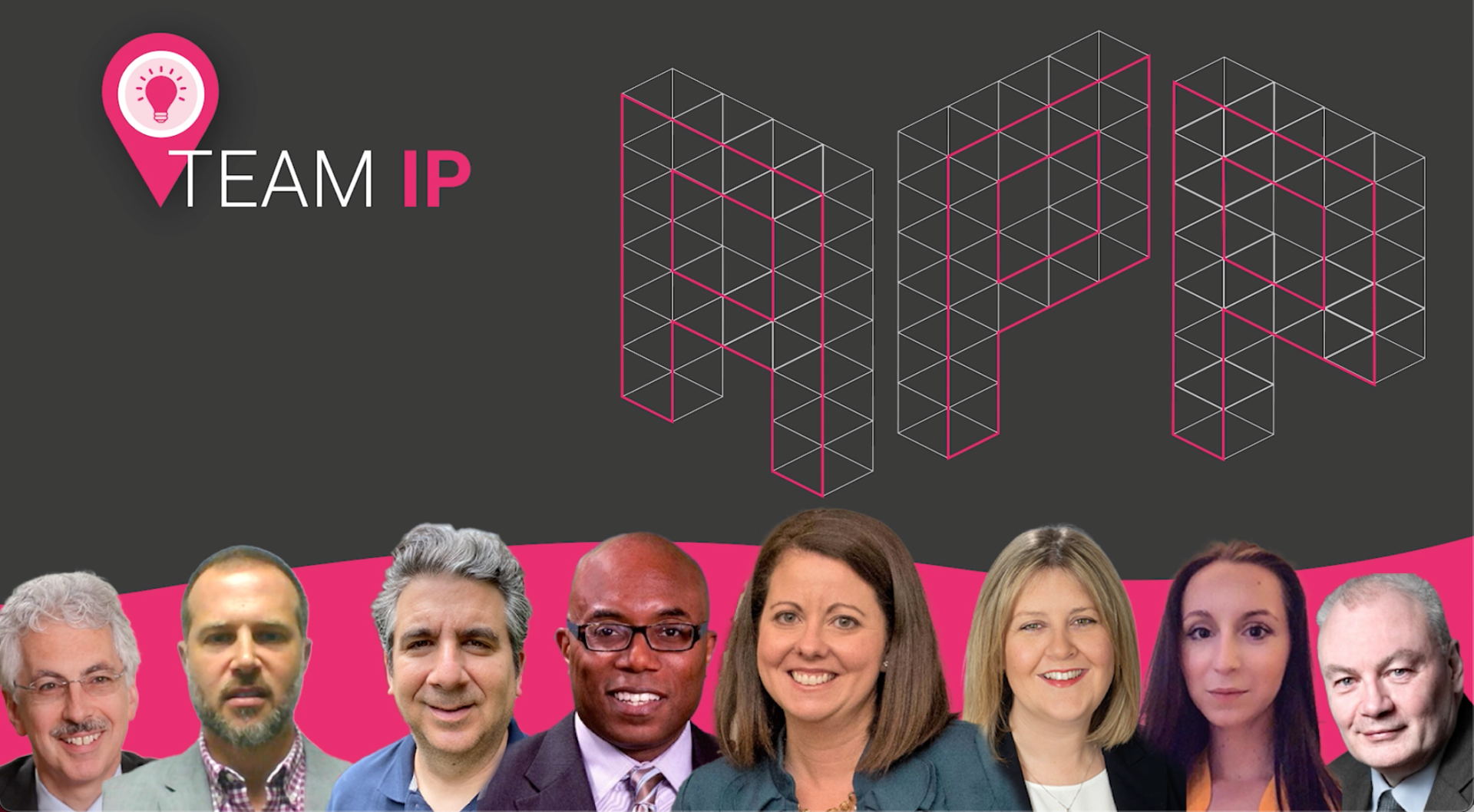
Team IP focused on the trademark renewal decision process for Hack the House, one they identified as a challenge for any company that owns a significant number of trademarks worldwide. They combined Apps into a solution that streamlines the communication out to global teams, alerting them that it is time to make decisions about whether to renew trademarks or not. It gathers feedback on why decisions were made and automates the process for trademarks that will unquestionably be renewed. The team also built an additional App that tracks who in an organization has access to which trade secrets.

Team Diversity created an App to help law departments establish a baseline for diversity statistics and tracking. Using the App, a legal operations professional can gather a high-level view of a law firm’s diversity efforts, track historical progress and report on efforts. The App sends law firms a survey where they can upload their diversity stats and initiatives. They based the App on the ABA Model Diversity Survey to align with existing industry standards.

Team Pro Bono Program Management wanted to help pro bono leadership track, manage, recognize and report on time spent by attorneys and be able to thank each one for their volunteer efforts. Their Hack the House App centralizes requests and gives lawyers a space to collaborate with internal resources and third parties such as outside counsel on pro bono initiatives. Users can easily report out the work to different bar associations or internally. Best of all, it helps show appreciation for pro bono work in the form of automated document generation for thank you letters.

Judging Hack the House

The five judges found an impressive array of solutions to evaluate. The panel included:

  • Maria Anassutzi, Lead IP Counsel EMEA, Canon Europe
  • William Hayes, Senior Lawyer, BBC
  • Mary Shirley, Head Of Culture Of Integrity And Compliance Education, FMCNA
  • Jonathan Powers, Director Of Learning & Development, Onit
  • Kristi Gedid, Senior Director, Global Legal Operations, Mylan

They judged based on a variety of criteria, including the ambition of the idea, how closely it fit with the original idea, the ease of use and the constructed App’s completeness. They also had a helping hand from hundreds of voters in the legal space.

“It was awesome to see the level of work and the thought that everybody put into their respective projects,” commented Mary Shirley, a judge and Head Of Culture Of Integrity And Compliance Education, FMCNA. “There is going to be a lot of real-world use for the Apps that have been produced. I had a fantastic time being a judge.”

“This hackathon made me feel empowered – not only as a judge but also as someone who works in and heads up legal teams,” said William Hayes, judge and Senior Lawyer at BBC. “I say empowered because I work with data scientists and technologists and developers, and often we are relying on them to try to get a solution developed. Seeing what the hackathon teams did with Apptitude, I feel like I can take my legal team now and say, ‘Hey, we’re going to do it ourselves.’ We can use these tools. We can use these ideas and create something ourselves. So it was empowering. I think that was something that I didn’t expect.”

After much deliberation and admiration for all the teams and their Apps, the judges selected the winner.

And the Winner Is …

TEAM IP!

Congratulations to Team IP and all the teams!

Thank you to everyone who participated in Hack the House.

Team EU

  • Ed Rastelli, Standard Chartered Bank
  • Lee Harrison, BT Group
  • Robert Johnson, Onit
  • Claire Banham, Onit
  • Alyssa Kokilah, Cognia Law
  • Tyler Reno, Onit

Team HR

  • Curtis Batterton, McDonald’s
  • Chris Hultgren, Deere and Company
  • Weston Wicks, Morae Global
  • Brett Baccus, Morae Global
  • Dipish Parmar, Morae Global
  • David Duffey, Onit

Team IP

  • Matt Burdman, Colgate Palmolive
  • Ken Capece, Colgate Palmolive
  • Ed Kelly, Colgate Palmolive
  • Nadine Stuttle, Duff and Phelps
  • Rebecca Cotton, Duff and Phelps
  • Atlantis Langowski, Onit
  • Larry Gianneschi, Colgate Palmolive
  • Josie Johnson, Onit

Team Diversity

  • Eric Kabot, Royal Caribbean Cruises LTD.
  • Michele Compasso, Corteva Agriscience
  • Gregg McConnell, Corteva Agriscience
  • Jesse Viani, Onit
  • Sam Lu, Consilio
  • Lisa Morris,  Consilio
  • Debby Young, Consilio
  • Rhonda Oliver, Onit

Team Pro Bono

  • Nick Panagoplos, Chubb
  • Kim Takacs, Chubb
  • Paige Edwards, Onit
  • Massimo Penzo, Morae Global

Thank you also to Cosmonauts, who collaborated with Onit on Hack the House.

The Latest Onit Acquisition: Your Contracts Drafted 10 Times Faster with Document Automation from AXDRAFT

Hear Onit’s CEO and the General Manager of AXDRAFT discuss Onit’s latest acquisition and what it means for contract lifecycle management, document automation and contract drafting in our latest podcast below.

AxDraft - An Onit Company

Drafting contracts just got easier with document automation from AXDRAFT – now an independent Onit subsidiary.

Onit announced the acquisition of the Y Combinator-backed company today. AXDRAFT – now AXDRAFT, an Onit Company – enables in-house counsel to draft legal documents 10 times faster and complete contracts like nondisclosure agreements and service agreements in less than five minutes.

This is Onit’s second acquisition announcement in 30 days. In November, Onit acquired legal AI company McCarthyFinch and immediately launched Precedent, its intelligence platform, and ReviewAI, software that accelerates contract review by up to 70% and improves user productivity by more than 50%.

Continued Contract Lifecycle Management Innovation

The AXDRAFT acquisition addresses Onit’s commitment to innovating its offerings, especially contract lifecycle management (CLM).

“Disruption is in Onit’s DNA, from launching the industry’s first no-code business process and automation platform, Apptitude, to bringing machine learning and natural language processing to the practice of contracting with Precedent and ReviewAI. We’re also the first in our space to offer two platforms, one for workflow automation and one for artificial intelligence. AXDRAFT is a disruptor to old-line businesses in the document automation space. Our guidance and resources will help the company scale significantly, secure new customers worldwide and contribute to Onit’s aggressive growth strategy,” said Onit’s CEO and co-founder Eric M. Elfman.

Addressing the Challenges of Contract Drafting with AXDRAFT

The contract drafting process comes with multiple challenges – especially when a corporate legal department has a high volume of them to complete. It’s highly manual, repetitive and time-consuming. Plus, as a manual process, there are numerous ways to make mistakes.

AXDRAFT breaks that cycle with its document automation by providing lightning-speed, error-free and multilingual contract drafting.

Yuriy Zaremba, co-founder of AXDRAFT and now its General Manager, understands these challenges firsthand.

“When I was a lawyer, I experienced how routine legal work can be when you draft the same types of documents over and over again. It’s a process that invites mistakes and keeps attorneys from focusing on higher-value contributions,” he explained. “AXDRAFT drafts the contracts and other legal documents in less than five minutes, making it significantly easier for legal professionals to maintain accuracy and collaborate with the businesses they support. We’re excited to join Onit and begin the next phase of our company’s evolution.”

Fueling AXDRAFT is a proprietary algorithm created by its co-founder and now CTO, Oleg Zaremba. The algorithm enables streamlined and extensible document drafting in any language, including Chinese and Japanese. It supports live document preview and data integrations to transform complex documents into simple Q&A processes. Another important distinction: AXDRAFT onboards customers’ documents at no cost, making it a truly turnkey solution.

AXDRAFT is available immediately as a stand-alone, out-of-the-box document automation tool.

Listen to the Latest Episode of Onit’s Podcast 

You can hear more about the acquisition in this podcast interview featuring Eric M. Elfman and Yuriy Zaremba.

To find out more about the AXDRAFT acquisition:

  • Read the press release.
  • If you are an Onit customer, speak with your account manager.
  • Visit the AXDRAFT website at AXDRAFT.com.