Year: 2020

Navigating COVID-19 With Technology and Innovation

2020 has not been the most favorable year for legal products and services vendors, at least in terms of the fallout from COVID-19. While world economies have remained all but frozen in the wake of the most taxing public health crisis in recent memory, legal departments and legal professionals have still been hard at work solving large enterprise problems and with fewer resources than usual. While economists describe these circumstances as exceedingly rare, corporate counsel and legal ops professionals know that the innovations they employ during the global pandemic have a long-lasting effect on efficiency and process improvements. Even though these times are stressful, many companies have used the slower pace of business to revise their processes and any enterprise can do the same.

The Only Constant is Change

Many legal technology providers have actually seen increased demand from the global pandemic as many companies are scrambling to find alternative revenue sources and tie up any loose ends on agreements that could impact their cash flows. That said, despite the circumstances in which demand has swelled, much of our previous content included thoughts about scalable solutions and embracing all of your technology tools. This may include triage such as reconfiguring document repositories, shifting your subscriptions towards cloud-based offerings and away from on-premises solutions, and employing new collaboration platforms to make it easy for legal personnel to work from anywhere.

Additionally, legal professionals have been evangelizing automation and analytics offerings for years. These tools often come bundled with many functions and pack in a lot of capabilities that might be overwhelming, but these solutions have been proven to address concerns of accountability while extracting valuable trends from data that your organization has already been collecting. Onit itself even offers free Business Continuity Apps which are a series of Apps we’ve released to support remote workers and their families that are sheltering at home. All in, these tools help organizations make the most informed decisions that keep their work aligned with their customers’ needs.

Keeping Your Eye on the Ball

Throughout the coming months and years, reeling back from all the changes COVID-19 has caused will be a challenge, but coming back from it is far from impossible. If your organization wants to thrive in a post-COVID world, it should stay focused on the value they can extract from the resources already available and be open to and plan for oncoming change. Finally, remember that none of this was easy and we’re all in this together; nobody succeeds if we don’t give our esteemed colleagues the time and environment they need to succeed.

For corporate counsel and legal ops professionals committed to expanding their knowledge-base, dive into our whitepaper, “Driving Savings, Process Efficiency and Collaboration in the Legal Department in a Post-COVID-19 Environment” and stay tuned for more blog posts similar to this one where we will explore the different options for rising strongly from the global pandemic.

Join Onit and Pearson for a Webinar: Transforming Legal Service Delivery and Enabling Self-Service

Join us for our upcoming webinar with Pearson, Transforming Legal Service Delivery and Enabling Self-Service. This webinar will detail how the Pearson legal department made the strategic move to a more standardized and streamlined way of delivering support to the business, in order to serve its business clients faster and more efficiently while reducing costs. The results have been the same quality of work at significantly lower cost and higher velocity.

This webinar will showcase why and how the Pearson legal department redefined itself and how it now supports and executes contract work. You will also learn about:

  • The critical role of executive sponsorship and change management
  • Performance management dashboards and SLAs
  • Hybrid resourcing and service delivery operating model
  • How Onit’s technology platform supports end-to-end process automation and web-based self-service portals
  • The resulting benefits which include cost savings, efficiency, reduced risk, use of data for better decision-making and improved business customer support

The webinar will be held June 18 at 10:00 a.m. CDT.

Click here to register for the webinar.

Onit Launches New Contract Lifecycle Management Quick Start Implementation Package

Onit today announced a new contract lifecycle management (CLM) Quick Start implementation package that allows companies of all sizes to streamline the entire contract process, reduce processing time and achieve higher contract compliance rates in less than 30 days. The new implementation package offers standard out-of-the-box functionality, quick time to value and a clear return on investment. The simplified implementation package gives legal and business teams immediate access to its award-winning contract lifecycle management technology, exposure to a robust workflow and automation platform and an upgrade path that can grow as they expand.

With this new Onit CLM Quick Start implementation package, companies can take advantage of the enterprise-grade contract lifecycle management software now with the industry’s fastest time to value. The CLM Quick Start implementation package includes one non-disclosure agreement (NDA) and one master services agreement (MSA) record type, limited custom fields, DocuSign or Adobe eSignature capabilities and an external contract request link.

Read the entire press release.

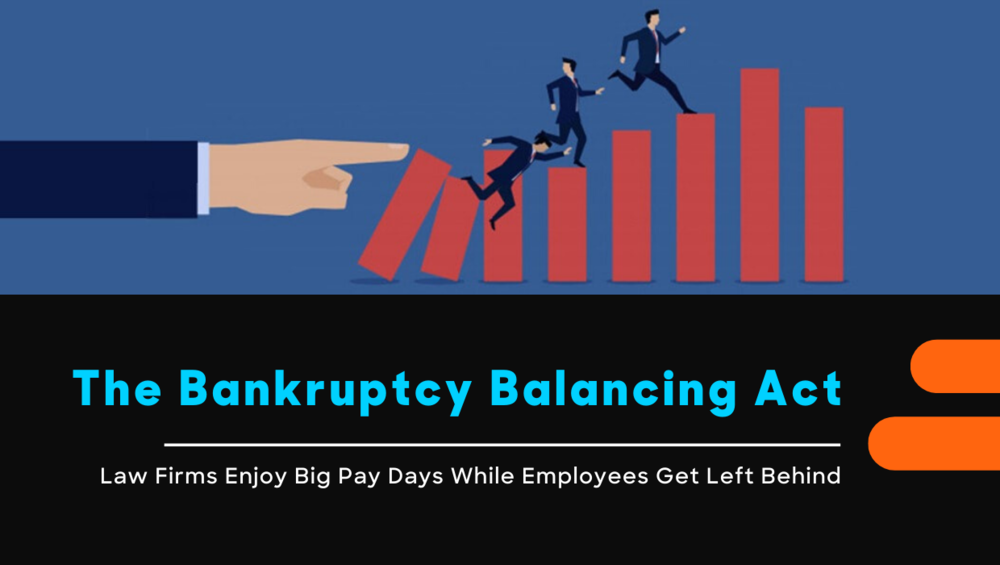
The Bankruptcy Balancing Act

Salvaging a business during bankruptcy comes with a hefty law firm price tag.

Surviving bankruptcy is a delicate balancing act. 

As businesses scramble to preserve assets and employees, they must retain law firms that can guide them through the unknown. 

In some of the largest bankruptcy filings within recent years, law firms have received massive payouts while significant workforce reductions occurred. 

More often than not, employees are laid off without severance even though company executives, boards, and bankruptcy judges allow law firms to charge hugely excessive fees throughout the bankruptcy process.

Company executives and board members have suffered severe reputational damage by not effectively managing the needs of their distressed businesses and employees.  

Although layoffs are often inevitable and lawyers play a critical role in bankruptcy filings, Bodhala data shows that law firms have charged exorbitant rates that exceed those of other mission-critical legal services.  

History will repeat itself during COVID as a potential record number of bankruptcies loom.

Enter Bodhala.

There is power in your data to control spiraling legal fees. 

Bodhala’s Hercules database – consisting of 32,000+ law firm profiles, 5 million matters, and over 500,000 timekeepers – helps you ensure you hire the right lawyer at the right law firm at the right price

Historically, rates for bankruptcy and restructuring work are undiscounted street rates. As the Trustee Program states, the rates must be comparable to similar work, but our data shows that rates for similar work are significantly lower than those currently being approved by the Trustee Program.

The market is significantly overcompensating law firms for bankruptcy and restructuring work. 

Throughout some of the largest bankruptcy cases over the past several years, employees suffered immensely while law firms padded their wallets. Let’s review how this played out at Lehman Brothers and Toys “R” Us.

Lehman Brothers

The investment bank’s collapse came in September of 2008, catalyzing the financial crisis that rocked the U.S. economy to its core.

More than 30 law firms were retained throughout the bankruptcy and liquidation process, making Lehman Brothers the most expensive bankruptcy in history. Firms accrued over $2 billion in legal fees.

Lead counsel for the investment bank, Weil, Gotshal & Manges, racked up over $484 million with lawyers billing up to $1,000 per hour.

So what happened to the employees?

The company’s entire 25,000-person workforce was laid off.

Employees were angry, distraught, and left to pack up their desks while bankruptcy lawyers began their feeding frenzies. 

Lehman’s CEO, Richard Fuld, suffered severe reputational damage as a result of the bankruptcy. Some referred to him as one of the worst CEOs of all time due to his negligence in protecting the company from the inevitable doom when he had the chance.

Toys “R” Us

The beloved toy store chain succumbed to bankruptcy in 2017.

As a result, the company received a hefty legal bill as their lead counsel, Kirkland & Ellis, took home $56 million.

Judge Keith Phillips reviewed and approved the firm’s fee application which listed the top two earners as raking in over $3 million dollars, billing hourly rates between $995 and $1,480. 

105 partners and 131 associates at Kirkland & Ellis worked on the bankruptcy case with seven partners and associates billing over one million dollars EACH in fees. 

What did the Toys “R” Us employees take home?

The employees who missed out on Thanksgiving dinners to accommodate Black Friday shoppers, those who sacrificed family gatherings to cover shifts, and spent their birthdays working instead of celebrating…they must have received something, right?

Think again.

The entire 33,000-person workforce was laid off without severance pay. 

Though the company initially promised employees severance, they quickly rescinded the offer as the retailer continued its downward spiral.

The Toys “R” Us bankruptcy was an outrage and led to the public shaming of the executives, board members, and bankruptcy judges that oversaw the filing.

The list of cases in which employees suffered while top law firm partners walked away with huge sums of money goes on. It will only continue to grow throughout the COVID crisis if we do not hold law firms accountable.

It is now more urgent than ever to find efficiencies in your company’s legal spend.

Bodhala is your partner for making this happen.

Our platform helps you ensure that you are balancing precious dollars between employee stakeholders and law partners.

Real transparency, real accountability, real control – that’s what we’re all about.

Legal Technology Adoption: Why Aren’t People Using Your New Software?

You’ve built a solid business case, and the benefits of digitalizing your legal processes are clear in efficiency gains and even cost savings (if you’re implementing a legal spend management solution). Not only will the business benefit, but the day-to-day legal operations and processes be simplified so your team is more productive and spends less time on admin. The new legal software is a “no-brainer.” Despite this, you have user adoption and acceptance challenges. Many members of your team are still using the old processes. Why, when are the benefits obvious, and how can you encourage your colleagues to use the new system?

Many change management blogs concentrate on the build-up to implementation and how to get buy-in from stakeholders and users at all levels and around the business. These include ensuring that the project team is diverse, documenting the business need before looking at the legal tech solutions, that requirements are reflective of those that will be using it, that scope doesn’t deviate too much from the initial business need, and that team members get to demo potential systems. All of this is important and contributes to a successful rollout. Regardless of how your pre-implementation project went, you can’t turn back the clock, so advice focusing on the project planning is of little use if you’ve already started rollout. This article focuses on the natural human behaviors that prevent user acceptance and adoption, along with advice and tactics to overcome the challenges so the software you have invested in achieves its expected benefits.

WHY USER ADOPTION CHALLENGES ARE SO COMMON

Firstly, you are not alone, so take some solace in that. Nor is user adoption a challenge specific to legal; ask around the business, and you will find other departments that feel your pain. Forming new habits is the key to success in using a new tool. Individuals will already have habitual, efficient routines, and moving to a new process is disruptive. To form a new habit, you must use the latest software often, requiring as little mental energy as the current process. However, getting to the point of it being routine involves effort, and there will be a temporary reduction in productivity and frustrations. It’s this hurdle that causes most of the issues.

The new software delivers unquestionable efficiency benefits on paper, but these will only come once it becomes the new normal. The key to successful user adoption is making learning the new process as easy as possible and for the new system to deliver benefits and rewards that drive the individual to want to repeat the process. At the same time, you need to manage the negative impact if some system features don’t quite work as intended and the confirmation bias at work in negative echo chambers. Bear all this in mind when using tactics to address user acceptance challenges.

TRAINING AND SUPPORT

Even the most intuitive software will require training to use the tool effectively. For example, there are often multiple paths to achieve desired actions, and team members may not be aware of certain shortcuts. Across the user base, you will have those that find learning new software easy and some that find it very difficult, regardless of its usability. Most training should come from the vendor itself during in-person or online onboarding. Still, provide ongoing training and support as usage ramps up or new employees join the company.

Train-the-trainer programs ensure an internal champion can quickly scale training throughout the business. Internal champions have a broad understanding of the software and the role the system plays in the business structure and processes. This knowledge means they play an essential role beyond training, supporting the team by managing stakeholders, and troubleshooting. Taking an e-billing implementation as an example, they could be responsible for liaising between accounting and law firms and managing difficult conversations in the case of unpaid invoices (in-house counsel can feel overwhelmed if they don’t fully understand the system while law firms grow impatient waiting for unpaid bills).

In-application support documents, videos, or interactive, guided walkthroughs can help address “how-to” questions. For those trickier use cases, utilize 24/7 support via the application, phone, or e-mail. Ensure external users of the system, for example, law firms using your e-billing system, are adequately trained and supported by the vendor to support external user adoption and avoid them directing technical queries to your team. The training addresses the “making the tool as easy to use as possible” part of the user adoption challenge. However, as mentioned above, other factors are at play, and relying solely on training may not improve usage.

WHAT’S IN IT FOR THEM?

People need to be motivated to repeatedly use the new system to the point where it becomes routine. One way to ensure repetition is to motivate the individual to repeat the process because they personally benefit. What this is will depend on the user. For a C-level executive, it might be how easily they can generate their weekly report. For a junior lawyer, they might save time because manual steps in their daily processes are now automated. The full spectrum of benefits should be communicated clearly, from legal spend reduction to day-to-day efficiency gains. These benefits will not appear immediately – due to the learning curve, there may be a perception of it taking longer – so set expectations. Use different methods of communicating; 1-2-1s, town halls, internal newsletters, etc., as individuals prefer to receive information in different ways. Share company progress towards these goals regularly, and it helps to show employees how their system usage and data input is contributing to transformation, perhaps through reports on their dashboard. Regardless of your benefits, how you communicate them, and how you measure progress towards them, the message needs to come from the board (top-down communication) to hammer home the strategic significance of the technology investment.

INCENTIVES/GAMIFICATION

Gamification uses game-like elements to generate positive emotions and user experiences. It’s widely used by brands (such as loyalty cards, online training courses, or fitness apps) as such tactics harness our instincts of competition and curiosity, rewarding behavior and motivating us to repeat it. Because of the positive experience, the individual is suddenly in control rather than being forced to use the software, which also contributes to habit forming. The most modern tools in the market have borrowed gamification elements to improve the user experience. For example, in-app interactive walkthroughs allow you to choose your journey through the software, your speed of progress and show you how far from the end you are.

Some software tools give you badges based on your time logged in and as you progress from beginner to expert. It might sound patronizing, but it’s human psychology. It works, which is one of the reasons why modern software has a better user experience and, therefore, the adoption rate. You can use competition to incentivize your team to use the new software by creating leaderboards and prizes – for example, the number of new matters created in the system per month. The tool itself will hold this data, encouraging them to become familiar with reporting and dashboards to keep track of the scores. You should also encourage your legal software vendor to hold ‘user experience/UX’ days with groups of users and work with them to incorporate elements of gaming and competition into the session, as this will improve the speed of education as well as make the sessions more enjoyable!

PEER CHAMPIONS AND PHASED ROLLOUTS

Within your organization, you will have people that are positive and determined to see the project succeed and people that will cling to every negative experience. Both types of people will share their experiences with their colleagues. You want to make the positive people “champions.” They may be responsible for training, being a port of call for issues, liaison between stakeholders, and being trusted by their colleagues to address these issues with the project leads.

Ideally, you will have included stakeholder representatives throughout the project to ensure software workflows accurately reflect real life, as the more accurate the workflows are, the easier adoption is. However, there may still be issues despite your best efforts, so if it’s not too late, phase your rollout so these issues are ironed out early on and impact as few people as possible. Your champions should be included in these rollout groups, but you want to keep complainers in a later rollout where possible! If a skeptical person has an unpleasant experience, this will confirm their fears. Likewise, the champion seeing benefits will have their positivity confirmed. Controlling the positive and negative experiences, and therefore peer-to-peer communication will give you better user acceptance rates.

LISTEN TO FEEDBACK

Schedule regular feedback sessions with your legal software provider to update them on what is working, not working, feature requests, etc. These should continue for as long as you use the product. A good vendor will take the initiative on this process (at Onit’s European legal spend management solution BusyLamp eBilling.Space, we also send out surveys to get feedback on user experience, bottlenecks, helpdesk support, feature functionality, etc.), but to get the maximum benefit, you need to listen and document internal feedback to report back to the legal tech vendor. In collecting negative feedback, there must be a balance. Make sure you have early-adopter power users who are detailed, fair, and critical in their feedback while weeding out those prone to complain about complaining’s sake. But nevertheless, document ALL complaints (perhaps by using the champion), see if they can be fixed internally, and escalate to the software provider if this is not possible. Close the loop by letting users know how you addressed their issue and what the resolution is. It’s important to know the shortcomings of the system and how it’s failing to meet requirements – if these are genuine and can’t be resolved, then it’s a valid cause of frustration for the team.

LEARN FROM OTHER DEPARTMENTS

While digitalization is new for many legal departments, your colleagues in other departments may be quite advanced in their technology journey. However, while the legal technology itself may be unique to the business, the user adoption challenges will likely not be. Ask around the business (a good starting point is HR) to benefit from existing change management tools and strategies. Ask them what they have tried and what worked and failed. The IT department may have been involved in multiple rollouts of new software. Learn from your colleagues across the business.

MAKE IT PERSONAL

Who are the people behind “the system,” both internally and working for the software provider? Show employees that rather than just being a piece of technology, there are real people behind the system who can advise and support them. If necessary, organize video meetings to get to know each other or implement user days with your tech vendor. While the in-app help documents and support functions are useful and should be encouraged, getting to know and building a relationship with the people managing the tool will aid adoption by improving perception. Plus, it’s harder to push back and reject other humans than it is a faceless piece of tech!

MAKE IT MANDATORY

Being forced to use a system means not being in control, not being motivated for any perceived reason, and being prone to friction. However, the fact you have invested in legal technology means usage is mandatory, and our experience is that user adoption is improved when there is a clear message from the start that usage is not optional. Used in conjunction with the techniques above, you can create a positive, motivating environment instead of a forceful, heavy-handed approach to mandatory adoption.

Request a demo of eBilling.Space today and see our RFP functionality for yourself.

Onit Participates in K1 Investment Management Webinar: Navigating Volatility

Onit recently participated in an exciting and timely webinar hosted by K1 Investment Management and we’d like to invite you to have a look. The webinar, Navigating Volatility, is definitely one not to be missed.

The session opened with Onit’s Vice President of Marketing Jill Black offering an overview of Onit’s Lean into LegalOps virtual program. Jill explained the timeliness of creating this program in the context of COVID-19, and how such a program contributes to really easing some of the negative impacts the crisis is having on businesses. She described how the initiative highlights programming from Onit and SimpleLegal’s customer base, industry thought leaders and innovators in the space. She then highlighted some key metrics demonstrating the success of the program, as well as Onit’s Meals on Wheels promotion, savings calculators, and Business Continuity Apps.

Travis Thornton, vice president of marketing at Dental Intelligence, then offered some insight into how his company began offering free software to their customers (dentists). He explained that their messaging needed to focus not so much on “using our tools,” but more on how to recover from the pandemic, and they put together a series of daily webinars specifically for that messaging. Travis then detailed some key metrics of their COVID-19 Rebound Action Plan campaign, showing the high level of success of the program.

Next, Yair Lehrer, vice president of marketing at Graduway, gave an overview of how his company felt the need to make their customers understand the importance of going digital after the pandemic hit. Yair described the three free products they began offering to drive inbound, Grad2020, GradBusiness and GradRaise. They realized the free offers weren’t doing as well as expected, so they began focusing on thought leadership, more content and more webinars. Their GLS Connect program was their pivotal marketing strategy. Due to the pandemic, they changed this to a highly successful live virtual conference.

Kevin Leahy, director of marketing at Gravyty explained their fundraising efforts during a crisis. Clients kept asking, “Is it okay to ask donors for money right now?” Gravyty presented a series of webinars to help their clients through the crisis and alleviate the fear of being alone by letting them hear from peers and industry experts. Kevin then details their three keys to navigating a crisis: 1) Don’t go dark, 2) Expand your reach, and 3) Ask, but adjust your ask.

In closing, the host Scott Kaplan, sales enablement and training practice director at K1 Investment Management, recapped what key changes each company had made in reaction to the pandemic:

Onit

  • Completely rethink how you go to market
  • Focus on packaging and pricing

Dental Intelligence

  • Address dentists’ concerns and problems
  • Establish yourself as a leader

Graduway

  • Shift from outbound to inbound
  • Possible churn customer are speakers or prospects to be on a panel

Gravyty

  • Messaging got more direct
  • Offer a guarantee

We hope you’ll take some time view this informative webinar.

Leading An In-House Law Department Through Uncertain Times: Challenges and Opportunities for the Legal Operations Practitioner

While events and in-person meetings are on pause in the age of COVID, Bodhala has fully embraced the opportunity to learn and connect with others virtually.

Earlier today, Bodhala participated in Consero’s Virtual Knowledge Bridge – Leading An In-House Law Department Through Uncertain Times: Challenges & Opportunities For The Legal Operations Practitioner.

Throughout each session, leaders from top Fortune 500 companies shared how their legal departments have pivoted throughout COVID.

Here are our main takeaways:

  • It’s legal operations’ time to shine. As companies continue to work remotely, legal operations teams have been critical in ensuring the smooth, seamless transition of hundreds to thousands of employees. One attendee, a Head of Legal Operations, shared that her legal operations team turned into a daily command center, proving them to be an essential arm of the department. Legal operations teams have been brought on for additional support in various areas of their departments. Another attendee, an SVP & COO, Legal & Associate General Counsel, noted that his team shifted their focus to supply chain and public policy matters in a project management and data coordination capacity. To learn more about how legal operations professionals are championing their roles in response to COVID, check out our most recent whitepaper.
  • Increased cost pressures across departments. Though many attendees expressed that cost pressures existed before COVID, the pandemic has accelerated the need to operate economically. A Director of Legal Operations & Governance, shared that her company’s finance team is looking at all costs with heightened scrutiny, citing outside counsel spend as an area of focus. Another attendee expressed that there is heavier cost pressure within his legal department as he cited a 60% focus on internal costs and 40% focus on external costs – like outside counsel spend.
  • Varying levels of maturity within legal departments. As heard throughout this morning’s sessions, legal departments are operating at varying levels of maturity. Some teams have been quick to implement thoughtful cost reduction changes with their outside counsel while others are still getting their bearings amidst the crisis. A Manager of Legal Operations noted that her team is paying close attention to how their law firms share in the burden of this crisis as this will affect her team’s future panel arrangements. A number of attendees also noted that their legal department’s refused rate card increases in 2020, offering significant savings. Another attendee shared that his team locked in 2019 rates for two years, allowing 50% savings.

Bodhala’s Insights

Bodhala CEO and Co-Founder, Raj Goyle led attendees through examples of cost pressure challenges our clients’ legal departments have faced during the pandemic and how they leveraged Bodhala’s platform to take back the reins from their law firms.

As company executives evaluate spend categories with a keen eye, the need to optimize legal spend has become even more urgent. 

The key to implementing meaningful change is through data. 

Everything you need to know about outside legal spend is housed in data – from top timekeepers to average hourly rates, and everything in between.

If you’re considering relying on your e-biller – think again. 

Data pulled from e-billers is typically chaotic, and more often than not, inaccurate. Check out our infographic, 7 Reasons Why You Need More Than an E-biller to Create a Winning Legal Department, to learn more.

Now, more than ever before, companies are relying on their legal operations team to deliver actionable, data-backed initiatives that can guide the business through COVID and set the stage for a successful future.

Bodhala is here to help.

Hercules, “the god of all analytics platforms” is Bodhala’s trailblazing proprietary database that operates as a single source of truth for legal data, and provides our clients with a 360 view of the legal market.

Running on Hercules, the Bodhala platform has an intuitive dashboard that analyzes:

  • Rates
  • Observed discount percentages at relationship and practice area/work type level (anonymized)
  • Matter types
  • Factors that create peer sets, providing accurate apples-to-apples comparisons of cost and staffing

Our clients’ legal operations teams have championed their roles in response to varying cost pressures fueled by COVID.

With our platform, these legal teams have utilized data and metrics to review invoices with heightened scrutiny, implemented scorecards to create true side-by-side comparisons of law firm rates, shifted rate card negotiations to finance and procurement in order to focus on mission-critical work, and more. 

Bodhala’s COVID Resources

Even during times of economic turmoil, the legal industry continues to respond with inflated fees and a refusal to hold timekeepers accountable. This has a tragic consequence for your business.

Find efficiencies in your company’s legal spend — we’re here to help. Contact us to learn how Bodhala can assist with your spend optimization efforts.

Watch Onit’s Latest Webinar: McDonald’s Corporation – Building and Executing a Legal Technology Roadmap

Onit recently co-hosted a webinar with McDonald’s and shared some valuable insights about how they built and executed a legal technology roadmap. The webinar was part of our new Lean into LegalOps online learning initiative.

The session opened with a brief review by our VP of Global Sales, Matt DenOuden, of our Business Continuity Apps and new cost savings calculators. Curtis Batterton, Legal Operations and Global Technology Manager at McDonald’s, began his discussion with his favorite quote by Ray Kroc, “None of us is as good as all of us.” Curtis felt like this resonated especially now with the current COVID-19 crisis. He then continued setting the stage by describing McDonald’s current legal technology landscape, followed by a quick review of their strategy up until the pandemic. Their strategy consisted of getting everything “working” to “building” an aspirational roadmap, surveying business and legal teams to identify their issues and wish lists and getting technology into the hands of global teams.

Curtis then offered some insight into the survey results. Three things that respondents wanted from technology were workload rebalancing, reducing workload and self-service. He continued by detailing some of the biggest challenges he is facing now; one of which is trying to keep all systems stable and available, and avoiding situations that may prevent people from doing crisis response. This unfortunately has led to other projects being put on hold as the current crisis continues. In regard to change management, Curtis noted that if it’s not crisis response, then it’s not the most important thing to do right now.

Curtis continued by explaining that long term goals still are critical such as globalizing systems, moving to paperless processes and tools and addressing workload and efficiency. But he added the key caveat that there will be a “new normal” and changes will have to be made. He also believed that legal work won’t change much, but the way the work gets done will change; such as more remote and off-site work. Curtis then explained how the crisis has been the impetus for using certain technology even more. In terms of selecting technology, he commented that it’s a fine balancing act to find a solution that every market and team can agree on using – adding that it’s just not possible to customize a solution for every different market or team. Leadership buy-in is critical before and during this process.

Curtis then explained how they had been using a platform approach to technology and he favors systems that are flexible and can respond to rapidly changing needs. He further noted that these needs are being amplified during this crisis in ways really never seen before. Curtis closed out his time with an overview of his thoughts about the future and key lessons learned, including:

  • Strategies will need to be made with a focus on agility
  • Technology evaluation should consider remote accessibility and flexible configurability
  • Workflow and collaboration solutions developed in response to the current crisis can be built into platforms like Apptitude (Onit’s workflow automation platform)

A Q&A session filled out the remaining time on the webinar. We hope you’ll take some time to watch this highly informative webinar.

Watch Onit’s Webinar: Adapting Law Department Practice to the New Normal

Onit recently co-hosted a webinar with PinHawk, Adapting Law Department Practice to the New Normal as part of our new Lean into LegalOps online learning initiative.

The session opens with Rees Morrison, Senior Manager at Ernst & Young, setting the stage for the webinar. Colleen Hankins, Senior Vice President at Fidelity then tackles the first question, “What has been the biggest challenge of work from home (WFH) for your department, and what have you done?” She explains they Fidelity had been anticipating this scenario since February, and that technology was one of their major concerns in making sure that employees had what they needed to work from home successfully. Colleen points out that the sheer volume of mail they receive was another unexpected challenge.

Jim Michalowicz, Senior Manager at TE Connectivity takes it from there and explains that a big challenge was in the operations side of the house. For example, electronic signatures aren’t allowed in Europe, so a document needed to be signed by hand and then scanned. He adds that the other challenge for them was maintaining a sense of community while not being in the office every day. Colleen is then invited to address the second question, “What have you invested in or spent more time on because of WFH?” She explains that focusing on a sense of connection was a huge priority, following technology and logistics. She adds that Fidelity has done a lot in this regard by putting together a communications campaign in order to ensure that people feel connected. In addition, Fidelity’s knowledge management program, which they started several years ago, has proved to be highly valuable during this crisis.

Jim returns to offer his insight to the same question. Keeping people connected was definitely a priority, and fortunately his company already had a communications in place pre-COVID. They already had quarterly webcasts, but now they’ve ramped up the number of them. Their use of Skype has increased dramatically as well. Kristen Herber, Managing Counsel at Under Armour, then takes on the third question concerning managing people during this crisis. She mentions that one of her strategies has been to have more of a personal connection with her team members, both as a team and one-on-one. Kristen points out that keeping a sense of normalcy and some comfort is very important. Colleen returns and comments that not much has changed in this regard for her, since her team has always been scattered across the country. Fidelity also encourages their people to take time off periodically.

Kristen moves onto the next question of how have HR and IT helped the law department. She remarks that they worked with HR to develop norms for communications. Jim comments that there were a lot of things they did cross-functionally, such as chipping in to help wherever needed. Kristen then addresses the next question of how law firms and vendors helped, in other ways than legal services. She mentions that they have taken advantage of all the law firms’ webinars and other knowledge, and it’s been very useful. Colleen tackles the final question concerning in what way will this crisis may permanently change the way they work with internal and external teams. She explains that the biggest change could be having to give up office space and have more people work remotely.

A Q&A session fills out the remaining time in the webinar. We hope you’ll take some time view this highly informative webinar by clicking the link below.

Bodhala Q & A: Handling Your Law Firm Payables During Covid

Since the start of the Covid pandemic, Bodhala has fielded client requests for data-backed insights on how to handle their law firm payables. 

Despite the current economic situation, law firms continue to invoice clients at rates that are even higher than the previous year. 

Knowledge is power. Bodhala equips your corporate legal department with the information needed to navigate these trying times. 

Consider these suggestions from our team of legal experts when evaluating your department’s spend:

Are corporate legal departments paying outstanding invoices?

While every budget line item is being reevaluated, corporations have halted accounts payable in an effort to preserve working capital. We have seen numerous businesses skip out on their rent payments, renegotiate vendor contracts, and cut executive salaries significantly.

As “The Great Retrade” takes shape across industries and corporate legal departments evaluate invoices with heightened scrutiny, law firms can no longer shield themselves from the negative effects of a crisis. Law firm invoices from the first half of the year are likely to be recut at the end of the pandemic. 
Based on market data from recent years, Bodhala predicts that nearly $100 billion of invoices are currently outstanding. We project that only 50 to 65% of outstanding receivables from the first quarter of 2020 will actually be collected.

Can I renegotiate rates?

You should absolutely work with your law firm to establish new rates that reflect the current economic situation. Bodhala recommends restructuring all hourly billing models with significant adjustments to your current rate card – even if you currently receive a discount.

Rate cards have increased year-over-year, usually without explicit sign-off from the client. Consider implementing your last approved rate card as this can help your business realize savings of 15 to 20%.

How should I handle ongoing matters?

Pay close attention to the staffing on your matters, monitor associate and partner matriculation, and do not be afraid to ask for discounts – after all, it is your money. Any M&A transactions halted by COVID should receive significant dead deal discounts of 15 to 25% on accrued fees.

Is my law firm going to be around when this is all over?

With so much uncertainty still on the horizon, it is not guaranteed that your law firm will be left standing when this is all said and done. Should your law firm go under, make sure you can pivot accordingly to a backup firm that can handle any mission-critical legal services. Stay informed on your law firm’s performance during these unprecedented times by requesting an economic health statement. Do not let your company be the last to pay a flopping firm.

Bodhala is here to help.

Bodhala is your partner for optimizing your outside legal spend and holding your law firm accountable throughout these challenging times. Our platform and team of legal experts can provide you with actionable insights to manage your law firm relationships, handing the reins back over to your corporate legal department.

We understand the critical need to conserve cash and run your legal operations efficiently throughout this crisis. To learn how Bodhala can help with your spend optimization efforts, contact us at [email protected]