
Author: Kemari Messineo

The Hidden Cost of Disconnected Legal Workflows

Hidden costs of disconnected legal workflows

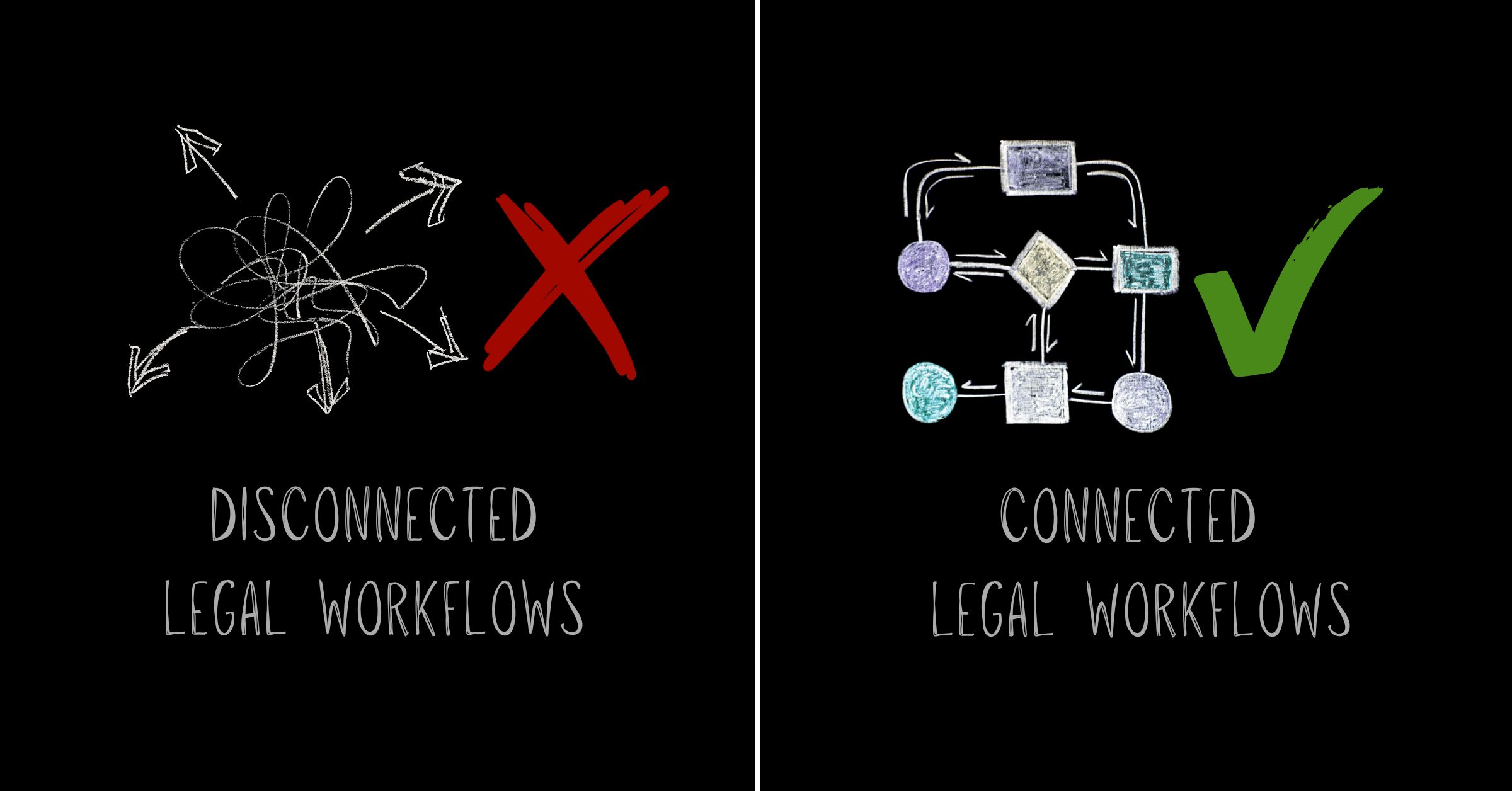
Spreadsheets break. Emails get buried. Approvals stall. For most Legal teams, these aren’t occasional problems, they’re the daily reality of working with disconnected legal workflows.

Legal departments manage more complexity than ever: outside counsel billing, contract lifecycles, matter tracking, vendor performance and compliance oversight. Yet many rely on fragmented tools that force teams to manually bridge gaps between intake, execution and reporting. The result isn’t just inefficiency. It’s operational friction that compounds over time, creating blind spots in spending, duplicated effort and missed opportunities to demonstrate value.

Disconnected legal workflows don’t just slow teams down. They undermine the strategic role Legal departments are expected to play.

When systems don’t talk, people fill the gaps

Manual work shows up everywhere when legal workflows operate in silos. Invoice data lives in one system. Matter details sit in spreadsheets. Contract approvals happen over email. Vendor performance exists only in someone’s memory.

Teams spend hours copying information between platforms, reconciling inconsistencies and chasing updates that should be automatic. Requests enter through intake, but the context doesn’t carry forward. Budget details require re-entry when opening a matter. Spend data demands manual exports to align with finance reports.

Industry benchmarks show Legal departments using disconnected tools waste 12-18% of their time on administrative rework. Skilled professionals do work that modern legal operations software should handle automatically.

Every handoff becomes a risk point without integration. Details get missed. Priorities shift without visibility. Manual intervention replaces status updates that should flow naturally through the workflow.

workflows and manual checklists for legal ops teams

What are disconnected legal workflows?

Disconnected legal workflows occur when legal teams use separate systems for intake, matter management, spend tracking, contract management and reporting, forcing manual data transfer between each stage. This fragmentation prevents information from flowing automatically, creating gaps in visibility and requiring constant human intervention.

Visibility gaps create control problems

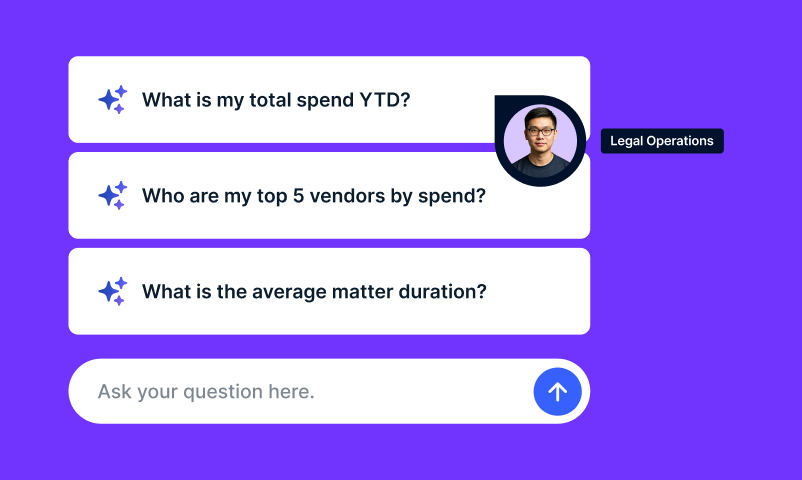
Real-time visibility becomes nearly impossible with disconnected workflows. When matter data, spend tracking and contract status live in separate systems, Legal leaders can’t answer basic questions without significant effort.

Which matters are trending over budget? What’s the current approval status across active contracts? How are vendors performing against billing guidelines? These questions should have instant answers. Manual reporting cycles deliver outdated information instead.

The 2025 Association of Corporate Counsel (ACC) Chief Legal Officer (CLO) Survey found that most Legal leaders now rely on technology and data for strategic decisions. But when legal workflows disconnect, that data either doesn’t exist or requires extensive manual work to compile.

Teams lose the ability to spot trends early without connected workflows. Cost overruns surface after damage occurs. Compliance gaps appear during audits instead of automated checks preventing them.

How do disconnected legal workflows affect legal operations?

Disconnected legal workflows force legal operations teams into reactive modes, spending valuable time on manual coordination instead of strategic planning. Billing data doesn’t connect to matter budgets, so invoice approvals slow down. Approval status remains invisible across departments, extending contract cycles. Performance metrics aren’t tracked in a unified system, turning vendor decisions into guesswork.

Fragmentation drives inconsistency

Manual processes breed variability. Enforcement becomes selective when billing guidelines aren’t embedded in review systems. Some invoices face scrutiny while others slip through. Over time, outside counsel learns which rules actually matter and which ones don’t.

Approval workflows suffer the same fate. Email-based routing means requests get handled differently depending on who’s available and what’s in their inbox. No standard path exists. No predictable timeline emerges. No reliable audit trail forms.

Inconsistency plagues matter management when teams track work across disconnected tools. One attorney uses a spreadsheet. Another relies on email folders. A third keeps notes in a document management system. Institutional knowledge disappears when someone leaves or workload shifts.

This fragmentation doesn’t just create inefficiency. It introduces risk. Missed deadlines, overlooked obligations and non-standard terms slip through because no single system provides comprehensive oversight.

legal workflows and automation - less manual work

Why do disconnected legal workflows persist?

Legacy systems built for single functions weren’t designed to work together. Many legal departments inherited point solutions purchased at different times by different stakeholders, each solving one problem but creating integration challenges. Technical debt, limited IT resources and fear of disruption keep teams locked into manual workarounds.

Data silos limit strategic impact

Legal departments face growing expectations to operate like other business functions: with clear metrics, predictable outcomes and evidence-based decision-making. Disconnected workflows make this nearly impossible.

Legal teams can’t analyze cost drivers by practice area, vendor or matter type when spend data lives separately from matter information. Reporting on cycle times requires manual reconstruction when contract metadata doesn’t connect to approval workflows.

Finance asks questions Legal can’t answer without days of data gathering. Leadership requests forecasts that require guesswork because historical patterns aren’t accessible. Business partners lose confidence because Legal can’t demonstrate the value being delivered.

Modern legal management software addresses this by creating a single source of truth. Matter details, spend tracking, vendor performance and contract status flow into one connected environment. Updates happen automatically. Reports reflect real-time data.

legal finance reporting and data

Integration eliminates redundant work

Copying data between systems ranks among the most expensive invisible tasks in legal operations. Every re-entry introduces error risk. Every manual update takes time away from strategic work.

Connected legal workflows solve this through integration. Information entered during intake flows directly into matter records. Invoice data syncs automatically with spend tracking. Contract approvals update status across all relevant dashboards without human intervention.

This approach does more than save time. It builds confidence in the data. When systems integrate, teams know that budget figures, matter status and vendor performance metrics are accurate because they come from the same operational record.

Collaboration with other departments improves through integration. Finance sees the same spend data Legal uses. Procurement accesses the same vendor insights. Compliance reviews the same contract terms.

How can legal teams fix disconnected legal workflows?

Fixing disconnected legal workflows requires unified legal operations software that connects intake, matter management, spend tracking and contract management in one platform. Teams should start by identifying where manual handoffs create the most friction, then prioritize integration points that deliver immediate visibility improvements.

Automation turns workflows into assets

Disconnected systems can’t support automation, so manual legal tasks persist. Invoice review stays manual when billing guidelines live in a document instead of being embedded in the approval process. Matter tracking stays manual when updates don’t trigger automatically based on workflow status.

AI-native legal operations platforms treat workflows as configurable assets. Billing rules become enforceable logic that flags violations before approval. Matter milestones become triggers that update status, notify stakeholders and generate reports without manual intervention.

According to Onit’s AI Center of Excellence research, AI-powered contract review using Large Language Models (LLMs) can complete tasks 70x faster than manual methods. But that speed only matters when the workflow connects. Manual handoffs erase efficiency gains if contract data doesn’t flow into matter records or spend tracking.

Exception-based review becomes possible through automation. Teams focus on flagged items that violate guidelines instead of checking every invoice line by line. Teams respond to alerts about delays or budget variances instead of tracking every matter update manually.

The strategic case for connected workflows

Legal departments can’t prove value when their operations remain invisible. Disconnected workflows keep legal work hidden from the metrics that matter to the business.

Connected legal workflows generate operational intelligence as a byproduct of daily work. Every invoice processed reveals spend patterns. Every matter tracked shows resource allocation. Every contract executed provides cycle time data.

legal contract review and contract management

This visibility transforms how Legal departments engage with leadership. Teams present data-backed analysis instead of defending budgets with anecdotal evidence. They offer predictive insights instead of reactive explanations about overspend. And teams show objective metrics about capacity and efficiency instead of justifying headcount requests through workload claims.

The shift from disconnected tools to unified legal operations isn’t just a technology upgrade. It’s a strategic repositioning of Legal as a data-driven business partner.

Making the move from chaos to clarity

Disconnected workflows don’t fix themselves. They worsen as Legal departments take on more complexity, adopt more tools and face higher expectations from the business.

Understanding where disconnection creates the most friction starts the move to connected legal workflows. Does it occur between intake and matter management? Between spend tracking and vendor oversight? Between contract execution and compliance reporting? Identifying the highest-cost gaps helps prioritize where integration delivers immediate value.

Modern legal operations platforms eliminate these gaps by design. They connect intake to execution, matters to spend, contracts to compliance and operations to insight, all within a single environment designed for how Legal teams actually work.

Legal teams don’t need more tools. They need their tools to work together.

Explore our comprehensive guide if you’re ready to escape disconnected legal workflows and start operating on your terms: Make Your Move: A Strategic Guide to Escaping the Manual Maze of Modern Legal Work. It outlines practical steps legal teams can take to reduce manual work, increase visibility, and build momentum without disruption.


9 Manual Legal Tasks Your Team Needs to Stop Doing Immediately

9 Manual Legal Tasks Stop Doing

Manual legal tasks slow teams down and quietly cap their potential. Legal departments are handling more matters, more invoices, and more scrutiny than ever before, all while being asked to do more with the same resources.

And yet, a surprising amount of legal work is still done by hand.

Not because legal teams don’t know better. But because manual processes tend to stick around long after they stop serving anyone. They feel familiar. They feel manageable. Until volume increases and the cracks start to show.

The result is slower workflows, frustrated professionals, and hours lost to manual legal tasks that technology could handle in minutes.

The teams moving ahead are not working longer hours. They are deliberately shedding the manual work that no longer makes sense. If your team is serious about scaling smarter, these are the manual legal tasks you need to stop doing now, and what to replace them with.

1. Reviewing invoices line by line

If invoice review still means scrolling through PDFs and eyeballing every line item, you have a scalability problem.

Manual invoice review is slow, inconsistent, and heavily dependent on individual judgment. Even experienced reviewers miss issues as volume grows. Over time, this leads to uneven enforcement, missed savings, and unnecessary friction with finance and outside counsel.

What to do instead: Move to exception-based review

Modern legal operations shift routine enforcement to systems and reserve human judgment for true exceptions. Policy-driven compliance checks can automatically surface billing guideline violations, duplicate charges, and unusual patterns before an invoice is approved.

This ensures consistent enforcement across every invoice while allowing reviewers to focus on decisions that actually require context. The result is faster review cycles, clearer insight into spend behavior, and less time lost to repetitive validation.

2. Tracking matters in spreadsheets

Spreadsheets feel flexible until they become fragile.

Manual matter tracking quickly leads to version control issues, missing information, and limited visibility. As matter volume grows, spreadsheets stop functioning as a source of truth and start introducing operational risk.

What to do instead: Create a connected system of record

Matter data should live in a centralized environment where status, documents, spend, vendors, and outcomes are connected. Real-time updates give legal leaders immediate visibility into workload and exposure without chasing updates or reconciling files.

This approach also protects institutional knowledge. When matter intelligence lives in a shared system rather than individual spreadsheets, teams remain resilient through growth, reorganization, and turnover.

spreadsheets representing manual legal tasks

3. Chasing approvals over email

Approval workflows built on email threads slow everything down.

Requests get buried, stakeholders miss messages, and legal ops teams spend time nudging instead of advancing work. These manual legal tasks create friction without improving outcomes.

What to do instead: Standardize policy-driven workflows

Centralized approval workflows replace inbox chaos with structure and accountability. Requests route automatically based on defined rules, status is visible at every stage, and approvals leave a clear audit trail.

This reduces turnaround time, lowers compliance risk, and gives leadership confidence that decisions follow consistent governance rather than ad hoc judgment.

4. Manually enforcing billing guidelines

Billing guidelines only work when they are applied consistently.

Manual enforcement after the fact leads to disputes, write-offs, and uneven application. Over time, firms learn where guidelines bend, which undermines both cost control and credibility.

What to do instead: Embed billing rules directly into review

Digitizing billing logic makes enforcement proactive instead of reactive. Issues are flagged automatically before approval, creating a predictable and neutral process.

This shifts conversations with outside counsel away from retroactive corrections and toward shared expectations. Consistent enforcement reduces friction, improves compliance, and eliminates recurring manual cleanup.

data privacy doing manual legal tasks

5. Re-entering the same data across systems

Copying data from one system to another is a quiet drain on productivity.

Manual data entry introduces errors, wastes skilled time, and undermines confidence in reporting. These tasks are often invisible, but their impact compounds quickly.

What to do instead: Eliminate data silos

Legal systems should operate as part of a connected operating environment, not in isolation. Matter, spend, and vendor data should flow automatically across legal and finance without re-entry or reconciliation.

When information is entered once and shared everywhere it is needed, teams gain accuracy, trust, and speed. This turns fragmented tools into a cohesive foundation for decision-making.

6. Managing vendors through inboxes and memory

Too many vendor decisions rely on anecdotal knowledge.

When performance, rate history, and outcomes are tracked informally or not at all, legal teams lose leverage and consistency. Strategic decisions become reactive instead of evidence-based.

What to do instead: Capture vendor intelligence through real work

Vendor insight should be derived from how firms actually perform across matters, not from separate scorecards or scattered notes. Structured data tied to outcomes, responsiveness, and spend patterns provides a factual basis for staffing and negotiation decisions.

This allows legal teams to reward firms that consistently deliver value and course-correct when performance falls short.

7. Pulling reports by hand every month

Manual reporting is one of the most expensive recurring tasks in legal operations.

By the time reports are compiled and formatted, the data is already outdated. Highly skilled professionals end up reporting on past activity instead of shaping future decisions.

What to do instead: Rely on real-time operational insight

Automated dashboards provide immediate answers to questions about spend, workload, and risk. Reporting becomes available on demand rather than as a monthly exercise.

This positions legal operations as a strategic partner to the business, providing insight that informs planning instead of simply documenting history.

legal front door legal intake

8. Handling legal intake manually

Email-based intake creates confusion from the start.

Requests arrive incomplete, urgency is unclear, and tracking progress becomes difficult. Legal teams spend time clarifying instead of resolving issues.

What to do instead: Make intake the front door to your operations

Standardized intake workflows capture the right information upfront and route work intelligently. Routine requests can move quickly, while complex matters are escalated with the right context.

This improves responsiveness for the business while protecting legal teams from constant interruption and rework.

9. Relying on people to remember process

Processes that live in someone’s head are fragile by definition.

They break when someone is unavailable, slow onboarding, and make improvement difficult. Over time, this creates operational risk that is hard to see until it causes disruption.

What to do instead: Automate for continuity and scale

Documented, system-driven workflows ensure consistency regardless of who is managing the work. They also generate data that can be used to identify bottlenecks and continuously improve performance.

This is how legal teams scale sustainably without burning out their best people or relying on heroics.

Ready to escape the manual maze?

Manual legal tasks are not a badge of honor. They are a signal that your systems are working against you.

You do not need to automate everything at once. But you do need a clear path forward.

If your team is ready to escape the manual maze and start operating on your terms, explore our newest and most comprehensive guide, Make Your Move: A Strategic Guide to Escaping the Manual Maze of Modern Legal Work. It outlines practical steps legal teams can take to reduce manual work, increase visibility, and build momentum without disruption.

Make your move. The work that matters is waiting.

What is Legal Matter Management? The Key to Modern Legal Operations

Legal matter management is a phrase you hear constantly in our industry. So what is it? It’s the workflow lawyers want to optimize and the primary challenge legal tech vendors strive to solve. However, its scope is so broad that the definition often gets lost in translation.

To clear up the confusion, we are breaking down exactly what legal matter management means today and how technology, specifically AI and automation, plays a pivotal role in its evolution.

The Core Components of a Legal Matter

While matter management often refers to software, the discipline itself existed long before digital tools. At its core, matter management is the process of managing a corporate legal practice’s projects. To do this effectively, you must coordinate several moving parts.

Here are the essential elements that require efficient coordination:

  • Documents: Legal work is document-intensive. From contracts and licenses to email threads, you need a centralized, secure repository to store and manage every file.
  • Knowledge: Your team is smart, but they shouldn’t have to rely solely on memory. Accessing accurate, historical institutional knowledge when needed is a critical component of successful management.
  • Collaboration: Law is a team sport. Matters involve stakeholders within the legal department, the wider business, and external counsel. Efficient management requires seamless communication and integration between all parties.
  • Workflow: While every matter has nuances, most follow a formulaic sequence of phases. Standardizing these workflows is key to efficiency.
  • Project Management: Matters are projects. They require scoping, budgeting, resourcing, risk tracking, and status reporting to ensure delivery on time.
  • Spend: Tracking spend against budget is vital, especially when outside counsel is involved. You must monitor work-in-progress (WIP), accruals, and potential budget risks.
  • Reporting: You cannot manage what you cannot measure. You need easily reportable data on status, risk, resourcing, and spend to make informed strategic decisions.
what is legal matter management

Matter-Level vs. Portfolio-Level Management

When most people discuss matter management, they focus on the micro level: managing a single case. This view is necessary for the attorneys and paralegals working the file who need visibility into specific documents and deadlines.

However, legal departments handle hundreds or thousands of ongoing matters simultaneously. This requires management at the macro (portfolio) level. General Counsel, CLOs, and legal operations leaders need high-level visibility, reporting, and data-driven insights across the entire legal landscape. True matter management must address both the individual project and the broader portfolio.

The Evolution of Digital Matter Management

Digital matter management (DMM) is the application of technology to support these processes. In the past, this might have meant using Excel spreadsheets and shared drives. Today, that approach creates data silos and inefficiencies.

Modern legal departments are moving away from disjointed point solutions and toward centralized, AI-native platforms. These platforms optimize the full matter lifecycle from intake to resolution in one system. By consolidating your tech stack, you eliminate integration headaches and gain a single source of truth for your data.

legal reporting for matter management

The Role of AI in Legal Matter Management

Artificial intelligence is reshaping how legal departments manage matters from start to finish. AI-driven solutions automate repetitive administrative tasks such as document review, data entry, and invoice validation. This allows legal professionals to focus on higher-value work. Predictive analytics helps identify risks and forecast case outcomes, enabling teams to make smarter, data-driven decisions early in the process.

For example, AI algorithms can analyze previous cases to suggest likely resolution timelines or flag unusual spending patterns for further review. Intelligent search and contract analysis tools allow lawyers to quickly find relevant information, improving their ability to respond to requests and meet deadlines. By integrating AI in legal matter management platforms, legal teams gain greater efficiency, accuracy, and strategic insight, giving them a distinct edge in today’s business landscape.

legal matter management desk reports

Why Prioritize Legal Matter Management Now?

Optimizing matter management is no longer optional; it is a competitive necessity. Legal departments are undergoing a rapid digital transformation driven by several urgent factors:

  • The need for efficiency: You are under pressure to do more with less, requiring tools that automate low-value tasks and boost productivity.
  • Cost control: Legal teams must demonstrate they are net contributors to the business, not just cost centers. This requires strict vendor management and spend visibility.
  • Remote work: Distributed teams need cloud-based tools to access workflows and know-how from anywhere.
  • Regulatory complexity: Growing global regulations increase workloads, demanding better risk management and compliance tracking.
  • Data-driven strategy: There is a rising need to improve internal customer engagement and use data to drive vendor selection.

Implementing a robust matter management platform alleviates these pressures, empowering your team to deliver measurable value to the enterprise.

Ready to Optimize Your Operations?

If you are still relying on spreadsheets and manual processes, it is time to modernize. Get out of your own way by downloading our newest guide, Make Your Move: A Strategic Guide to Escaping the Manual Maze of Modern Legal Work. Click here to download now.

Need a more personalized approach? Our team can help you build a roadmap for digital transformation. Speak to a Legal Ops expert today.

Legal workflow management: From legal intake chaos to connected legal ops

legal workflow management

For many legal teams, intake chaos is the first visible symptom of a bigger problem: fragmented legal workflow management. Requests come in without context, priorities are unclear, and work gets routed before anyone has a full picture of impact or effort. Even teams with structured intake processes struggle to achieve predictability because the workflows that follow intake are not truly connected.

Legal workflow management is what turns intake from a moment into a motion. Without it, intake becomes a handoff instead of the foundation for how work actually gets done.

Why intake chaos persists even with structure in place

Most legal teams have invested in intake. They use forms, triage rules, and routing logic to control how requests enter the department. But intake still feels chaotic when legal workflow management stops at the front door.

Requests are captured, reviewed, and approved, but the information collected does not reliably flow into the systems managing matters, spend, contracts, and reporting. Intake data gets re-entered downstream. Context is lost. Ownership shifts. Priority has to be re-evaluated.

When legal workflow management is disconnected, intake quickly loses its value the moment work begins.

legal workflow management for legal ops through automation

What fixing legal intake alone fails to solve

When intake feels messy, the instinct is to tighten control. Teams add required fields, expand categories, and layer on more review steps. Structure helps, but it does not create predictability on its own.

Without connected legal workflows and better management, teams still chase updates later. They still reconcile inconsistencies. They still manually update matter status and spend details. The same work resurfaces because intake was never tied into how work flows across the department.

The issue is not intake quality. It is incomplete legal workflow management.

The operational cost of disconnected legal workflows

When legal workflow management is fragmented, small gaps compound quickly. Requests get approved without a clear understanding of downstream effort. Matters start without budgets or timelines attached. Spend issues surface late because intake context never carried forward. Contracts stall because urgency or ownership was never clear.

legal reporting best practices

Reporting becomes reactive because intake data never became part of the operational record. What teams experience as intake chaos is really disconnected legal workflow management showing up early.

What predictable workflows actually require

Predictability comes from connection, not control.

When legal workflows connect intake directly to matters, spend tracking, contract workflows, and reporting, teams stop re-entering information. Context moves with the work. Status updates happen automatically as tasks progress. Visibility improves before bottlenecks form.

In this model, intake is not a gate. It is the first step in legal workflow management that carries information from request to resolution without constant human intervention.

legal intake chaos

How AI supports better legal workflows without replacing judgment

AI does not replace intake ownership or legal decision-making. It strengthens legal workflows by supporting continuity and context.

Used thoughtfully, AI helps normalize request information, reduce back-and-forth before work starts, and keep workflows aligned as work evolves. It helps surface risk, identify patterns, and maintain consistency across matters, spend, and contracts.

The goal is not to automate judgment away. The goal is to ensure legal ops workflow management supports people in making decisions, not reconstructing information the system already has.

From legal intake chaos to operational confidence

When intake is supported by connected legal workflow management, chaos gives way to predictability. Teams stop reacting and start planning. Visibility improves without additional reporting effort. Legal moves faster without sacrificing control.

Intake still matters. Structure still matters. Automation still matters.

best legal workflow management solutions

What changes is that legal workflow keeps work connected from the moment a request arrives through execution, spend, contracting, and insight. That is where predictable legal work actually begins.

Want to see how modern legal workflow management helps teams reduce manual work across intake, spend, contracts, and reporting?

Explore our newest guide, Make your move: A strategic guide to escaping the manual maze of modern legal work, to see how connected systems help legal teams move forward with confidence.

Of course, if you’re ready to dive in now and reduce all that manual chaos, it might be time to speak to an expert.

Does your legal operations team get trapped on endless side quests? Let’s fix that

legal operations team side quests

Productivity suffers when your legal operations team is caught up in endless “side quests.” You know, those repetitive administrative tasks that distract from your true mission. Fetching documents, routing contracts, and handling approval requests can consume hours that should otherwise drive bigger business goals.

Unlike games, where side quests can be rewarding, a legal operations team faces a different outcome. These distractions drain productivity, burn out talent, and cost your business real money. And anything that affects your ROI can be a potential problem if not handled right.

Your legal operations team’s main quest is strategic: managing risk, facilitating major deals, and steering the company through regulatory changes. Yet, too often, highly skilled professionals get pulled into a cycle of low-value tasks, chasing signatures, uploading files, and searching for contract versions buried in email threads.

This grind isn’t just tedious — it’s expensive. If your legal operations team spends time on data entry or routine admin, high-value resources are being misallocated. It’s time to identify the distractions and automate them out of existence.

legal operations team tech stack

The high cost of low-value work

Manual tasks quietly undermine legal operations team productivity. Five minutes to file a contract or ten minutes to assemble a typical NDA seems trivial until you multiply it across hundreds of agreements and dozens of employees. Suddenly, those side quests are a major drain.

Thousands of lost hours cause friction across the organization. Sales teams wait on contract approvals, procurement stalls on vendor onboarding, and the legal operations team becomes known as the “Department of No” …not because it wants to, but because it’s buried in administrative backlog.

The hidden risk of manual processes

Every manual touchpoint introduces risk to your legal operations team. When tasks are repetitive, mistakes creep in. Compliance is threatened when someone misses an update or forgets a regulatory clause.

Small errors can lead to significant consequences: missed renewal deadlines, overlooked obligations, or non-standard terms that expose the organization to penalties or reputational harm.

Identifying your legal operations team’s side quests

Is your legal operations team’s productivity suffering? The answer often hides in everyday frustrations:

  • “Where is that file?” Without a centralized repository, hours are wasted searching for information.
  • “I’m just a glorified admin.” When legal professionals spend time formatting or triaging emails, morale falls and turnover risks rise.
  • “We need to hire more people.” If you need more headcount to keep up, the real solution may be eliminating those manual side quests.

If these sound familiar, your legal operations team’s energy is spent on maintenance, not progress.

identify legal operations productivity issues

Automating the grind for your legal ops department

The solution isn’t to work harder but smarter. Equip your legal operations department with automation tools that remove repetitive, manual tasks. This allows your experts to focus on impactful, strategic work.

Streamline contract management

Start with Contract Lifecycle Management (CLM). A robust CLM platform automates routine contract tasks, from document generation and template management to approval routing and secure, searchable storage.

This not only accelerates sales cycles, it also lifts the legal operations team out of bottleneck territory and creates time for more strategic priorities.

Leverage data-driven insights

Manual processes cloud visibility. Automation brings clarity, showing bottlenecks, high-risk vendors, and legal spend in real time.

With actionable data, your legal operations team can show its value to the business, using metrics that reflect improved efficiency, increased compliance, and cost savings.

Integrate your tech stack

Copying data between disconnected systems creates just another set of side quests. Your tools should connect seamlessly with CRMs, ERPs, and HR platforms.

When your systems are integrated, information flows effortlessly, reducing duplicate work and confusion over where to find the latest file.

legal operations team data driven decisions

AI for legal: The ultimate cheat code for your legal operations team

AI-native solutions are changing the landscape for the legal operations team. AI reviews contracts for risk, flags issue areas instantly, and extracts data from legacy documents in minutes. Chatbots can answer routine business questions so your lawyers remain focused on high-level work.

This isn’t about replacing your legal operations team; it’s about freeing them to apply skills to complex negotiations, risk analysis, and strategic projects that move the business forward.

Return to the main storyline

Legal operations teams face constant pressure: tighter budgets, restructuring, and evolving regulations. There’s no room for wasted effort.

Eliminating administrative side quests is essential. Streamline workflows and automate routine work to unlock your legal operations team’s expertise. Enhance compliance, cut costs, and empower your legal operations professionals to take on the high-impact work that fuels business growth.

The main quest is waiting. It’s time to stop grinding and start leveling up your legal operations team.

Ready to optimize your legal operations team?

If you’re ready to leave manual side quests behind and focus on real business outcomes, we’re here to help. Our AI-native solutions empower legal operations teams to move fast, work smart, and deliver the efficiency your business needs. Speak to an expert today to get your legal operations team on the right path.

6 Must-Have Features to Look for in Legal Intake Software

6 must-haves for legal intake software

Legal intake software should make it easier to manage requests, not expose how broken the process really is. But for many legal teams, the absence of a clear intake system is exactly what creates the problem.

When you don’t have dedicated legal intake software, tracking and assigning work feels nearly impossible. Business partners toss requests over the fence via email, text, or hallway conversations, often leaving out critical details. This forces your team into a loop of back-and-forth phone calls just to get the information they need to start working.

It’s time to stop the scramble. Corporate legal departments need a smarter way to work, and automated legal intake software is the solution.

By implementing an intelligent, self-service portal, you centralize the chaos. You enable information sharing across departments and reduce the time your staff spends on manual data entry.

Why you need legal service request (LSR) software:

  • Streamlined processes: Simplify how work enters the department.
  • Reduced admin time: Drastically cut the cycle time spent on low-value tasks.
  • Strategic focus: Free up time for high-value legal work.
  • Better service: Enhance responsiveness to your business partners.

If you are ready to transform your operations, here are the six non-negotiable features you should look for in legal intake software.

legal intake chaos at work desk

1. Centralized intake

A scattered process is a broken process. Your legal software must support a central intake workflow for all legal service requests. This not only simplifies the experience for your business partners but also provides a complete, defensible audit trail for every matter.

2. User-friendly interface

Adoption is everything. If the tool is difficult to use, your partners won’t use it. Look for legal intake software that is intuitive and easy to learn, requiring virtually no training for users to get started immediately.

3. Variable workflows

Rigidity kills efficiency. Your workflow process should be flexible and easy to modify. You need the ability to alter requests, review and approve them dynamically, and add new approvers on the fly without slowing down the entire operation.

4. Automated notifications

Eliminate the “black box” perception where requests go to die. Your software should automatically generate notifications to keep business partners updated on the status of their requests. Transparency builds trust.

legal intake reporting dashboard and analytics

5. Reporting and dashboards

You can’t manage what you can’t measure. Robust reporting and dashboard views allow the corporate legal department to track legal intake software metrics by region, department, business unit, or complexity. Use these data-driven insights to optimize resource allocation.

6. Rapid deployment

You don’t have months to waste on implementation. Look for an intake solution that offers rapid deployment with little or no IT involvement. The goal is to get your corporate legal department up and running quickly so you can start seeing ROI immediately.

Driving success with legal intake software

The right technology allows your legal department to stop chasing paperwork and start focusing on business needs. With well-chosen legal intake software, you can provide higher-quality services, operate more efficiently, and become a driving force in fueling your company’s success.

legal intake software and legal service request

Ready to put these ideas into action? Download the Legal Service Request Checklist to evaluate whether your current intake process actually supports how your legal team works today, or quietly holds it back.

And if you want to see what a modern, automated intake experience looks like in practice, you can also speak to an expert to find out how Onit helps legal teams streamline requests, improve visibility, and operate on their terms.

7 Keys to Effective Legal Matter Management

effective legal matter management

Effective legal matter management helps your team cut chaos, boost efficiency, and deliver stronger results. Master these seven essentials to spend less time on busywork and more time practicing law while building trust and reliability.

When you manage legal matters effectively, your team stays focused, roles are clear, and surprises are rare. You find what you need when you need it, without frantic searches or missed details.

Your legal matters rarely go as planned. The good news is, when you adopt effective legal matter management, you take control. Last-minute surprises fade, your team knows what to do next, and you become the trusted go-to when it counts.

Why is legal matter management important?

Effective legal matter management helps your team move faster, stay organized, and solve problems with less stress. With the right systems in place, you save time, make better decisions, and become the go-to person when issues arise.

1. Clear communication and collaboration

When communication is clear and direct, your team moves faster and fewer mistakes happen. Set expectations early and keep everyone in the loop so projects run smoothly and stress stays low.

Breakdowns in communication kill productivity and morale. According to Gallup’s 2025 State of the Global Workplace report, poor communication drains productivity fast. Keep your team informed and share updates regularly so projects and people keep moving.

Strong communication keeps projects on track and teams aligned. Share updates often to avoid delays and confusion. When everyone is in the loop, you build trust and deliver results without surprises.

Tips to get started

  • Use centralized communication channels. Whether you use discussion forums, messaging platforms, or a combination, ensure everyone knows where to go to join the conversation.
legal document management

2. Centralized document storage and management

If you’re tired of wasting time tracking down files, you’re not alone. The 2025 ABA Legal Industry Report found just over half of law firms use cloud storage, so many teams still scramble for documents. Organize your files in one place to save hours, lower stress, and always be prepared.

Stop wasting time searching for files. Organize documents in one secure, accessible place to make it easy for your team to quickly find what they need and stay focused.

If you’re still using email to find files, it’s time for a change. A centralized hub makes documents easy to find, saves time, and keeps your team organized. Store everything in one place so you can focus on work, not searching.

Tips to get started

  • Verify that docs are accessible and secure. Use access controls to ensure cloud-based documents are shared safely with the right people, not just anyone with a link.
  • Keep your system searchable. Filter files by name or matter to prevent a marathon scrolling session every time you need to find something.
  • Prioritize scalability. Make sure your storage capacity meets your needs and can be adjusted as your requirements change.
  • Follow a single document-sharing process. Your file-sharing process should include version history for all documents and allow you to restrict access.

3. Standardized workflow management

If you’re buried in spreadsheets and manual updates, it’s time for a better workflow. Standardize and automate processes to fix bottlenecks fast and focus on real legal work. A streamlined approach helps your team work smarter and keeps days running smoothly.

Automate and standardize your workflows so everyone knows the next step, work is clearly divided, and you can focus on higher-value tasks. A consistent process means fewer mistakes and improved productivity for your team.

Tips to get started

  • Automate repetitive work. Whenever possible, automate sequential processes, like sending invoices upon matter completion, to keep your work consistent and efficient.

4. Streamlined task management

Endless emails and scattered spreadsheets cause mistakes and missed deadlines. A smarter task management system keeps you organized, ensures nothing is overlooked, and keeps projects on track.

Too many tasks and no plan? Details get missed. Set a clear, simple system everyone can follow so nothing slips through. A strong task management approach keeps you on track and deadlines met.

Want your to-do list under control? Use smart task management. Break tasks into clear steps, track progress with the right tools, and spend less time chasing details. You’ll have less stress and fewer mistakes, so you can focus on the work that matters.

Tips to get started

  • Rely on how-to templates. Create templates by matter type that break legal matters down into a predictable series of steps.
  • Use an assignment dashboard. Keep task assignments in one centralized location where everyone can view who’s working on what.
  • Automate basic tasks. When possible, use automation to streamline everyday matter tasks, like creating due dates, sending reminders, and monitoring deadlines.
document management and storage

5. Enhanced data insights for efficient legal matter management

To lead with confidence, you need clear, actionable data… not guesswork. The 2025 ACC CLO Survey found most legal leaders now rely on tech and data for better decisions. When you track results and adjust as needed, your data helps you stay in control.

With the right data, you know exactly where resources go, what’s working, and what to adjust. Clear insights help you lead with confidence and deliver measurable results.

When reports show costs rising, use that data to adjust your budget and fix issues before they turn into problems. Let data drive your decisions and help you avoid financial surprises.

Tips to get started

  • Objectively track performance. Track metrics like recorded hours by matter, matter spends, and top timekeepers to discover where your team is efficient and where matters need improvement.
  • Budget efficiently. Create projections based on previous matters to effectively allocate resources.
  • Create reusable reports. Save go-to reports for any area of legal matter management to make effective choices in real time.

6. Robust risk management and compliance

Simple mistakes, like sending the wrong file or missing an access update, can cause compliance issues. The 2025 Verizon Data Breach Investigations Report shows most data breaches come from human error. Stay alert and check permissions to keep your team secure and your data safe.

Work with IT early to set permissions, update systems, and track privacy rules. This way, you can focus on your work, stay compliant, and keep data secure.

Tips to get started

  • Audit your risk management and compliance. Work with your IT department to identify your biggest areas of risk and act accordingly.
  • Stay updated on current laws. Regularly check data privacy laws and provide necessary training when you onboard new team members.
  • Know the basics. Understand where your data is stored, who has access, if it’s encrypted, and how roles and permissions are set.
expense tracking and reporting for effective legal matter management

7. Detailed time and expense tracking

Manual time and expense tracking wastes hours and causes mistakes. The right tools keep your records accurate, prevent billing errors, and help you stay organized with less chaos and more control.

Accurate time and expense tracking helps you avoid errors, spot issues early, and make better decisions. With a reliable system, you know where every dollar and hour goes, can prove your team’s value, and keep surprises to a minimum.

Tips to get started

  • Catch potential spend issues early. Track legal spends and monitor potential problems with detailed spend management reports.
  • Leverage historical data. Use information from previous matters to improve decision-making and budgeting for future matters.
  • Get team alignment on accruals. Keep your teams in the loop on accrual calculation and submission procedures.

See the real ROI of effective legal matter management

Want to see the measurable impact of better legal matter management? Try our ROI calculator to track efficiency gains, control budgets, and reduce risk so your team can stay focused on what matters most.

Ready for deeper guidance? Connect with an Onit expert to map your path forward.

Measure Legal Department KPIs with These 4 Hacks

legal department KPIs and hacks to measure them

Let’s be honest: if you’re not measuring your legal department KPIs, you’re flying blind. The modern legal team is expected to prove their value, support the business’s strategy, and ruthlessly optimize legal spend management. If you aren’t there yet, you’re overdue for a change.

Stuck in spreadsheet hell? You’re not alone, but you’re also not going to win the future that way. Legal reporting best practices and technology can take you from manual chaos to automated clarity. The best part? You don’t need a massive analytics platform to crush your KPIs. Start with structure, consistency, and the four hacks below to unlock performance data that actually matters.

1. Legal department KPIs are your leverage

Legal department KPIs aren’t just pretty numbers for a slide deck. They’re your narrative. They tell leadership exactly how your team impacts the bottom line and why you should have a seat at the decision-making table. This aligns with broader business guidance on performance measurement, like Harvard Business School Online’s breakdown of how effective KPI structures drive organizational decision-making. Quantified, strategic, and focused: that’s how forward-thinking legal leaders play the game.

Even if you’re building from scratch, laser in on high-impact metrics: efficiency, risk reduction, alignment with business goals. This isn’t an optional exercise. It’s your ticket to credibility.

Still tracking data privacy costs manually and watching them climb? There’s your smoking gun. Use those insights to push for process changes, justify training, or argue for in-house moves that slash outside counsel spend. Strong legal department KPIs tell a story the C-suite can’t ignore.

legal reporting data

2. Cut the fluff: Choose legal department KPIs that actually matter

Let’s talk results. Your legal KPIs must expose the link between legal effort and business value. Ditch vanity metrics and focus on what drives decisions.

Start with these proven performers for both legal spend management and operational rigor:

  • Actual spend by month: Own your budget, find burn points, and spotlight cost control.
  • Total hours billed: Reveal capacity constraints and dependency on outside counsel.
  • Discounts, adjustments, alternative fee arrangements: Show you don’t just spend. You negotiate and save.
  • Number of contracts executed: Measure how legal accelerates (or blocks) deals.
  • Matters resolved and time per matter: Find choke points, boost efficiency, and rebalance workloads.

If you’ve got access to AI-native analytics or enterprise legal management tools, level up:

  • Top matters by attorney hours and rate: Pinpoint where you’re leaking money or over-allocating talent.
  • In-house vs. outside counsel workload: Stop outsourcing what you should be running internally and vice versa.
  • Line-item spend breakdowns: Kill off travel drains, admin bloat, and research inefficiencies.

Reporting on these KPIs isn’t about making leadership happy. It’s about controlling your narrative, driving legal reporting best practices, and putting yourself in the driver’s seat for strategic initiatives.

Pro tip: Modern legal ops solutions automate dashboards and reporting, letting you focus on strategy instead of spreadsheet migraines.

legal operations strategy - use legal department KPIs to get more time back

Quantitative KPIs: Don’t guess, prove it

Dig deep into your data. Your in-house timesheets and coded invoices hold gold if you know how to mine it. Build your legal spend management story from the numbers, not just gut feelings.

Track reductions and overruns by line item. Follow the money. Compare workloads and costs across practice areas over time. Trends don’t lie, so use them to predict, pivot, and persuade.

Qualitative KPIs: Influence beyond the numbers

Some of your impact is beyond the spreadsheet. Smart legal reporting best practices mean capturing qualitative wins too. Did negotiating a high-stakes deal save the company millions? Shout it out.

Ask your business partners for honest feedback. Are they waiting too long for support? Do they feel legal is a strategic enabler or a stubborn bottleneck? Build internal surveys and measure what matters, not just what’s easy to count.

3. Ditch the data dumpster: Build smart records around legal department KPIs

Your KPIs are only as good as your data hygiene. Step up your legal reporting best practices:

  • Tag invoices precisely. If it doesn’t drive a KPI, why track it?
  • Train your squad on the critical fields. Everyone must play by the same data rules.
  • Standardize formats for ease, speed, and auditability.
  • Stay compliant. The regulators will thank you, plus you’ll sleep better at night.

If the company demands ruthless efficiency, your systems and reporting must make cost savings unmistakably clear. Legal department KPIs are your ammunition. Organize them, defend them, and use them to drive real change.

4. Track legal department KPIs the modern way, or get left behind

Let’s face it. Spreadsheets are a stopgap, not a solution. They’re better than nothing, but if you want to bring the heat, automation and real-time dashboards are your best friends.

Pull all your legal department KPIs, legal spend management data, and performance metrics into one simple view for leadership. No more scrambling before the next quarterly report. Let cloud tools and visualization software do the grunt work so you can focus on results.

When you’re ready to stop living in the stone age, migrate to an AI-native solution. Let automation run the numbers, surface trends instantly, and produce dashboards executives actually want to read. The future of legal reporting best practices is real-time, interactive, and smart.

legal ops software - your legal tech stack matters

With the right tech, your team can:

  • Build automated dashboards that make spend, matter cycles, and vendor performance instantly visible.
  • Slice KPI reports by team, region, or matter type with ease.
  • Share insights in seconds, not days or weeks.

Time to upgrade or be outpaced

A basic spreadsheet works until it doesn’t, then you need a legal ops platform that automates data management and reporting. Modern legal analytics tools are purpose-built for legal department KPIs. Get dashboards you can trust, share insights on autopilot, and keep leadership looped in with zero manual hassle.

Ready to wield real influence? Sharpen your KPIs and build a truly data confident legal department by checking out our guide, Math of Legal Ops: Numbers, Process, and People Driving the Bottom Line.

It breaks down the real mechanics behind legal performance, spend control, and operational impact, and shows why manual math has no place in modern legal ops.

Click here to download the guide.

What You Need to Know About Legal Matter Management Software

legal matter management software

Legal matter management software gives legal ops a central hub to track every matter, budget, document, and vendor decision in one place. It replaces spreadsheets and manual updates with real-time visibility, helping teams control spend, reduce risk, and forecast with confidence.

Project management has become one of the most strategic responsibilities for legal operations teams. Legal matters are often their largest, most complex projects — with countless moving parts, multiple vendors, and budget pressures that demand precise tracking and visibility.

Mastering matter management is now the foundation of effective legal operations and spend control. Legal departments that manage matters with data-driven tools save an average of 12–18% in legal spend, according to recent industry benchmarks. The ability to analyze matter data across firms, practice areas, and timekeepers transforms legal work from reactive to proactive — turning information into measurable ROI.

This guide covers the essentials of legal matter management in 2025 — and how modern legal management software helps teams centralize data, automate workflows, and make smarter financial decisions.

What is legal matter management?

Legal matter management is the process of organizing, tracking, and analyzing all matters handled by your legal department — both in-house and with outside counsel.

It’s more comprehensive than traditional case management, which focuses on individual cases and documents. Matter management encompasses all related data: budgets, timekeepers, invoices, risks, key contacts, and outcomes.

It provides a single operational view across all work, giving legal teams and finance shared visibility into cost, performance, and progress.

legal teams dealing with legal matter management

Creating legal matter records

Every matter begins with a structured record — a centralized place to track who’s involved, what’s being done, and how much it costs.

A standard matter record should include:

  • Matter title and ID
  • Date opened and current status
  • Practice area(s)
  • Budget and spend-to-date
  • Assigned counsel (in-house and external)
  • Support staff and invoice approvers

For litigation, add plaintiff/defendant details, jurisdiction, and judge information. For contracts, include counterparty, contract type, and risk level.

Consistent formatting is key to maintaining data integrity and accurate reporting.

Establishing and maintaining budgets

Accurate matter records enable smarter forecasting. By analyzing spend by matter type, practice area, or vendor, legal ops can set realistic budgets and prevent cost overruns.

To maintain control:

  • Use historical analytics to estimate future matter costs
  • Enforce outside counsel billing guidelines
  • Require timely invoice and accrual submissions
  • Standardize invoice formats and approval workflows

Well-structured budgets eliminate surprises and strengthen collaboration with finance. The more granular your matter data, the more confidently you can predict spend and allocate resources.

Tracking and updating legal matters

Keeping matter data current is critical for operational accuracy. It’s also important for creating effective reports for the GC. Updates should include:

  • New or revised documents
  • Received invoices and payments
  • Budget adjustments
  • Staffing changes
  • Upcoming deadlines or milestones

Real-time visibility ensures that reports and dashboards reflect the most recent information — especially for executive briefings or accrual forecasts.

Reporting on legal matters

Matter reporting gives leadership a clear view of department performance. With objective metrics — such as matter lifecycle time, spend by firm, or variance from budget — legal teams can identify cost drivers, improve vendor management, and demonstrate ROI.

These insights support stronger collaboration between legal, finance, and the C-suite. They help explain where money goes, justify budget requests, and provide transparency around outside counsel efficiency.

Three ways legal management software solves matter management challenges

Even well-organized legal teams encounter inefficiencies when managing hundreds of matters manually. Modern matter management software addresses these pain points with automation, integration, and analytics.

1. Centralizes data into a single source of truth

A digital platform consolidates all matter data — budgets, invoices, and communications — into one system. Legal and finance can access the same information instantly, improving collaboration and accuracy.

Integrations with tools like Power BI, Tableau, and document management systems further reduce manual work and eliminate data silos.

2. Reduces manual work through automation

Automation eliminates repetitive legal management tasks such as data entry, document tagging, and budget tracking. Features like matter templates, smart search, and OCR (optical character recognition) simplify workflows and make information instantly searchable.

This not only saves time but also improves job satisfaction — a critical factor as legal ops teams face increasing workloads with limited headcount.

3. Provides real-time insight into spend and performance

With up-to-date data feeding dashboards automatically, teams can spot cost overruns, track matter progress, and measure outside counsel performance. Instead of retroactive reporting, they can take proactive action — reallocating budgets, enforcing guidelines, or adjusting staffing based on live data.

End-to-end legal management platforms transform reporting from an administrative task into a strategic advantage.

manual legal process - legal matter management software can help

Why effective matter management proves the value of legal ops

Strong matter management doesn’t just save time — it demonstrates legal’s impact on the business. By uniting people, process, and technology, legal operations can manage spend strategically, enforce compliance automatically, and surface insights that support executive decisions.

For more resources on optimizing your legal operations, request a demo of Onit’s legal matter management solution to see how modern legal departments are transforming matter management.

What is Legal eBilling? How Modern Legal Teams Drive Spend Control

an image that represents a legal ops professional handling legal eBilling

Legal eBilling is how modern legal teams bring order, accuracy, and transparency to their spend. It replaces manual billing chaos with automated workflows that capture data, enforce billing rules, and help teams understand exactly where their money goes. For departments under pressure to do more with less, eBilling provides structure, accountability, and time back in the day.

What is legal eBilling?

Legal eBilling is the electronic submission, review, and approval of invoices between law firms and corporate legal departments. Instead of exchanging invoices through email or spreadsheets, firms upload invoices directly into a secure eBilling platform. Most use a standardized format called LEDES (Legal Electronic Data Exchange Standard), which helps organize billing data consistently.

Once received, the eBilling system automatically checks each invoice against company billing guidelines, rate cards, and budgets. If something doesn’t match, it gets flagged for review. The invoice is then routed through an approval process where reviewers can accept, reject, or adjust line items as needed.

This structure creates consistency across the entire billing cycle. Invoices are processed faster, fewer errors slip through, and teams can focus on analysis rather than administration.

legal eBilling representation with data and analytics

How legal eBilling works

A legal eBilling workflow is built around automation and visibility. Here’s what it typically looks like:

  1. Law firms submit invoices electronically. They log into the eBilling platform and upload invoices using approved formats like LEDES.
  2. The system validates automatically. Pre-set rules flag issues such as incorrect rates, missing matter codes, or out-of-scope tasks.
  3. Invoices move through approvals. The platform routes them to the right reviewers based on your internal workflows.
  4. Legal teams monitor progress. Dashboards and reports provide real-time updates on pending, approved, or rejected invoices.
  5. Finance syncs with legal. Once approved, invoices flow into accounting systems for payment, keeping budgets and records aligned.

This process eliminates repetitive tasks, reduces human error, and creates a digital record of every billing action taken. Law firms benefit too because they process payments faster, and set clear billing rules upfront.

Why legal billing matters for modern legal teams

Billing is one of those processes that can quietly drain hours from a legal department each month. And so, without automation, it’s easy for mistakes to pile up. Rates may differ from agreed terms. Tasks that fall outside of policy get billed. In many cases, approvals stall because the right person doesn’t see an email in time.

Legal eBilling fixes that by standardizing and streamlining how invoices move through review. As a result, the system enforces rules automatically and provides visibility into each invoice’s status. Then, teams can track pending items, approved expenses, and real-time spending.

legal eBilling and legal teams

This visibility is a game changer for legal ops. It allows teams to track spend by matter, law firm, or region, and uncover insights that drive smarter decisions. With clean, reliable data, legal departments can forecast budgets, monitor trends, and show measurable value to the business.

What to look for in a modern eBilling system

The best eBilling solutions are flexible, intuitive, and built to support collaboration between legal teams and law firms. Key features to prioritize include:

  • LEDES support and global capability: Ensure compatibility with industry standards and multiple currencies.
  • Configurable billing rules: Set your own policies, rate structures, and approval workflows.
  • Dashboards and analytics: Access spend reports and compliance tracking in real time.
  • Vendor collaboration tools: Make it simple for law firms to submit and track invoices.
  • Integration readiness: Connect seamlessly with matter management or financial systems.

An effective legal eBilling platform should be easy to implement, simple for firms to use, and powerful enough to scale with the department’s needs.

The benefits of legal eBilling

Once legal eBilling is in place, the improvements are felt quickly. Teams spend less time chasing down invoices and more time analyzing results. Finance gains accurate, up-to-date data, and law firms have a smoother experience submitting bills.

Some of the biggest benefits include:

  • Faster approvals: Automated routing reduces delays and shortens payment cycles.
  • Stronger compliance: Built-in rules enforce outside counsel guidelines automatically.
  • Better forecasting: Real-time data makes budgeting more predictable and accurate.
  • Improved visibility: Every invoice and matter is tracked and searchable.
  • Reduced rework: Standardized processes catch errors before they cause problems.

Together, these benefits add up to measurable ROI. Legal departments that adopt eBilling typically see a faster invoice turnaround, fewer disputes, and greater alignment with finance.

legal eBilling image of person signing contract or bill

Common misconceptions about eBilling

It’s common for teams to assume eBilling is too complex, too expensive, or only for large enterprises. The reality is that modern solutions are far easier to deploy and maintain than they used to be. Cloud-based platforms now offer intuitive interfaces, built-in templates, and quick onboarding for both internal users and law firms.

Another misconception is that eBilling is only for tracking costs. While cost control is a major benefit, the true value lies in visibility. With the right data, legal ops teams can benchmark performance, justify budgets, and drive continuous improvement across their department.

The future of legal eBilling

Legal eBilling continues to evolve alongside the rest of legal technology. Automation and AI are already changing how invoices are reviewed and analyzed. Smart systems can now identify unusual billing patterns, predict potential overspend, and suggest optimization opportunities before issues arise.

These advances will make eBilling even more proactive in the years ahead. Instead of simply managing invoices, it will help legal teams make strategic decisions about where to invest time and budget.

Why it matters

Legal eBilling isn’t just about paying bills more efficiently. It’s about gaining the clarity and control that every modern legal department needs. It gives teams confidence in their data, alignment with finance, and the time to focus on higher-value work.

For growing legal ops teams, eBilling is the foundation for smarter, more strategic operations.

Ready to see how Onit helps legal teams simplify billing and spend management? Book a demo today.

*Post updated on 11/6/2025